Dieffenbachia (Dumb Cane)
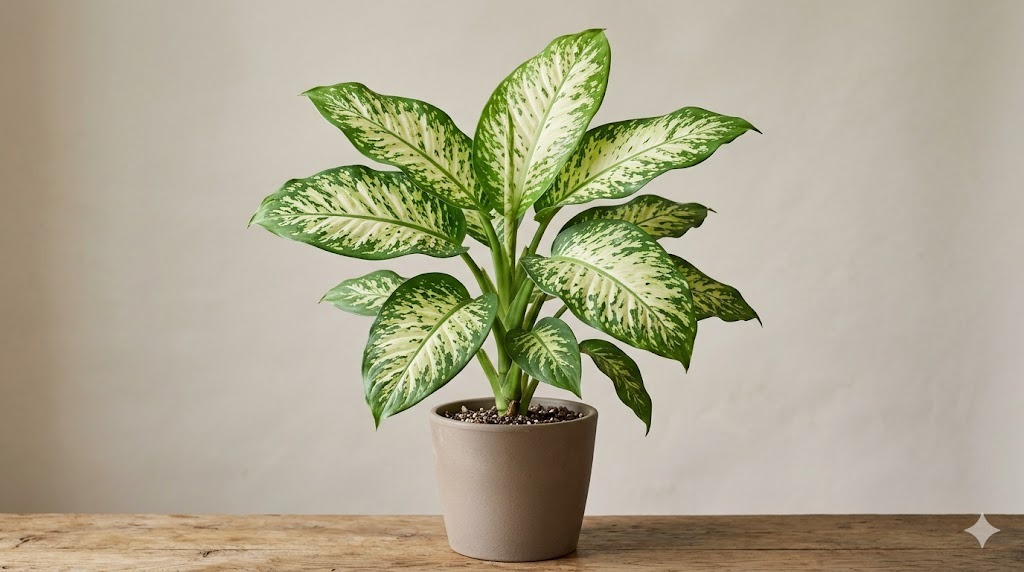
The Dieffenbachia is a bold, fast-growing foliage plant with large, dramatic leaves splashed and speckled in cream, white, and shades of green.
🗓️ Last reviewed: June 2026
Overview
The Dieffenbachia is a bold, fast-growing foliage plant with large, dramatic leaves splashed and speckled in cream, white, and shades of green. It brings a lush, tropical, jungle-like fullness to a room with refreshingly easy care - it tolerates lower light and a beginner's mistakes well. Its common name, "Dumb Cane," comes from its one notable trait: the sap is an irritant strong enough to cause temporary loss of speech if chewed. Handsome, easy, and dramatic - but a plant to be sensible about around pets and small children.
Origin & Natural Habitat
Dieffenbachia is native to the tropical rainforests of Central and South America and the Caribbean. It grows on the warm, humid, shaded forest floor beneath the canopy - which is exactly why it tolerates lower indoor light so well. This warm, humid, shaded origin defines its easygoing care.
Appearance
The Dieffenbachia produces large, broad, oval to lance-shaped leaves on sturdy upright stems (canes). The foliage is the show: bold patterns of cream, white, yellow-green, and dark green - speckled, splashed, or marbled. Indoors it grows fast, reaching 0.6-1.8 m. As it matures it tends to drop its lower leaves, revealing a bare, cane-like trunk topped with a crown of foliage. Popular cultivars include 'Camille', 'Tropic Snow', and 'Tropic Marianne'.
Why People Love It - Qualities & Benefits
- Bold, dramatic foliage: big, brightly variegated leaves with real jungle impact.
- Fast-growing: rewards good care with quick, visible new leaves.
- Tolerates lower light: thrives where many variegated plants would fade.
- Easy and forgiving: beginner-friendly, undemanding care.
- Lush, full presence: quickly fills a corner with tropical greenery.
- Easy to propagate and rejuvenate.
Care
Light
Adaptable. It does best in bright, indirect light, which keeps the variegation strong and growth compact, but it tolerates medium and even lower light better than most variegated plants. Avoid direct sun, which scorches the leaves. In very low light, growth gets leggy and variegation fades.
Watering
Water when the top 3-5 cm of soil is dry, then drain well - typically every 1-2 weeks, less in winter. Keep it lightly moist but not soggy; overwatering causes yellowing leaves and root rot, while letting it dry out too far causes drooping and brown edges.
Soil & Potting
Use a well-draining potting mix. Drainage holes are essential.
Humidity & Temperature
Appreciates moderate to high humidity; dry air causes brown leaf edges. Loves warmth: 18-27 °C. It is sensitive to cold - keep it above about 15 °C and away from cold drafts, which cause leaf yellowing and drop.
Feeding
Feed every 4-6 weeks in spring and summer with a balanced fertilizer at half strength.
Repotting & Rejuvenating
Repot every 1-2 years in spring. Over time the plant drops lower leaves and develops a bare cane; when it gets too leggy, you can cut it back hard - it will resprout from the cut cane - and use the cut sections to propagate, rejuvenating a tired plant.
Propagation
Easy, by stem cuttings and division:
- Cane cuttings: cut the bare cane into sections (each with at least one node/bud), lay them horizontally half-buried, or root them upright, in moist soil or water.
- Tip cuttings: root the leafy top in water or soil.
- Division: separate offshoots at repotting.
Always wear gloves and wash your hands when cutting Dieffenbachia - the sap is an irritant.
Common Problems & Pests
- Yellowing leaves: overwatering, cold drafts, or natural loss of the oldest lower leaves.
- Brown leaf edges/tips: dry air, inconsistent watering, or cold.
- Drooping: under- or overwatering - check the soil and roots.
- Leggy, bare cane: natural with age, or low light - cut back and propagate to rejuvenate.
- Faded variegation: insufficient light.
- Pests: spider mites, mealybugs, scale, and aphids; inspect and treat.
Toxicity & Safety
Toxic to cats, dogs, and humans. Dieffenbachia contains a high concentration of insoluble calcium oxalate crystals. Chewing any part causes intense burning and irritation of the mouth, tongue, and throat, drooling, swelling, and difficulty speaking and swallowing - the cause of the name "Dumb Cane." The sap also irritates skin and eyes. Severe reactions are uncommon but the irritation is genuinely painful. Keep it well away from pets and children, handle it with gloves, and wash hands and tools after pruning. Avoid touching your face after handling cut stems.
Pros & Cons
Pros
- Bold, dramatic, brightly variegated foliage.
- Fast-growing and lush.
- Tolerates lower light well.
- Easy, forgiving, beginner-friendly.
- Easy to propagate and rejuvenate.
Cons
- Notably toxic - irritant sap, painful if chewed ("Dumb Cane").
- Drops lower leaves; gets leggy with age.
- Sensitive to cold.
- Variegation fades in low light.
Best Suited For
- Beginners wanting bold, easy, lower-light-tolerant foliage.
- Bright to moderately-lit rooms.
- Homes without pets or small children that chew plants.
- Anyone wanting fast, lush, tropical greenery.
Not ideal for households with pets or toddlers who chew leaves, given the irritant sap.
FAQ
Why is it called "Dumb Cane"? Because of its sap. Dieffenbachia sap contains irritant crystals that, if the plant is chewed, cause intense mouth and throat irritation and swelling - temporarily affecting the ability to speak. The effect gave the plant its common name.
Is Dieffenbachia dangerous? It is toxic and an irritant - chewing it is genuinely painful and causes mouth swelling, and the sap irritates skin and eyes. Severe reactions are uncommon, but it should be kept away from pets and children, and handled with gloves. Wash your hands after pruning.
Why are the lower leaves yellowing and dropping? Some loss of the oldest lower leaves is natural - it is how Dieffenbachia develops its cane-like trunk. Widespread yellowing, though, usually means overwatering or cold drafts.
My Dieffenbachia is leggy with a bare stem - what can I do? Cut it back. Dieffenbachia resprouts from the cut cane, and you can root the cut sections to make new plants - rejuvenating a tired, leggy plant. Wear gloves when you cut it.
Can it grow in low light? It tolerates medium and even lower light better than most variegated plants, though bright, indirect light keeps it most compact and colorful. Avoid direct sun.