Dracaena (Dracaena marginata, fragrans & more)
"Dracaena" is not one plant but a whole family of easy, sculptural indoor trees and shrubs - and several of the most popular houseplants on the market belong to it.
🗓️ Last reviewed: June 2026
Overview
"Dracaena" is not one plant but a whole family of easy, sculptural indoor trees and shrubs - and several of the most popular houseplants on the market belong to it. The slim, spiky-leaved Dragon Tree (Dracaena marginata), the broad-leaved Corn Plant (Dracaena fragrans), the colorful 'Lemon Lime', and even Lucky Bamboo are all Dracaenas. They share the same appeal: tall, architectural, tolerant of low light, slow and tidy, and forgiving of neglect. If you want vertical greenery that fills a corner without demanding much, a Dracaena is one of the safest choices you can make.
Origin & Natural Habitat
Most popular Dracaenas are native to tropical Africa, with some from Asia and nearby islands. They grow as understory shrubs and small trees in warm forests, generally in dappled, filtered light beneath taller canopy trees. This shaded-forest origin is why they cope so well with the moderate and low light of an indoor home. The genus name comes from the Greek for "female dragon," a reference to the deep-red resin ("dragon's blood") produced by some species.
Appearance
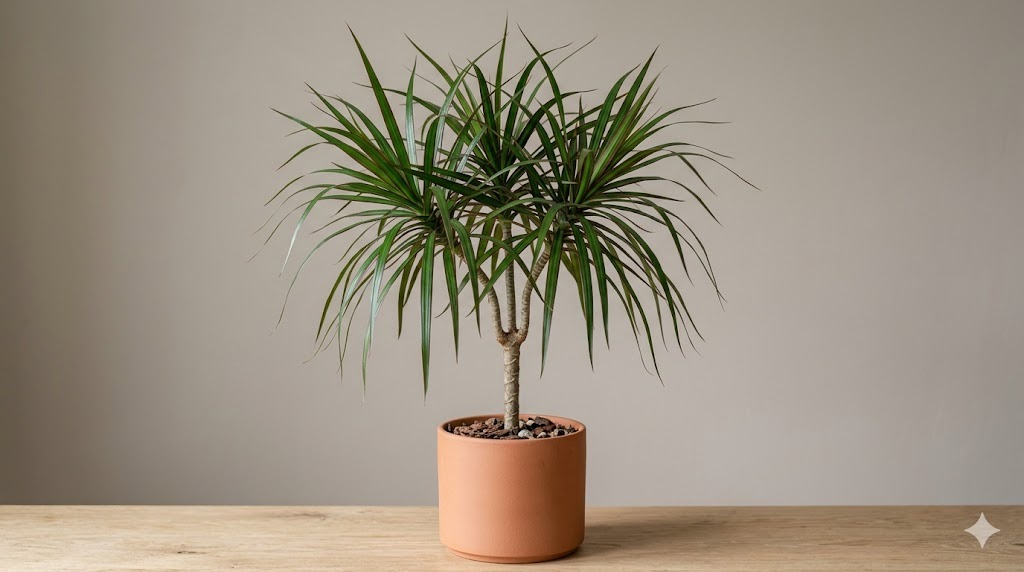
Dracaenas share a recognizable structure: a woody, cane-like stem or trunk topped with a rosette or tuft of long, strappy leaves. As the plant grows, the lower leaves shed, leaving an attractive bare cane - so a mature Dracaena looks like a slender palm or small tree.
Common types:
- Dragon Tree (D. marginata) - thin canes, narrow arching leaves edged in red; very tolerant.
- Corn Plant (D. fragrans) - thick canes, broad arching leaves, often with a yellow central stripe ('Massangeana').
- 'Lemon Lime' - bright chartreuse-and-green striped leaves.
- 'Janet Craig' / 'Compacta' - deep glossy green, very low-light tolerant.
- D. trifasciata - the Snake Plant (now also classed as a Dracaena; covered separately).
Indoors most reach 1-2 m, some taller.
Why People Love It - Qualities & Benefits
- Easy vertical greenery: fills a corner with height and structure with minimal effort.
- Tolerates low and moderate light: thrives where many statement plants would fail.
- Slow and tidy: does not outgrow its space quickly or demand constant pruning.
- Huge variety: many forms, colors, and sizes - there is a Dracaena for almost any spot.
- Long-lived and reliable: a well-kept Dracaena lasts for many years.
- Air quality: Dracaenas were notable performers in NASA's Clean Air Study; the realistic home benefit is easy greenery and calm.
Care
Light
Adaptable. Most Dracaenas prefer bright, indirect light, where they grow fastest and keep the best leaf color, but they tolerate medium and even fairly low light well - the green forms like 'Janet Craig' are especially shade-tolerant, while colorful and variegated forms keep their color best in brighter light. Avoid harsh direct sun, which scorches the leaves.
Watering
Water when the top 3-5 cm of soil is dry - typically every 1-2 weeks, less in winter. Dracaenas dislike soggy soil and are prone to root rot if overwatered. Let excess drain fully. Many Dracaenas are sensitive to fluoride, chlorine, and salts in tap water, which cause brown leaf tips and edges - using filtered, distilled, or left-out water reduces this common problem.
Soil & Potting
Use a well-draining potting mix; a little perlite helps. Drainage holes are essential.
Humidity & Temperature
Tolerates normal room humidity; appreciates a little extra. Comfortable at 18-27 °C. Keep above about 13 °C and away from cold drafts.
Feeding
Feed monthly in spring and summer with a balanced liquid fertilizer at half strength. Over-feeding worsens brown tips, so keep it light.
Repotting & Pruning
Repot every 2-3 years in spring. Dracaenas can be cut back hard - if a plant gets too tall or leggy, cut the cane at the desired height and it will sprout a new tuft of leaves just below the cut. The cut-off top can be rooted as a new plant.
Propagation
Dracaenas are easy to propagate from stem cuttings:
- Top cuttings: cut off the leafy crown with a section of cane, and root it in water or moist soil.
- Cane cuttings: cut the bare cane into sections (keep track of which end is "up"), and root them - each section can sprout new growth.
Keep cuttings warm and bright; rooting takes several weeks.
Common Problems & Pests
- Brown leaf tips and edges: the most common Dracaena complaint - usually fluoride/chlorine/salts in tap water, over-fertilizing, or dry air. Switch to filtered water and feed lightly.
- Yellowing leaves: overwatering, or natural shedding of the oldest lower leaves (normal as the cane develops).
- Brown, soft stem base / mushy cane: root or stem rot from overwatering.
- Pale or scorched patches: too much direct sun.
- Drooping leaves: under- or overwatering - check the soil.
- Pests: spider mites, mealybugs, and scale; inspect regularly and treat with insecticidal soap.
Toxicity & Safety
Toxic to cats and dogs. Dracaenas contain saponins; if chewed they cause vomiting (sometimes with blood), drooling, loss of appetite, and depression in pets - cats can be especially affected. It is generally considered non-toxic to humans, but should not be eaten. Keep it out of reach of pets.
Pros & Cons
Pros
- Easy, sculptural vertical greenery.
- Tolerates low and moderate light.
- Slow, tidy, low-maintenance.
- Many varieties, colors, and sizes.
- Can be cut back and easily propagated.
Cons
- Toxic to cats and dogs.
- Brown leaf tips are common with fluoridated/chlorinated tap water.
- Slow-growing - limited visible change.
- Sheds lower leaves (normal, but can look bare).
Best Suited For
- Beginners wanting an easy floor plant or indoor tree.
- Low- to medium-light corners, offices, and hallways.
- Anyone wanting low-maintenance vertical greenery.
- Spaces that need height without spread.
Not ideal for pet households with leaf-chewers, or anyone wanting fast, dramatic growth.
FAQ
Why does my Dracaena have brown leaf tips? Most often fluoride, chlorine, or salts in tap water - Dracaenas are notably sensitive to these. Switch to filtered, distilled, or left-out water. Over-fertilizing and dry air also cause brown tips. Trim the brown tips with scissors for appearance.
My Dracaena is too tall and leggy - what can I do? Cut it. Dracaenas tolerate hard pruning: cut the cane at the height you want, and a new tuft of leaves will sprout just below the cut. Root the cut-off top in water or soil to make a second plant.
Why are the lower leaves yellowing and dropping? Some shedding of the oldest lower leaves is completely normal - it is how a Dracaena develops its bare cane and tree-like look. Widespread yellowing, though, usually means overwatering.
Is the Dracaena safe for pets? No - Dracaenas are toxic to cats and dogs and can cause vomiting and lethargy if chewed. Keep them away from pets.
How much light does a Dracaena need? They are adaptable: bright indirect light is best, but most tolerate medium and even fairly low light. Green-leaved forms handle shade best; colorful and variegated types need brighter light to keep their color.