Echeveria
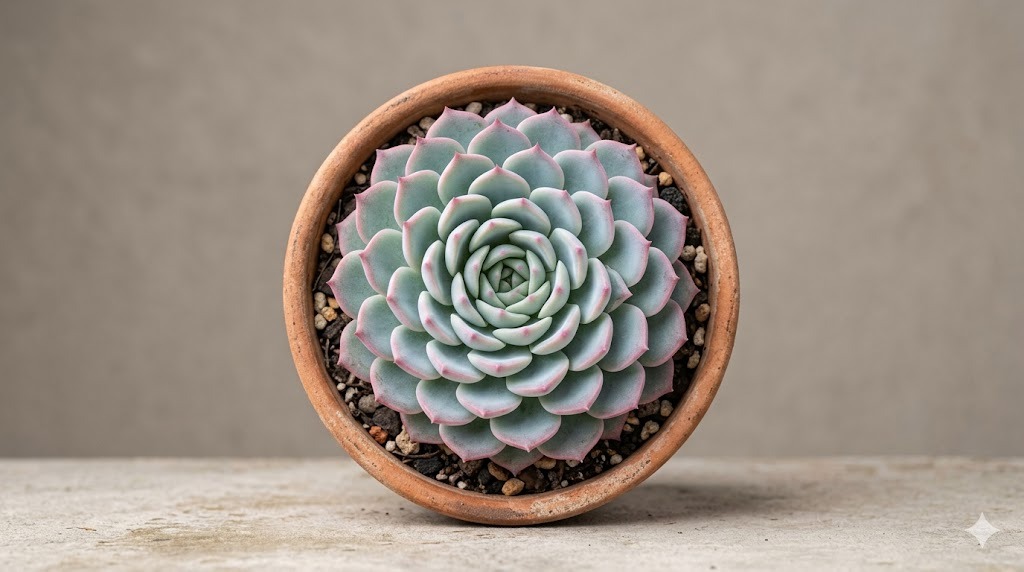
Echeveria is the quintessential rosette succulent - the plump, symmetrical, flower-like rosette that defines the whole succulent aesthetic.
🗓️ Last reviewed: June 2026
Overview
Echeveria is the quintessential rosette succulent - the plump, symmetrical, flower-like rosette that defines the whole succulent aesthetic. In powdery blue, soft green, lavender, pink, and dramatic dark tones, often blushing at the leaf tips, Echeverias are the photogenic stars of windowsills and succulent arrangements everywhere. They are easy and rewarding if you can give them what they truly need: lots of bright light and very little water. Get those right and they are tough, beautiful, and endlessly collectible; get them wrong and they stretch, fade, and rot. This is a plant that lives or dies by light.
Origin & Natural Habitat
Echeverias are native to the semi-desert highlands of Mexico and Central America, growing on dry, rocky slopes in intense sunlight. They are true sun-loving succulents, storing water in their fleshy leaves to survive long dry spells. Their high-altitude, sun-baked origin is the whole care guide: maximum light, sharp drainage, and infrequent watering.
Appearance
Each Echeveria forms a tight, symmetrical rosette of thick, fleshy leaves spiraling out from a central point - typically 5-20 cm across. Colors range from chalky blue-green and pale jade to pink, purple, near-black, and ruffled or frosted forms. Many develop blushing pink or red leaf edges in strong light ("stress color"). Healthy plants produce offsets around the base and send up arching stalks of bell-shaped orange, pink, or yellow flowers. There are hundreds of species and thousands of hybrids.
Why People Love It - Qualities & Benefits
- Iconic beauty: the perfect rosette is the signature succulent shape - endlessly photogenic.
- Huge variety: countless colors, sizes, and textures to collect.
- Compact: ideal for windowsills, small pots, and arrangements.
- Low water needs: tolerates neglect and long gaps between watering.
- Easy to propagate: new plants grow from a single leaf - deeply satisfying.
- Colorful "stress" tones: bright light brings out beautiful pinks and reds.
Care
Light
Lots of direct light is essential. Echeverias need the brightest spot you have - a south- or west-facing windowsill with several hours of direct sun, or a grow light. This is the number-one care factor: in insufficient light an Echeveria etiolates - it stretches tall, the rosette opens up and loses its tight shape, the leaves space out and point downward, and the color fades. Etiolation is permanent for those leaves. Strong light keeps the rosette compact and brings out vivid color.
Watering
Water thoroughly, then wait until the soil is completely dry - roughly every 1-2 weeks in summer and far less in winter. Water the soil directly, not the rosette: water trapped in the center causes rot. The leaves store water; overwatering causes soft, mushy, yellowing, translucent leaves and root rot. Slightly wrinkled lower leaves mean it is ready for a drink.
Soil & Potting
Use a gritty, very fast-draining cactus or succulent mix. A pot with drainage holes is essential; terracotta is ideal.
Humidity & Temperature
Prefers dry air. Comfortable at 15-27 °C. Not frost-hardy - keep above about 5 °C.
Feeding
Minimal - a diluted succulent fertilizer once or twice in spring and summer.
Repotting
Repot every 2-3 years or when crowded with offsets; spring is best. Wait a week before watering after repotting.
Propagation
Echeveria propagation is famously easy and rewarding:
- Leaf propagation: gently twist off a whole, healthy leaf (a clean break is essential), let it callus for a few days, then lay it on dry succulent mix. A tiny rosette and roots form over weeks; the original leaf eventually shrivels and is removed.
- Offsets: separate the pups that grow around the base, let them callus, and pot up.
- Beheading: if a plant has etiolated (stretched), cut off the rosette top, let it callus, and replant it - and the leftover stem often sprouts new offsets.
Common Problems & Pests
- Etiolation (stretching, loose rosette, fading color): insufficient light - the most common problem. Move it to the brightest spot or add a grow light; behead and replant if needed.
- Soft, mushy, translucent leaves: overwatering and rot.
- Shriveled, wrinkled leaves: underwatering - water thoroughly.
- Rot in the center of the rosette: water sitting in the rosette - water the soil only.
- Black/brown mushy stem: advanced root or stem rot.
- Pests: mealybugs are the main enemy, often hiding deep in the rosette and at the roots; also aphids on flower stalks. Treat promptly.
Toxicity & Safety
Non-toxic and pet-safe. Echeverias are considered safe for cats, dogs, and humans - a pet-safe choice among succulents. (Note: some other "succulents" sold alongside them, such as certain Euphorbias, are toxic - true Echeverias are not.)
Pros & Cons
Pros
- Iconic, beautiful rosette form.
- Non-toxic and pet-safe.
- Huge variety to collect.
- Compact and low-water.
- Very easy and rewarding to propagate.
Cons
- Demands lots of direct light - etiolates badly without it.
- Rots quickly if overwatered or watered into the rosette.
- Prone to hidden mealybugs.
- Not suited to low-light homes.
Best Suited For
- Bright, sunny windowsills (or grow-light setups).
- Beginners with a genuinely sunny spot.
- Succulent collectors and arrangers.
- Pet households wanting safe succulents.
Not ideal for low-light rooms, overwaterers, or anyone without a sunny window.
FAQ
Why is my Echeveria stretching out and losing its shape? That is etiolation - caused by too little light. The rosette stretches, opens up, and fades. Move it to your brightest, sunniest spot or use a grow light. To restore a compact look, behead the stretched rosette and replant the top.
How often should I water an Echeveria? Only when the soil is fully dry - roughly every 1-2 weeks in summer, much less in winter. Water the soil, never into the rosette. Overwatering is the main killer.
Why are the leaves turning to mush? Overwatering and root rot. Soft, translucent, yellowing leaves mean too much water. Let it dry out fully, check the roots, and repot in gritty mix.
Can I really grow a new plant from one leaf? Yes - twist off a healthy leaf cleanly, let it callus a few days, lay it on dry succulent mix, and a tiny rosette forms over weeks. It is one of the most satisfying propagations there is.
Are Echeverias safe for pets? Yes - true Echeverias are non-toxic and pet-safe.