English Ivy (Hedera helix)
English Ivy is the classic trailing, climbing vine - elegant, lush, and full of old-world charm, with star-shaped leaves cascading from shelves or scrambling up a trellis.
🗓️ Last reviewed: June 2026
Overview
English Ivy is the classic trailing, climbing vine - elegant, lush, and full of old-world charm, with star-shaped leaves cascading from shelves or scrambling up a trellis. As a houseplant it brings a soft, romantic, cottage-garden feel and comes in a wonderful range of leaf shapes and variegations. It is also a plant with a split personality: outdoors in mild climates it is famously vigorous, even invasive, yet indoors many people find it surprisingly temperamental, prone to crispy leaves and spider mites if the air is hot and dry. Grown in the cool, bright, humid conditions it actually wants, English Ivy is a beautiful and rewarding plant.
Origin & Natural Habitat
English Ivy is native to Europe and western Asia, where it grows as an evergreen woodland climber - scrambling along the forest floor and up tree trunks and walls, clinging with specialized aerial rootlets. It thrives in cool, moist, shaded-to-dappled woodland conditions. That temperate-woodland origin explains its houseplant quirks: it likes things cooler and more humid than a typical warm, dry living room, which is why it can sulk indoors while thriving outside.
Note: English Ivy is considered an invasive species in parts of North America and elsewhere. Where that applies, grow it as a contained houseplant and never plant or discard it outdoors.
Appearance
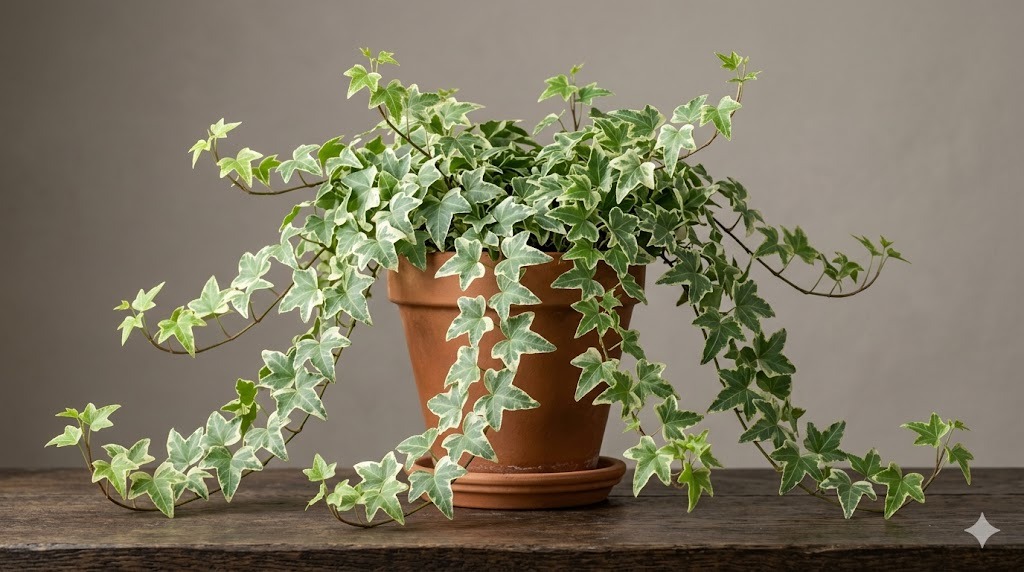
English Ivy has lobed, star-shaped evergreen leaves on long, flexible trailing or climbing stems. Leaves vary widely by cultivar - from classic five-lobed green to ruffled, heart-shaped, or needle-pointed, and from solid deep green to bright cream, gold, white, and silver variegation. Indoor vines easily reach 1-2 m and longer, and the plant can be trained up supports, topiary frames, or left to trail. (Mature ivy outdoors eventually changes to a non-climbing, shrubby adult form with different leaves, but indoor plants stay in the trailing juvenile form.)
Why People Love It - Qualities & Benefits
- Classic, romantic look: the cascading or climbing vine brings timeless cottage-garden charm.
- Versatile: trails from shelves and hanging pots, climbs trellises and frames, or can be trained into topiary.
- Huge variety: dozens of leaf shapes and variegations to collect.
- Evergreen and lush: full, green coverage year-round.
- Easy to propagate: roots readily from cuttings, so one plant fills many pots.
- Air quality: a notable performer in NASA's Clean Air Study; the realistic home benefit is attractive, easy greenery.
Care
Light
Bright, indirect light is ideal - and essential for variegated types to keep their cream and gold patterns. It tolerates medium light but grows slower and leggier; in deep shade, variegated ivies fade toward plain green. Avoid harsh, hot direct sun, which scorches the leaves.
Watering
Water when the top 3-5 cm of soil is dry - keep the soil lightly moist but never waterlogged. Both overwatering (root rot, yellowing) and prolonged dryness cause problems. Ivy generally prefers slightly more frequent watering than a succulent-type plant, but still wants to drain freely.
Soil & Potting
Use a well-draining potting mix. Drainage holes are essential.
Humidity & Temperature
This is the key to indoor success. English Ivy prefers cooler temperatures (around 10-21 °C) and moderate to high humidity. Hot, dry indoor air - especially near radiators in winter - stresses it, causing crispy brown leaves and, critically, encouraging spider mites. Keep it in a cooler room, away from heat sources, and raise humidity if your air is dry.
Feeding
Feed monthly in spring and summer with a balanced liquid fertilizer at half strength. None in winter.
Repotting & Pruning
Repot every 1-2 years in spring. Prune freely - ivy responds well to trimming, which keeps it bushy and full rather than thin and straggly. Use the prunings as cuttings.
Propagation
English Ivy propagates very easily from stem cuttings. Cut a healthy stem section a few leaves long, just below a node, and place it in water or directly into moist soil. Roots form within a couple of weeks. Pot up rooted cuttings, planting several together for a fuller display.
Common Problems & Pests
- Spider mites: the number-one indoor ivy problem - they thrive in hot, dry air and can quickly infest a stressed plant (look for fine webbing and stippled, dull leaves). Prevention is humidity and cooler air; treat by rinsing the plant and using insecticidal soap, repeated as needed.
- Crispy brown leaves and edges: hot, dry air; underwatering; or too much direct sun.
- Leggy, sparse, bare stems: too little light - move it brighter and prune to encourage bushiness.
- Loss of variegation: insufficient light for variegated types.
- Yellowing leaves: overwatering, or natural aging of old leaves.
- Pests beyond mites: aphids, mealybugs, and scale can also appear.
Toxicity & Safety
Toxic to cats, dogs, and humans if eaten. English Ivy contains saponins and other compounds; ingestion causes drooling, vomiting, diarrhea, and abdominal discomfort. The sap can also cause skin irritation and allergic dermatitis in sensitive people - some gardeners react to handling it. Keep it away from pets and children, and consider wearing gloves if your skin is sensitive.
Pros & Cons
Pros
- Classic, romantic, versatile trailing/climbing vine.
- Huge variety of leaf shapes and variegations.
- Easy and fast to propagate.
- Evergreen, lush, full coverage.
Cons
- Prone to spider mites in warm, dry indoor air.
- Prefers cool conditions - can struggle in heated rooms.
- Toxic to pets and people; sap can irritate skin.
- Invasive outdoors in some regions - keep contained.
Best Suited For
- Cooler rooms - entryways, unheated bedrooms, bright stairwells.
- Owners who can provide humidity and watch for mites.
- Trailing displays, trellises, and topiary projects.
- Anyone who loves a classic, cottage-style vine.
Not ideal for hot, dry living rooms, pet households with leaf-chewers, or beginners who won't monitor for spider mites.
FAQ
Why does my English Ivy keep getting spider mites? Hot, dry indoor air is the cause - spider mites thrive in it, and ivy is especially prone. Move the plant somewhere cooler, raise the humidity, and inspect regularly. Treat infestations by rinsing the plant and applying insecticidal soap, repeating every week or so until clear.
Why are the leaves going crispy and brown? Usually hot, dry air, underwatering, or too much direct sun. English Ivy prefers cool, humid conditions - keep it away from radiators, raise humidity, and keep the soil lightly moist.
Why is my variegated ivy turning plain green? Not enough light. Variegated ivies need bright, indirect light to keep their cream and gold patterns. Move it closer to a bright window.
Is English Ivy safe for pets? No - it is toxic to cats and dogs, causing drooling, vomiting, and diarrhea if eaten. The sap can also irritate human skin. Keep it out of reach of pets and children.
Can I plant my houseplant ivy outside? Be careful - English Ivy is an invasive species in parts of North America and other regions, where it smothers native plants and trees. If you live in such an area, keep it strictly as a contained houseplant and never plant or discard it outdoors.