Haworthia (Zebra Plant & Window Plants)
Haworthia is the small, tough, charming succulent that fits almost anywhere - a desk, a windowsill, a tiny pot in a sunny kitchen.
🗓️ Last reviewed: June 2026
Overview
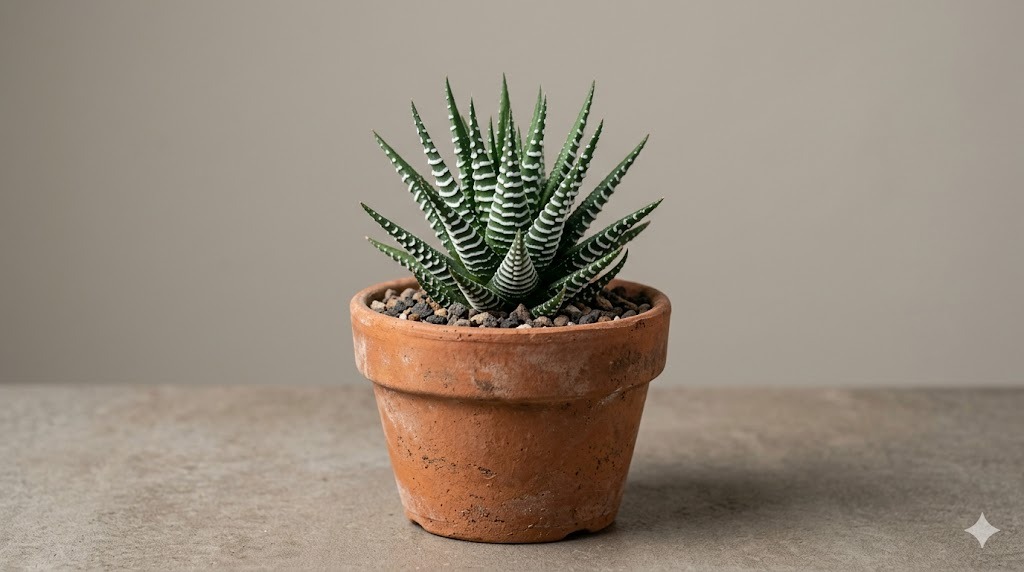
Haworthia is the small, tough, charming succulent that fits almost anywhere - a desk, a windowsill, a tiny pot in a sunny kitchen. The most famous, the Zebra Plant (Haworthiopsis fasciata/attenuata), has dark green leaves striped with crisp white bands; others, the "window plants" like Haworthia cooperi, have plump translucent leaf tips that glow when light passes through them. Compact, slow, pet-safe, and far more shade-tolerant than most succulents, Haworthia is one of the easiest and most beginner-friendly succulents you can own.
Origin & Natural Habitat
Haworthias are native to southern Africa, especially South Africa, where they grow in dry, rocky scrubland - but, importantly, often tucked into the shade of rocks, shrubs, or grass rather than in full blazing sun. Some species grow almost buried, with only their translucent leaf "windows" exposed at soil level to capture light while staying cool. This part-shade, rocky, arid origin is why Haworthias tolerate lower light better than sun-hungry succulents like Echeveria, while still wanting sharp drainage and infrequent water.
Appearance
Haworthias form small, neat rosettes of thick, fleshy leaves, generally 5-15 cm across. The Zebra Plant type has firm, pointed, dark-green leaves covered in raised white dots or bands, giving a striped appearance. The "window" types have rounded, plump, soft leaves with translucent tips. Most stay compact and produce offsets, slowly forming a little cluster. Mature plants send up a thin stalk of small, tubular white flowers.
Why People Love It - Qualities & Benefits
- Tiny and space-friendly: perfect for desks, windowsills, and small pots.
- Pet-safe: non-toxic to cats and dogs.
- More shade-tolerant than most succulents: thrives in bright indirect light, not just blazing sun.
- Very low-maintenance: infrequent watering, slow and tidy growth.
- Charming detail: crisp white stripes or glowing translucent windows reward a close look.
- Easy to propagate: offsets readily provide free plants.
Care
Light
Bright, indirect light is ideal - a bright windowsill out of harsh midday sun, or with gentle morning sun. Haworthia tolerates lower light better than sun-loving succulents, making it a good desk plant. Signs of trouble: stretching and leaning toward light means too little; red, orange, or brown stressed coloring (and a washed-out look) means too much intense sun.
Watering
Water thoroughly, then only again when the soil is completely dry - roughly every 2-3 weeks in summer, and much less (every 4-6 weeks or longer) in winter. The fleshy leaves store water; overwatering causes soft, mushy, translucent, rotting leaves and is the main cause of death. When in doubt, wait.
Soil & Potting
Use a gritty, fast-draining cactus or succulent mix. A small pot with drainage holes is essential; terracotta helps the soil dry.
Humidity & Temperature
Prefers normal-to-dry air. Comfortable at 15-27 °C. Keep above about 5-10 °C; not frost-hardy.
Feeding
Minimal - a diluted succulent fertilizer once or twice in spring and summer is plenty.
Repotting
Repot every 2-3 years, or when the pot fills with offsets. Spring is best; wait a week before watering after repotting.
Propagation
Haworthias propagate easily from offsets ("pups"): small rosettes form around the base of the parent. When an offset has its own roots, gently separate it, let it callus for a day or two, and pot it in dry succulent mix. Some types can also be grown from leaf cuttings, though offsets are more reliable.
Common Problems & Pests
- Soft, mushy, translucent leaves: overwatering and root rot - the classic killer. Stop watering, repot in dry mix, remove rot.
- Shriveled, thin, curling leaves: underwatering - give it a thorough soak.
- Stretched, leaning rosette: not enough light.
- Red/orange/brown discoloration: sun stress from too much intense light (mild stress color is harmless, but severe scorching is not).
- Browning leaf tips: usually underwatering or sun stress.
- Pests: mealybugs (including root mealybugs) and occasionally scale; inspect and treat.
Toxicity & Safety
Non-toxic and pet-safe. Haworthias are considered safe for cats, dogs, and humans - one of the best pet-safe succulents.
Pros & Cons
Pros
- Tiny - fits anywhere.
- Non-toxic and pet-safe.
- More shade-tolerant than most succulents.
- Very low-maintenance.
- Easy to propagate from offsets.
Cons
- Slow-growing - limited visible change.
- Rots quickly if overwatered.
- Small - not a statement plant.
Best Suited For
- Desks, windowsills, and small spaces.
- Beginners and first-time succulent growers.
- Pet households.
- Anyone wanting a low-effort, charming little plant.
Not ideal for people wanting a large statement plant, or chronic overwaterers.
FAQ
How often should I water a Haworthia? Only when the soil is completely dry - roughly every 2-3 weeks in summer, much less in winter. The leaves store water, so underwatering is rarely fatal; overwatering is the number-one killer.
Why are my Haworthia's leaves soft and see-through? Overwatering and root rot. The leaves go soft, mushy, and translucent when the soil stays too wet. Stop watering, check the roots, and repot into dry, gritty mix.
Can a Haworthia grow on a desk away from a window? Haworthia tolerates lower light better than most succulents, so a bright spot indoors works well. But in a genuinely dark corner it will stretch and weaken - it still needs decent bright, indirect light.
Is the Haworthia safe for pets? Yes - Haworthias are non-toxic and pet-safe for cats and dogs.
What are the little rosettes around my plant? Offsets, or pups. When they have their own roots, separate them, let them callus, and pot them up - free new plants.