Heartleaf Philodendron (Philodendron hederaceum)
The Heartleaf Philodendron is, for many growers, the single easiest trailing houseplant in existence.
🗓️ Last reviewed: June 2026
Overview
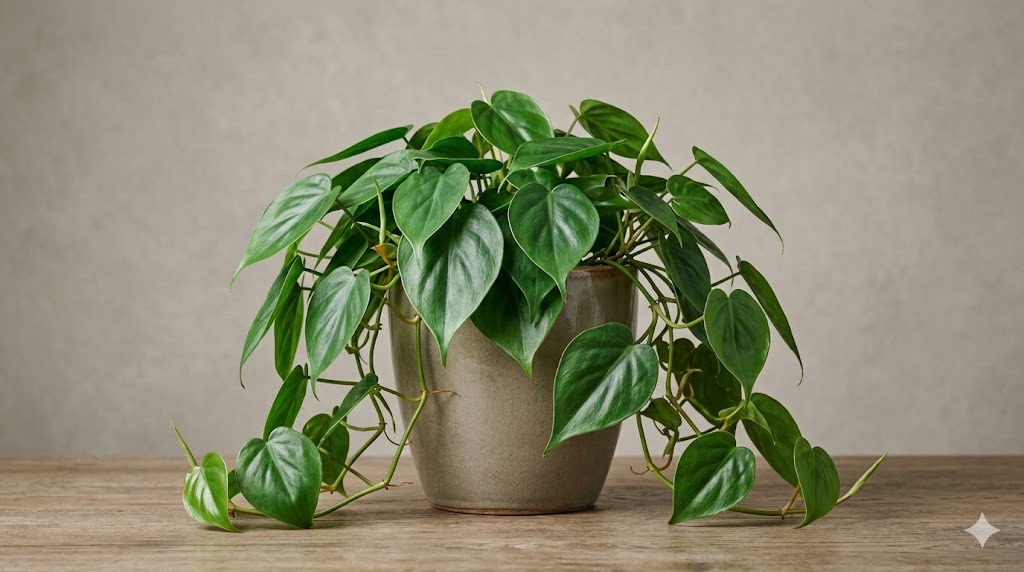
The Heartleaf Philodendron is, for many growers, the single easiest trailing houseplant in existence. With soft, glossy, heart-shaped leaves on cascading vines, it is lush, fast, adaptable, and remarkably tolerant of low light and neglect - often even more forgiving than its lookalike, Pothos. It trails beautifully from shelves and hanging pots, climbs happily up a pole, and propagates in minutes. For a beginner who wants an instantly satisfying, can't-fail green vine, this is the plant.
Origin & Natural Habitat
The Heartleaf Philodendron is native to the tropical rainforests of Central America and the Caribbean. In the wild it grows as a climbing vine, starting on the forest floor and scrambling up tree trunks toward the light, gripping the bark with aerial roots. It lives in the warm, humid, shaded understory beneath the canopy - which is exactly why it copes so well with the lower-light, stable conditions of an indoor home. The genus name Philodendron comes from the Greek for "tree-loving," a nod to its tree-climbing habit.
Appearance
The Heartleaf Philodendron has soft, thin, glossy, heart-shaped leaves - deep green and often with a slight bronze tint when they first emerge - on slender, flexible trailing or climbing stems. Indoor vines easily reach 1.5-3 m and can be trained much longer.
It is often confused with Pothos. Quick differences: Philodendron leaves are thinner, softer, and more matte, with a more elongated heart shape and a smooth texture; Pothos leaves are thicker, stiffer, waxier, and slightly puckered. New Philodendron growth often emerges from a delicate papery sheath.
Notable relatives sold under "Philodendron": 'Brasil' (heartleaf with a yellow-green stripe), 'Micans' (velvety, dark, with a bronze sheen), and 'Lemon Lime' (bright chartreuse).
Why People Love It - Qualities & Benefits
- Possibly the easiest vine there is: tolerates low light, irregular watering, and beginner mistakes - extremely hard to kill.
- Fast and lush: grows quickly and fills out, giving constant satisfying new growth.
- Versatile styling: trails from shelves and hanging pots, or climbs a moss pole for larger leaves.
- Soft, elegant foliage: the heart-shaped leaves give a softer, more romantic look than many houseplants.
- Effortless propagation: roots from cuttings in water within a couple of weeks.
- Greenery and calm: adds humidity and the proven mood-lifting effect of leafy greenery, even in dim rooms.
Care
Light
Highly adaptable. It thrives in medium to bright, indirect light and also tolerates genuinely low light better than most plants - making it excellent for darker rooms. In bright indirect light it grows fast and full; in low light it grows more slowly and can get leggy. Avoid direct sun, which scorches the soft leaves. The variegated forms (like 'Brasil') keep their color best in brighter light.
Watering
Water when the top 2-4 cm of soil is dry - typically weekly in summer, every 10-14 days in winter. It is forgiving of the occasional missed watering. Drooping, limp leaves usually mean thirst (and recover after watering); yellowing leaves usually mean overwatering. As always, avoid soggy, waterlogged soil.
Soil & Potting
Use a well-draining potting mix; a little perlite or bark improves it. Drainage holes are important. It also grows readily in plain water as a long-term display.
Humidity & Temperature
Tolerates normal room humidity but grows lusher with a little extra. Comfortable at 18-27 °C. Keep above about 13 °C and away from cold drafts.
Feeding
Feed monthly in spring and summer with a balanced liquid fertilizer at half strength. None needed in winter.
Repotting & Training
Repot every 1-2 years when roots fill the pot. To keep it full rather than leggy, prune regularly and plant the cuttings back into the same pot. Give it a moss pole to climb for noticeably larger leaves, or let it trail.
Propagation
Among the easiest of all plants to propagate. Cut a stem just below a node (the point where a leaf and a small aerial root emerge). Place the node in a glass of water; roots appear within 1-2 weeks. Pot up the rooted cutting in soil, or leave it growing in water. Every cutting needs at least one node - a lone leaf will not grow.
Common Problems & Pests
- Yellow leaves: usually overwatering; occasionally natural aging of the oldest leaves.
- Brown crispy tips/edges: underwatering or very dry air.
- Leggy vines with bare stems: too little light - move it brighter and prune to encourage branching.
- Loss of variegation: variegated forms fading to green from insufficient light.
- Pale, scorched patches: too much direct sun.
- Black mushy stems: root rot from soggy soil.
- Pests: generally resistant, but watch for spider mites, mealybugs, and aphids; wipe off and treat with insecticidal soap.
Toxicity & Safety
Toxic to cats, dogs, and humans if chewed. Like most aroids, it contains insoluble calcium oxalate crystals; chewing causes mouth and throat irritation, drooling, and vomiting. Not usually life-threatening but genuinely unpleasant. Because it trails, keep hanging pots out of reach of cats, and keep it away from small children.
Pros & Cons
Pros
- One of the easiest, most forgiving plants to grow.
- Tolerates low light well.
- Fast, lush, rewarding growth.
- Propagates in minutes.
- Versatile - trail, climb, or grow in water.
Cons
- Toxic to pets and kids if chewed.
- Gets leggy in low light without pruning.
- Soft leaves scorch in direct sun.
- Easily confused with Pothos at the store.
Best Suited For
- Complete beginners and first-time plant owners.
- Lower-light rooms where other vines struggle.
- Shelves, hanging pots, and spots for a trailing vine.
- Anyone building a collection through propagation.
Not ideal for homes with cats that chew dangling leaves, unless hung well out of reach.
FAQ
What's the difference between a Heartleaf Philodendron and Pothos? They look similar but Philodendron leaves are thinner, softer, more matte, and a more elongated heart shape; Pothos leaves are thicker, stiffer, waxier, and slightly puckered. New Philodendron growth emerges from a papery sheath. Both are easy - the Philodendron usually handles low light a little better.
Why is my Philodendron leggy with bare stems? Too little light, or it has never been pruned. Move it brighter and cut the long bare vines back - it will branch and fill out. Replant the cuttings into the same pot for a fuller plant.
Can it grow in water permanently? Yes. A Heartleaf Philodendron lives happily in a vase of water indefinitely - just refresh the water regularly and add a little diluted fertilizer now and then.
How do I make the leaves bigger? Give it a moss pole to climb. Like many climbing aroids, a Heartleaf Philodendron produces larger leaves as it ascends a support, compared with trailing loose.
Is it safe around pets? No - it is toxic to cats and dogs if chewed, causing mouth irritation and vomiting. Hang it high or keep it in a pet-free room.