Hoya (Wax Plant)
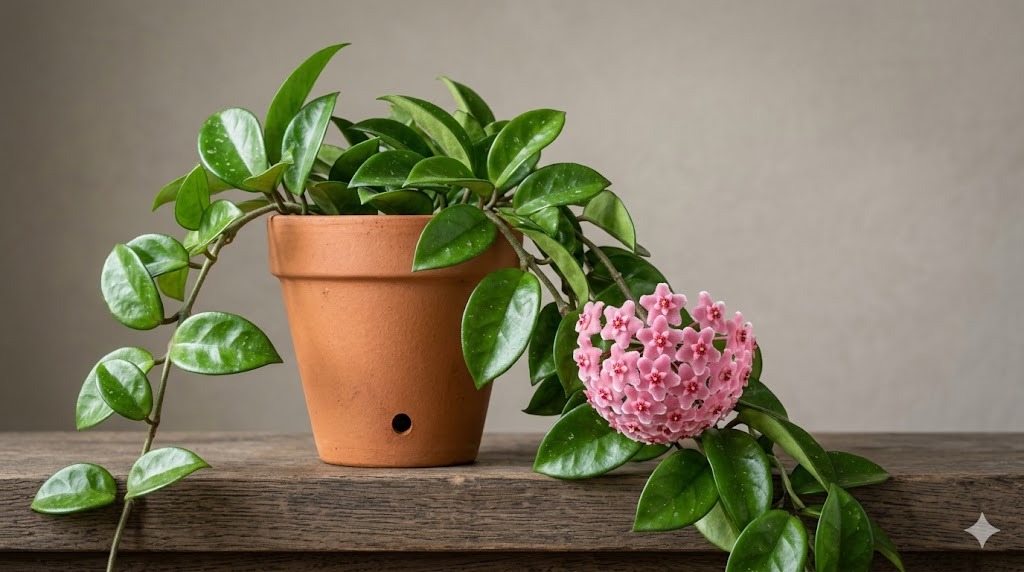
The Hoya, or Wax Plant, is a long-lived, easy-going trailing and climbing plant beloved for two things: thick, durable, often glossy leaves, and - once mature - extraordinary clusters of star-shaped flowers that look as if they were carved from porcelain or wax, frequently with a sweet evening fragrance.
🗓️ Last reviewed: June 2026
Overview
The Hoya, or Wax Plant, is a long-lived, easy-going trailing and climbing plant beloved for two things: thick, durable, often glossy leaves, and - once mature - extraordinary clusters of star-shaped flowers that look as if they were carved from porcelain or wax, frequently with a sweet evening fragrance. Hoyas are forgiving, slow but steady, and famously low-maintenance. They are also a collector's dream: hundreds of species, from tiny-leaved trailers to plants with leaves the size of a hand. A Hoya is a plant to keep for decades.
Origin & Natural Habitat
Hoyas are native to the tropical regions of Asia, Australia, and the Pacific islands. Most are epiphytes - they grow on trees, with their roots clinging to bark, in warm, humid, dappled-light conditions. They are semi-succulent: those thick leaves store water, an adaptation to the variable moisture of life perched on a branch. This epiphytic, semi-succulent origin is the key to their care - they want airy roots, bright light, and to dry out between waterings.
Appearance
Hoyas grow as trailing or twining vines with paired leaves that range enormously by species - thick and waxy, thin, fuzzy, splashed with silver, variegated in cream and pink, or curled and twisted (like the popular 'Hindu Rope', Hoya carnosa 'Compacta'). The famous flowers appear in rounded clusters (umbels) of small, star-shaped, waxy blooms, often white, pink, or red with a contrasting center, and many are fragrant. Hoya carnosa and Hoya kerrii (the "Sweetheart Plant", with heart-shaped leaves) are the most common.
Why People Love It - Qualities & Benefits
- Porcelain-like flowers: the waxy, star-shaped blooms are unique and stunning, and many are sweetly scented.
- Long-lived: Hoyas can thrive for decades, becoming heirloom plants.
- Low-maintenance: forgiving, drought-tolerant, and slow to outgrow their space.
- Huge collectible variety: hundreds of species and cultivars in every leaf form.
- Versatile: trails from shelves or climbs a trellis or hoop.
- Pet-safe: generally considered non-toxic to cats and dogs.
Care
Light
Bright, indirect light is essential - and it is the key to flowering. Some gentle direct sun (morning) is fine and encourages blooms. In low light a Hoya survives but grows slowly and will not flower. Variegated types need good light to keep their color.
Watering
As a semi-succulent epiphyte, the Hoya likes to dry out between waterings. Water thoroughly when the soil is mostly dry, then drain well - typically every 1-2 weeks in summer, less in winter. The thick leaves store water; overwatering and soggy soil cause root rot. Slightly wrinkled or soft leaves indicate thirst.
Soil & Potting
Use a chunky, very airy, fast-draining mix - an orchid-style blend of bark and perlite, or a well-amended aroid mix. Standard dense soil suffocates the epiphytic roots. Drainage holes are essential. Hoyas like to be snug in their pots and often flower better slightly root-bound - do not over-pot.
Humidity & Temperature
Appreciates moderate to high humidity but tolerates average room air. Comfortable at 18-27 °C; keep above about 13 °C and away from cold drafts.
Feeding
Feed every 2-4 weeks in spring and summer with a balanced fertilizer; a higher-phosphorus bloom fertilizer can encourage flowering.
Repotting
Repot infrequently - only every few years when very crowded - because Hoyas flower best when snug.
Flowering & the Peduncle Rule
Hoya flowers emerge from special stalks called peduncles or "spurs." The single most important Hoya rule: never cut off the peduncle after the flowers fade. The same peduncle reblooms again and again, year after year, from the exact same spot. Cutting it forces the plant to start over. Patience is also required - many Hoyas take a few years of maturity and good light before they bloom at all.
Propagation
Hoyas propagate very easily from stem cuttings. Take a cutting with one or two pairs of leaves and at least one node, and root it in water, sphagnum moss, or an airy mix - roots form over a few weeks. (Note: a single Hoya kerrii heart leaf, often sold as a novelty, will usually root and stay alive but, lacking a node, will rarely ever grow into a vining plant.)
Common Problems & Pests
- No flowers: insufficient light, an immature plant, too large a pot, or - a common mistake - the peduncles having been cut off.
- Yellowing, soft leaves: overwatering and root rot.
- Shriveled, wrinkled leaves: underwatering, or root rot preventing water uptake.
- Leggy growth with sparse leaves: too little light.
- Sticky residue / sooty mold: the flowers naturally produce sweet nectar, which can drip; pests can also cause sticky honeydew.
- Pests: mealybugs are the main enemy (often in leaf joints and new growth), along with aphids on flower buds and scale.
Toxicity & Safety
Generally considered non-toxic and pet-safe. Hoyas are widely regarded as safe for cats and dogs and are not listed as toxic by major pet-poison resources. As with any plant, discourage pets from eating large amounts of foliage; the milky sap can be a mild irritant for some people.
Pros & Cons
Pros
- Unique, beautiful, often fragrant waxy flowers.
- Long-lived - a true heirloom plant.
- Low-maintenance and forgiving.
- Generally pet-safe.
- Huge collectible variety.
Cons
- Can take years to flower.
- Won't bloom in low light.
- Easily set back by cutting off the peduncles.
- Needs an airy, special potting mix.
Best Suited For
- Patient plant owners who want long-lived, flowering greenery.
- Bright rooms and windowsills.
- Pet households.
- Collectors.
Not ideal for impatient gardeners wanting fast flowers, low-light rooms, or anyone who deadheads everything.
FAQ
Why won't my Hoya flower? Common reasons: not enough light, the plant is still too young (many take a few years), the pot is too big, or - very often - the peduncles were cut off. Give it bright light, keep it snug, be patient, and never remove the flower stalks.
Should I cut off the old flower stalk? No - never. Hoya flowers grow from peduncles that rebloom from the same spot, year after year. Cutting them off removes future flowers. Leave every peduncle intact, even when it looks bare.
Why are my Hoya's leaves wrinkled? Usually underwatering - give it a thorough drink and the thick leaves should plump up. If watering doesn't help, suspect root rot from earlier overwatering, where damaged roots can't take up water.
Is the Hoya safe for pets? Hoyas are generally considered non-toxic and pet-safe for cats and dogs. They are not listed as toxic by major pet-poison resources.
Can I grow a Hoya from a single heart-shaped leaf? The novelty Hoya kerrii single leaf will usually root and survive as a cute heart, but because it has no node, it almost never grows into a full vine. For a real plant, propagate from a stem cutting that includes a node.