Indoor Citrus (Dwarf Lemon, Lime & Calamondin)
Indoor Citrus brings something few houseplants can: fragrant flowers, glossy evergreen leaves, and real, edible fruit - all on a sunny windowsill.
🗓️ Last reviewed: June 2026
Overview
Indoor Citrus brings something few houseplants can: fragrant flowers, glossy evergreen leaves, and real, edible fruit - all on a sunny windowsill. Dwarf varieties of lemon (especially the famous Meyer Lemon), lime, and the small ornamental Calamondin orange are bred or grown to stay compact enough for pots. The reward is genuine: jasmine-scented blossom that perfumes a room, and home-grown citrus fruit. The trade-off is that citrus is more demanding than the average houseplant - it is a fruiting tree, and it wants a lot of light and consistent care.
Origin & Natural Habitat
Citrus trees originated in the subtropical and tropical regions of Southeast Asia. They evolved in warm, sunny, humid climates with rich, well-drained soil and plentiful light year-round. There is no such thing as a low-light citrus - bright sun is fundamental to how these trees grow and fruit. Bringing one indoors means recreating as much of that bright, warm, humid environment as possible.
Appearance
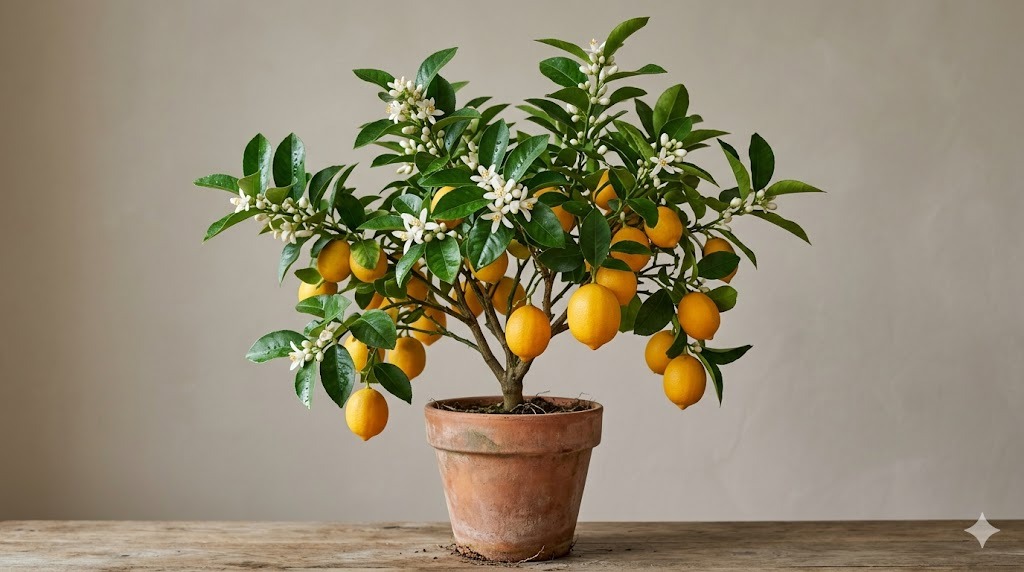
Indoor citrus are compact evergreen shrubs or small trees with glossy, deep-green, aromatic leaves (crush one and it smells of citrus). They bear fragrant white (sometimes purple-tinged) star-shaped flowers, followed by green fruit that ripens to yellow, green, or orange. Common types: Meyer Lemon (the classic indoor lemon, sweeter and less acidic), Kaffir/Makrut Lime and other dwarf limes, and Calamondin (a small, very ornamental, tart orange that fruits heavily). Indoors, in pots, they are usually kept 0.6-1.5 m with pruning.
Why People Love It - Qualities & Benefits
- Real, edible fruit: home-grown lemons, limes, or calamondins from your own windowsill.
- Intensely fragrant flowers: citrus blossom perfumes a whole room.
- Evergreen and handsome: glossy aromatic foliage year-round.
- Flowers and fruit together: citrus often carries blossom and fruit at the same time.
- A productive plant: combines beauty with a genuine harvest.
- Compact with pruning: dwarf types stay pot-sized.
Care
Light
This is the most important factor. Citrus needs as much light as possible - a minimum of 6-8 hours of direct sun a day. A south-facing window is essential; many indoor growers add a grow light, especially in winter. Insufficient light is the number-one reason indoor citrus fails to thrive, flower, or fruit. Moving it outside to a sunny spot in summer (after acclimating) greatly benefits it.
Watering
Water thoroughly when the top 3-5 cm of soil is dry, then drain completely. Citrus wants consistent moisture but hates soggy, waterlogged roots - root rot is a serious risk, while drought stress causes leaf drop. Aim for evenly moist, well-drained. Inconsistent watering is a common cause of flower and fruit drop.
Soil & Potting
Use a well-draining, slightly acidic potting mix (a citrus-specific mix is ideal). A pot with excellent drainage is essential. Do not over-pot.
Humidity & Temperature
Prefers moderate humidity; dry indoor winter air can stress it and invite pests. Comfortable at 18-28 °C in the growing season. It needs warmth but tolerates a cooler (not freezing) winter rest; protect it from frost and cold drafts. Most dwarf citrus are not frost-hardy.
Feeding
Citrus are heavy feeders. Use a dedicated citrus fertilizer (high in nitrogen, with micronutrients like iron, zinc, and magnesium) regularly through the growing season, following the product rate. Citrus are prone to nutrient deficiencies - yellowing leaves with green veins often signal a lack of iron or magnesium.
Pollination
Outdoors, insects pollinate citrus. Indoors, blossom may need a hand: gently transfer pollen between flowers with a small soft brush to improve fruit set.
Repotting & Pruning
Repot every 2-3 years. Prune to maintain shape and size and to remove weak growth. Remove any thorns or suckers as desired.
Propagation
Citrus is usually propagated commercially by grafting named varieties onto sturdy rootstock - which is why bought plants fruit well and reliably. At home, stem cuttings can be rooted with warmth and humidity. Growing from seed (pips) is possible and fun, but seed-grown citrus can take many years to fruit, may not come true to the parent, and are best treated as a long-term curiosity.
Common Problems & Pests
- Leaf drop: citrus drops leaves under stress - inconsistent watering, too little light, cold drafts, or sudden change.
- Flower and fruit drop: some natural drop is normal (a tree cannot ripen every flower), but heavy drop signals stress - erratic watering, low light, or temperature swings.
- Yellowing leaves: overwatering, or - very commonly - nutrient deficiency (iron, magnesium, zinc); look at the pattern of yellowing.
- No flowers/fruit: insufficient light, or an immature plant.
- Pests: citrus are notably pest-prone indoors - spider mites, scale, mealybugs, and aphids are all common. Inspect frequently and treat promptly.
Toxicity & Safety
Mildly toxic to cats and dogs. Citrus plants contain essential oils and compounds (such as psoralens and limonene/linalool) that are irritating to pets; chewing the leaves, peel, or fruit can cause vomiting, diarrhea, drooling, and depression. The fruit is, of course, edible and healthy for humans. Keep the plant away from pets that chew foliage.
Pros & Cons
Pros
- Real, edible home-grown fruit.
- Intensely fragrant blossom.
- Glossy, evergreen, aromatic foliage.
- Often flowers and fruits at once.
Cons
- Demands lots of direct sun - often a grow light is needed.
- A heavy feeder, prone to nutrient deficiencies.
- Pest-prone indoors (mites, scale).
- Drops leaves, flowers, and fruit when stressed.
- Mildly toxic to pets.
Best Suited For
- Sunny south-facing windows (or grow-light setups).
- Anyone wanting a productive, fragrant, edible plant.
- Gardeners willing to feed and tend it attentively.
- Homes that can move it outdoors for summer.
Not ideal for low-light homes, beginners wanting easy care, or pet households with leaf-chewers.
FAQ
How much light does indoor citrus need? A lot - at least 6-8 hours of direct sun daily. A south-facing window is essential, and many growers add a grow light, especially in winter. Insufficient light is the main reason indoor citrus fails to flower or fruit.
Why is my citrus dropping its leaves (or flowers and fruit)? Citrus drops leaves and fruit under stress - usually inconsistent watering, too little light, cold drafts, or sudden change. Some natural fruit drop is normal, but heavy drop means something is wrong. Stabilize the light, watering, and temperature.
Why are the leaves yellowing? Either overwatering, or - very commonly with citrus - a nutrient deficiency such as iron or magnesium. Citrus are heavy feeders; use a proper citrus fertilizer with micronutrients, and check whether the soil is staying too wet.
Do I need to pollinate the flowers myself? Indoors, often yes. Without insects, gently brush pollen between the flowers with a small soft brush to improve fruit set.
Is indoor citrus safe for pets? It is mildly toxic to cats and dogs - the leaves and peel contain irritating oils and compounds that can cause vomiting and diarrhea if chewed. Keep the plant away from pets (the fruit itself is fine for people).