Kalanchoe (Kalanchoe blossfeldiana)
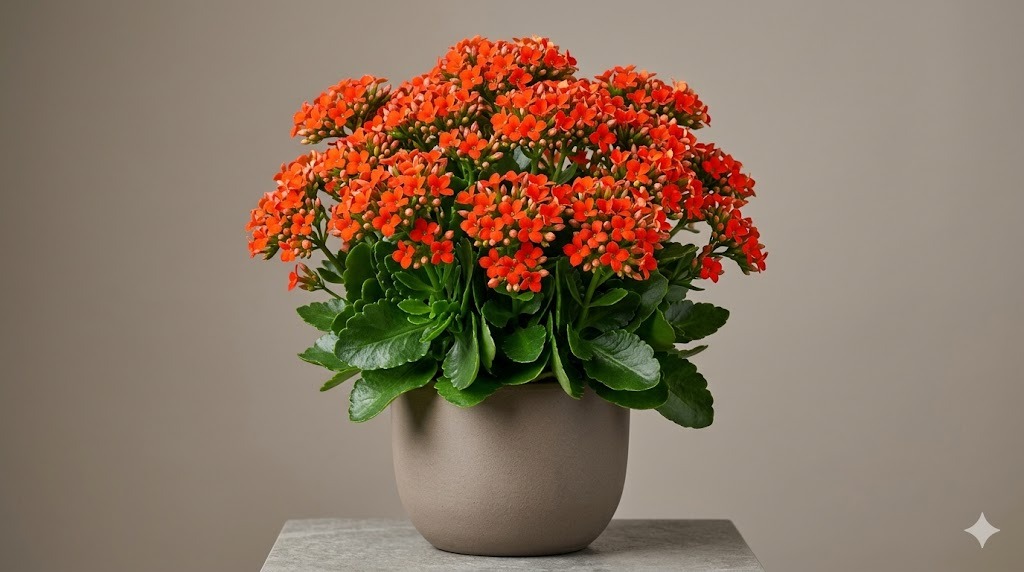
The Flaming Katy Kalanchoe is the cheerful, easy succulent that you buy already bursting with flowers - dense clusters of tiny, long-lasting blooms in red, orange, yellow, pink, and white, sitting above neat, glossy, scalloped leaves.
🗓️ Last reviewed: June 2026
Overview
The Flaming Katy Kalanchoe is the cheerful, easy succulent that you buy already bursting with flowers - dense clusters of tiny, long-lasting blooms in red, orange, yellow, pink, and white, sitting above neat, glossy, scalloped leaves. It is inexpensive, widely sold (especially in winter and spring), and almost foolproof to keep alive: as a succulent, it thrives on sun and minimal water. The one challenge is getting it to rebloom the following year, which - like a Christmas Cactus - depends on giving it a spell of long, dark nights.
Origin & Natural Habitat
Kalanchoe blossfeldiana is native to Madagascar, where it grows in dry, rocky, sun-baked conditions. It is a true succulent, storing water in its thick, fleshy leaves to survive drought. Its hot, sunny, arid origin is the whole care guide: lots of light, gritty soil, infrequent watering. (The genus Kalanchoe is large and includes other popular plants, such as the "Mother of Thousands"; this guide covers the common flowering Flaming Katy.)
Appearance
Kalanchoe blossfeldiana forms a compact, bushy mound, usually 20-40 cm tall, of thick, glossy, dark-green leaves with scalloped edges. Above the foliage it produces dense, rounded clusters of small four-petaled flowers - single or double - in vivid red, orange, yellow, pink, magenta, and white. The blooms last for many weeks, often two months or more.
Why People Love It - Qualities & Benefits
- Long-lasting flowers: a single bloom display lasts many weeks - exceptional value.
- Bright, cheerful color: vivid blooms in a wide range of shades.
- Easy succulent care: sun-loving, drought-tolerant, low-maintenance.
- Compact and affordable: small, inexpensive, and widely available.
- Winter color: commonly sold and blooming in the darker months, brightening the home.
- Easy to propagate: roots readily from leaf and stem cuttings.
Care
Light
Bright light, including several hours of direct sun, is ideal - a sunny windowsill. Good light keeps the plant compact and is essential for healthy blooming. In low light it grows leggy, pale, and weak, and will not flower well.
Watering
Water as a succulent: thoroughly, then only again when the soil is completely dry - roughly every 1-2 weeks in summer, less in winter. The fleshy leaves store water; overwatering causes soft, mushy stems and leaves and root rot, the main cause of death. Water the soil, not the flowers or the center of the plant. When in doubt, wait.
Soil & Potting
Use a gritty, fast-draining cactus or succulent mix. Drainage holes are essential.
Humidity & Temperature
Prefers normal-to-dry air. Comfortable at 15-27 °C. Not frost-hardy - keep above about 10 °C.
Feeding
Feed lightly every 4-6 weeks during the growing season with a diluted succulent or balanced fertilizer; a bloom-supporting fertilizer helps before flowering.
Grooming
Deadhead spent flower clusters - snip them off once faded - to keep the plant tidy and encourage it to put energy into new growth and future blooms.
Getting It to Rebloom
Kalanchoe is a short-day plant: it sets flower buds in response to long nights. Many people treat it as a "buy, enjoy, discard" plant because reblooming seems hard - but it is straightforward:
- After the flowers fade, deadhead and let the plant rest and grow for a while.
- To trigger new buds, give it about 6 weeks of long nights - roughly 14 hours of complete darkness each night (a dark room or a box/cover over it in the evenings) - with bright light during the day.
- Cool-ish nights help. Once buds appear, return it to normal bright light and enjoy the next display.
Propagation
Very easy. Take a stem cutting or even a single leaf, let the cut end callus for a day or two, then place it in dry succulent mix. Water sparingly until rooted. Stem cuttings root faster; leaves work for many Kalanchoes too. Spring is a good time.
Common Problems & Pests
- Soft, mushy stems and leaves: overwatering and root rot - the classic killer.
- Leggy, pale, stretched growth: not enough light.
- No reblooming: the plant did not get the long-night period needed to set buds.
- Shriveled leaves: underwatering (less common).
- Faded flowers: natural end of the bloom cycle - deadhead them.
- Pests: mealybugs, aphids (often on flower buds), and occasionally scale.
Toxicity & Safety
Toxic to cats and dogs. Kalanchoe contains compounds (bufadienolides) that affect the heart; ingestion causes vomiting, diarrhea, and, in larger amounts, more serious effects on heart rhythm. It is one of the more concerning common houseplants for pets - keep it well out of their reach.
Pros & Cons
Pros
- Long-lasting, vivid flowers.
- Easy succulent care.
- Compact, cheap, widely available.
- Brings color in the darker months.
- Easy to propagate.
Cons
- Toxic to cats and dogs (heart effects).
- Rots quickly if overwatered.
- Needs a long-night period to rebloom.
- Goes leggy in low light.
Best Suited For
- Bright, sunny windowsills.
- Beginners wanting easy, long-lasting flowers.
- Anyone wanting affordable winter/spring color.
- Succulent lovers.
Not ideal for dark rooms, overwaterers, or pet households with plant-eaters.
FAQ
How often should I water a Kalanchoe? As a succulent - thoroughly, then only when the soil is completely dry, roughly every 1-2 weeks in summer and less in winter. Overwatering, causing mushy stems and rot, is the main way it dies.
Why won't my Kalanchoe flower again? Kalanchoe sets buds in response to long nights. To rebloom it, give it about 6 weeks of roughly 14 hours of complete darkness each night (cover it in the evenings or use a dark room), with bright light by day. Without that long-night period, it will not reliably rebloom.
Why is my Kalanchoe leggy and pale? Not enough light. Move it to a bright, sunny windowsill - it needs direct sun to stay compact and bloom well.
Is the Kalanchoe safe for pets? No - Kalanchoe is toxic to cats and dogs, containing compounds that can affect the heart. It is one of the more concerning houseplants for pets, so keep it well out of reach.
Can I keep my Kalanchoe after it finishes flowering? Yes - it is a perennial succulent, not disposable. Deadhead the spent flowers, keep growing it with bright light and minimal water, and use the long-night method to bring on a new bloom.