Kentia Palm (Howea forsteriana)
The Kentia Palm is the elegant, upright indoor palm of grand hotels, conservatories, and stylish living rooms - a tall, graceful plant with arching, deep-green fronds that radiate calm sophistication.
🗓️ Last reviewed: June 2026
Overview
The Kentia Palm is the elegant, upright indoor palm of grand hotels, conservatories, and stylish living rooms - a tall, graceful plant with arching, deep-green fronds that radiate calm sophistication. It has been a prized houseplant since the Victorian era, valued because it is both beautiful and unusually tolerant of indoor conditions. It handles lower light, cooler rooms, and a degree of neglect better than most palms, and it is pet-safe. It is slow-growing and not cheap, but a Kentia Palm is a long-term investment in a genuinely elegant, easygoing statement plant.
Origin & Natural Habitat
Howea forsteriana is native to Lord Howe Island, a small island off the coast of Australia in the Pacific - and it grows there, and almost nowhere else, naturally. On the island it grows in a mild, humid, frost-free climate, often in sandy, shaded-to-bright understory conditions. Almost all Kentia Palms in the world are grown from seed exported from Lord Howe Island. Its mild, adaptable island origin explains its famous tolerance of indoor life.
Appearance
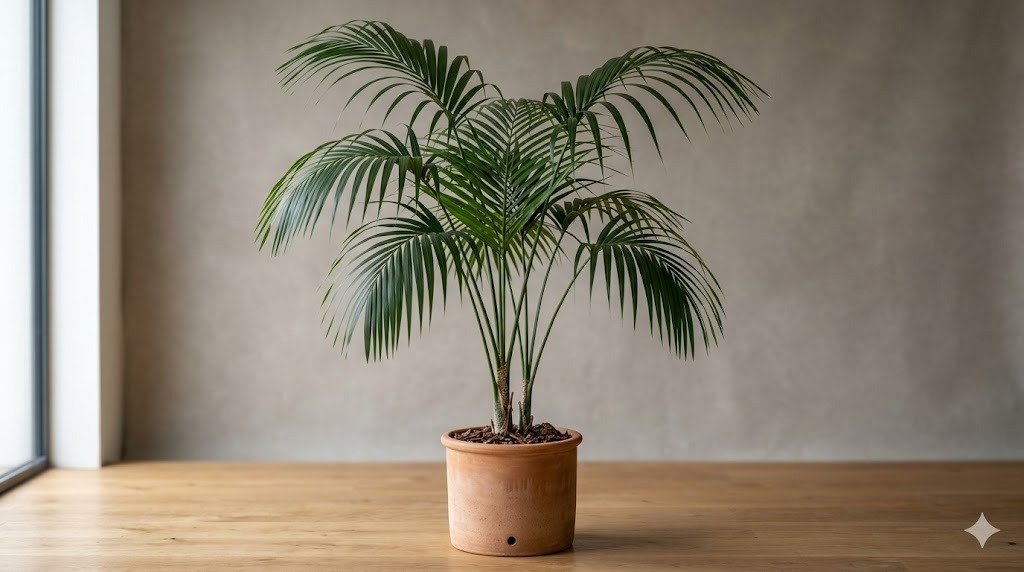
The Kentia Palm has slender, dark-green, upright stems topped with long, gracefully arching fronds divided into many narrow, drooping leaflets. It has an elegant, slightly weeping form. Indoors it grows slowly, eventually reaching 1.8-3 m, and is often sold with several plants grouped in one pot for a full look.
Why People Love It - Qualities & Benefits
- Timeless elegance: the upright, arching form has a refined, sophisticated, classic look.
- Tolerant of indoor conditions: handles lower light, cooler rooms, and some neglect better than most palms.
- Pet-safe: non-toxic to cats and dogs.
- Statement greenery: fills a corner with graceful height.
- Long-lived: a Kentia Palm can thrive for decades.
- Air quality: a strong performer in NASA's Clean Air Study.
Care
Light
Adaptable - it prefers bright, indirect light but tolerates medium and even fairly low light better than most palms, which is a large part of its appeal. Avoid harsh direct sun, which scorches the fronds. In a brighter spot it grows a little faster and fuller.
Watering
Water when the top 3-5 cm of soil is dry - typically every 1-2 weeks, less in winter. The Kentia Palm dislikes both soggy soil (root rot) and complete drying out. Aim for lightly moist and well-drained; let excess drain fully.
Soil & Potting
Use a well-draining potting mix. Drainage holes are essential. Kentia Palms dislike root disturbance, so repot infrequently.
Humidity & Temperature
Tolerates normal room humidity but appreciates moderate humidity; dry air contributes to brown frond tips. Comfortable at 16-24 °C and tolerant of cooler rooms; keep above about 10 °C and away from cold drafts and heating vents.
Feeding
Feed lightly every 6-8 weeks in spring and summer with a balanced fertilizer. It is slow-growing and needs little.
Repotting
Repot only every 2-3 years, or when truly crowded - it resents having its roots disturbed, so handle it gently and infrequently.
Propagation
The Kentia Palm cannot practically be propagated at home. It grows only from seed, which is slow and difficult, and it does not grow from cuttings. The multi-stem pots sold in shops are several seed-grown plants, not divisions, and dividing them damages the sensitive roots. Kentia Palms are bought, not propagated - which is part of why they are relatively expensive.
Common Problems & Pests
- Brown frond tips: dry air, inconsistent watering, tap-water chemicals, or over-fertilizing.
- Yellowing fronds: overwatering (most common), underwatering, or too little light.
- Brown, mushy stem base: root rot from soggy soil.
- Spider mites: common on indoor palms in dry air - inspect frond undersides regularly.
- Other pests: scale and mealybugs.
Toxicity & Safety
Non-toxic and pet-safe. The Kentia Palm is considered safe for cats, dogs, and humans - an elegant, large, pet-safe palm for any home.
Pros & Cons
Pros
- Timeless, elegant, sophisticated form.
- Tolerates lower light and cooler rooms.
- Non-toxic and pet-safe.
- Long-lived statement plant.
Cons
- Slow-growing.
- Relatively expensive.
- Brown tips common with dry air or hard water.
- Prone to spider mites; dislikes root disturbance.
Best Suited For
- Anyone wanting an elegant, classic statement palm.
- Bright to moderately-lit rooms.
- Pet households.
- Owners who value a long-term, low-fuss plant.
Not ideal for anyone wanting fast growth, a bargain plant, or a sunny windowsill spot.
FAQ
Why is my Kentia Palm getting brown tips? Usually dry air, inconsistent watering, hard tap water, or over-feeding. Raise humidity, water consistently, use filtered water, and feed lightly. Trim brown tips with scissors for appearance.
Can a Kentia Palm grow in low light? It prefers bright, indirect light, but it tolerates medium and even fairly low light better than most palms - one of the main reasons it has been a prized indoor plant for over a century. It just grows more slowly in lower light.
Why are the fronds yellowing? Most often overwatering. Let the top few centimeters of soil dry before watering and ensure good drainage. Underwatering and too little light can also cause yellowing.
Is the Kentia Palm safe for pets? Yes - it is non-toxic and pet-safe for cats and dogs.
Why are Kentia Palms expensive? They grow only from seed, very slowly, and the seed comes almost exclusively from one small island. That slow, limited production makes them pricier than fast-grown palms - but it buys you a long-lived, elegant plant.