Lucky Bamboo (Dracaena sanderiana)
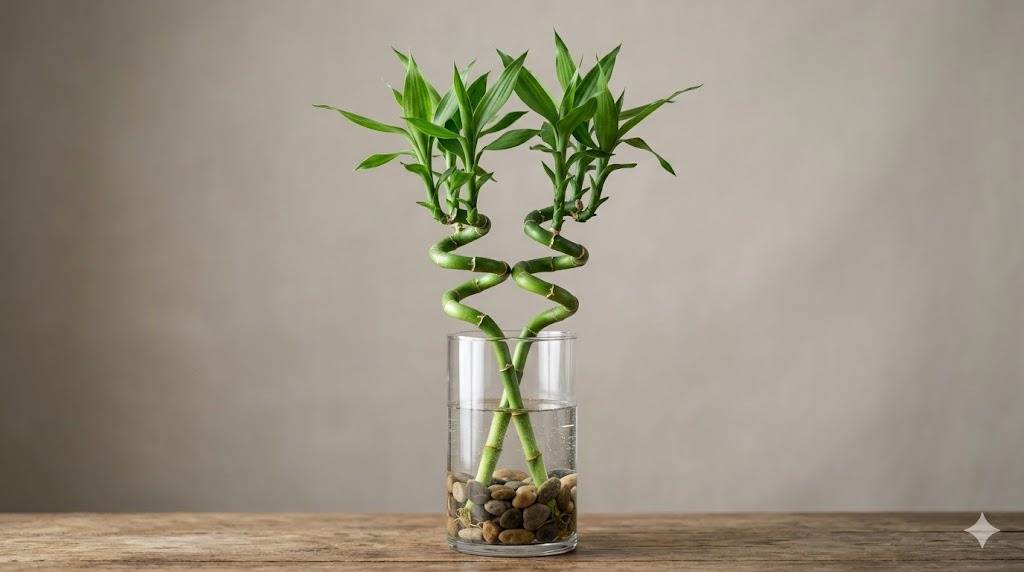
Lucky Bamboo is the green stalks you see growing in a vase of water and pebbles on desks, shop counters, and windowsills everywhere - a symbol of good fortune, prosperity, and positive energy in feng shui.
🗓️ Last reviewed: June 2026
Overview
Lucky Bamboo is the green stalks you see growing in a vase of water and pebbles on desks, shop counters, and windowsills everywhere - a symbol of good fortune, prosperity, and positive energy in feng shui. Here is the surprise: it is not bamboo at all. It is a species of Dracaena, an easy, tough houseplant that happens to grow well in plain water. Inexpensive, forgiving, and pet-unfriendly only if chewed, Lucky Bamboo is a charming, low-effort, symbolic plant - as long as you understand its one real weakness: tap water.
Origin & Natural Habitat
Lucky Bamboo is Dracaena sanderiana, native to the tropical rainforests of Central Africa, particularly Cameroon. In the wild it is a leafy understory shrub growing in warm, humid, shaded conditions. It is not related to true bamboo (Bambusoideae grasses) - the name comes purely from the resemblance of its segmented green stalks. Its association with luck comes from feng shui, where the number of stalks carries different meanings (commonly: three for happiness, five for wealth, and so on; the number four is traditionally avoided).
Appearance
Lucky Bamboo has upright, jointed, green stalks (canes), each topped with a tuft of strappy green leaves. The canes are often sold straight, but they are also famously trained into spirals, curls, and woven shapes - this is done by rotating the growing stalk near a light source so it bends, a slow nursery process. It is commonly grown in water with decorative pebbles, or in soil. Sizes range from tiny desk arrangements to canes over 1 m.
Why People Love It - Qualities & Benefits
- Symbol of luck and prosperity: a meaningful, popular gift, rooted in feng shui tradition.
- Grows in water: no soil needed - clean, simple, and decorative.
- Very easy and forgiving: tolerates low light and neglect.
- Compact and versatile: fits any desk, counter, or windowsill.
- Sculptural shapes: spirals and woven forms are striking.
- Inexpensive: cheap, widely available, and easy to gift.
Care
Light
Bright, indirect light is ideal. It tolerates low to medium light well, making it a good desk and office plant. Avoid direct sun, which scorches the leaves and yellows the canes.
Water (the key factor)
This is the make-or-break point. Lucky Bamboo is sensitive to chlorine, fluoride, and salts in tap water - these cause brown leaf tips and edges, the most common complaint.
- In water: use distilled, filtered, or rainwater - or tap water left out 24 hours to off-gas chlorine. Keep the roots covered (about 2-5 cm of water). Change the water every 1-2 weeks to keep it fresh and prevent rot and odor.
- In soil: keep the soil consistently lightly moist, and use the same low-chemical water.
Container & Medium
Grown in water, it needs only a vase with pebbles to hold the canes upright. Grown in soil, use a well-draining potting mix in a pot with drainage holes.
Humidity & Temperature
Tolerates normal room humidity. Comfortable at 18-27 °C; keep above about 13 °C and away from cold drafts.
Feeding
Feed very sparingly - a drop of diluted fertilizer (or a specialist Lucky Bamboo fertilizer) every couple of months. Plants in plain water especially need a little feeding, but over-feeding causes algae and leaf burn.
Propagation
Propagated from stem cuttings. Cut a healthy section of cane that includes a node, remove lower leaves, and place it in clean water - roots and new shoots form over a few weeks. A cutting that includes the leafy top will continue growing; a section of bare cane can also sprout. This is easy and reliable.
Common Problems & Pests
- Brown leaf tips/edges: the classic problem - chlorine, fluoride, or salts in tap water. Switch to filtered, distilled, or left-out water.
- Yellowing canes or leaves: too much direct sun, over-fertilizing, poor (stale) water, or chemicals in the water. A yellowing cane is often a bad sign - remove it so it doesn't affect the rest.
- Mushy, soft, rotting cane base: stale water, rot - change water regularly.
- Algae in the vase: light plus nutrients - use an opaque container, change water, clean pebbles.
- Pests: uncommon, but mealybugs and mites occasionally appear.
Toxicity & Safety
Toxic to cats and dogs. Despite the harmless-looking name, Lucky Bamboo is a Dracaena, and Dracaenas are toxic to pets - chewing causes vomiting, drooling, and lethargy, and cats can be especially affected. (True bamboo is non-toxic, but this is not true bamboo.) Keep it away from pets. It is generally considered non-toxic to humans but should not be eaten.
Pros & Cons
Pros
- Easy, forgiving, low-light tolerant.
- Grows in plain water - no soil needed.
- Symbolic gift of luck and prosperity.
- Compact and inexpensive.
- Sculptural trained shapes.
Cons
- Toxic to cats and dogs (it's a Dracaena, not real bamboo).
- Very sensitive to tap-water chemicals - brown tips are common.
- Water must be changed regularly to prevent rot.
- A yellowing cane usually can't be saved.
Best Suited For
- Desks, offices, counters, and small spaces.
- Beginners wanting an easy, symbolic plant.
- Anyone wanting a soil-free, water-grown plant.
- Gift-giving.
Not ideal for pet households with leaf-chewers, or anyone unwilling to use filtered water and change it regularly.
FAQ
Is Lucky Bamboo actually bamboo? No. Despite the name and look, it is not bamboo at all - it is Dracaena sanderiana, a type of Dracaena. The name comes only from the resemblance of its segmented stalks.
Why are the leaf tips turning brown? Almost always chemicals in tap water - chlorine, fluoride, and salts. Lucky Bamboo is very sensitive to them. Use distilled, filtered, or rainwater, or leave tap water out for 24 hours before using it.
How often do I change the water? Every one to two weeks. Fresh water prevents rot, odor, and algae. Keep the roots covered with about 2-5 cm of clean, low-chemical water.
Why is one of my canes turning yellow? Yellowing canes usually result from too much sun, stale or chemical-laden water, or over-feeding. A yellowing cane rarely recovers - remove it promptly so the problem doesn't spread to healthy canes.
Is Lucky Bamboo safe for pets? No - it is a Dracaena, and Dracaenas are toxic to cats and dogs (the "bamboo" name is misleading). Keep it away from pets.