Maidenhair Fern (Adiantum)
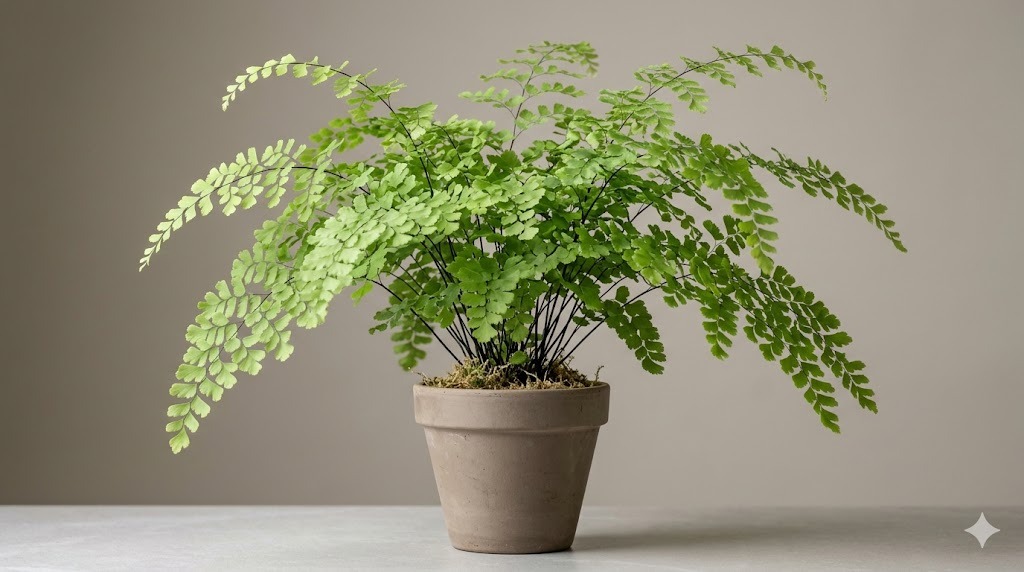
The Maidenhair Fern is, by common agreement, one of the most beautiful houseplants there is - delicate, airy fronds of tiny, fan-shaped leaflets on fine, glossy black stems, with a soft, lacy, almost weightless look.
🗓️ Last reviewed: June 2026
Overview
The Maidenhair Fern is, by common agreement, one of the most beautiful houseplants there is - delicate, airy fronds of tiny, fan-shaped leaflets on fine, glossy black stems, with a soft, lacy, almost weightless look. It is also, by equally common agreement, one of the most demanding. The Maidenhair Fern lives or dies by moisture and humidity: it cannot dry out, not even once, and it hates dry indoor air. This is a plant for someone who genuinely wants a challenge and a showpiece - and who can give it the constant, attentive, humid care it requires.
Origin & Natural Habitat
Adiantum ferns are found in moist, shaded places around the world, often near water - beside streams and waterfalls, on damp rocks, and in humid forest crevices. They live in environments of constant moisture, high humidity, gentle filtered light, and stable mild temperatures. This is the entire explanation of their care, and their reputation: a plant adapted to a perpetually damp, humid streamside simply cannot cope with a normal dry living room.
Appearance
The Maidenhair Fern has fronds composed of many small, delicate, fan- or wedge-shaped bright-green leaflets, held on distinctive thin, wiry, glossy-black stems. The overall effect is light, lacy, and graceful - the fronds seem to float. New fronds unfurl in soft, pale green. Plants stay compact, usually 20-45 cm tall and wide.
Why People Love It - Qualities & Benefits
- Exceptional beauty: few plants match its delicate, airy, lacy elegance.
- Soft, graceful texture: brings a light, romantic, refined feel to a room.
- Pet-safe: non-toxic to cats and dogs.
- Compact: stays a manageable size.
- A rewarding showpiece: a thriving Maidenhair Fern is a real point of pride.
Care
Light
Bright, indirect light, or medium light - never direct sun, which scorches the delicate fronds almost instantly. It evolved in shaded, filtered light. A north or east window, or a bright spot away from the sun's direct path, is ideal.
Watering
This is the make-or-break factor. The Maidenhair Fern must be kept consistently, evenly moist at all times - the soil should never dry out, not even briefly. If it dries out completely, the fronds rapidly go crispy and brown, and that foliage will not recover. At the same time, it must not sit in waterlogged, stagnant water. The practical answer is checking it often and watering frequently - sometimes every day or two - to keep the soil reliably moist. Many growers use self-watering pots or sit the pot on a constantly damp pebble tray.
Soil & Potting
Use a rich, moisture-retentive but still draining potting mix. Drainage holes are essential - moist, not soggy.
Humidity & Temperature
Very high humidity is essential - this is the other half of why it has its reputation. Aim for 60-70%+. In normal dry indoor air, the Maidenhair Fern browns and crisps relentlessly. Misting is not nearly enough. The reliable solutions are: a humidifier, a terrarium or glass case, or a consistently humid bathroom. Keep it warm and stable: 18-24 °C, away from cold drafts, heating vents, and dry air currents.
Feeding
Feed lightly - every 4-6 weeks in the growing season - with a diluted balanced fertilizer. It is sensitive to fertilizer salts, so keep it weak.
Grooming
If the plant browns badly, do not give up: cut all the damaged fronds right back to the base. A Maidenhair Fern with healthy roots and good conditions will often push out a flush of fresh new fronds.
Propagation
Propagated by division of the root ball: at repotting, gently separate the clump into sections, each with fronds and roots, and pot them up. Keep divisions especially warm, moist, and humid while they recover, as division is stressful for this delicate plant. It also grows from spores in nature, but division is the practical home method.
Common Problems & Pests
- Crispy, brown, shriveled fronds: the signature problem - caused by the soil drying out (even once) or low humidity. The damaged fronds will not recover; cut them off and improve conditions for new growth.
- Scorched, pale fronds: direct sun.
- Yellowing, wilting, or whole-plant collapse: drying out, or - if waterlogged and stagnant - rot.
- Browning leaf edges: dry air, drafts, or fertilizer salt build-up.
- Pests: generally not very pest-prone, but spider mites can appear in dry air, along with scale and mealybugs.
Toxicity & Safety
Non-toxic and pet-safe. The Maidenhair Fern is considered safe for cats, dogs, and humans - one of the few genuinely delicate, beautiful plants that is also pet-safe.
Pros & Cons
Pros
- Exceptionally beautiful - delicate, lacy, elegant.
- Soft, graceful, romantic texture.
- Non-toxic and pet-safe.
- Compact.
Cons
- Very demanding - one of the fussiest houseplants.
- Cannot dry out, ever - needs near-constant moisture.
- Needs very high humidity; crisps in dry air.
- Not remotely a beginner plant.
Best Suited For
- Experienced, attentive plant owners who want a challenge.
- Terrariums, glass cases, and consistently humid bathrooms.
- Homes with a humidifier.
- Pet households wanting a delicate, safe plant - if conditions allow.
Not ideal for beginners, dry homes, forgetful waterers, travelers, or anyone wanting an easy plant.
FAQ
Why does my Maidenhair Fern keep turning brown and crispy? The two classic causes: the soil dried out (even once, even briefly), or the air is too dry. The Maidenhair Fern must be kept constantly, evenly moist, and needs very high humidity. Crisped fronds will not recover - cut them off, fix the conditions, and wait for new growth.
How often do I water a Maidenhair Fern? Often - whatever it takes to keep the soil consistently, evenly moist and never dry. In practice that can mean every day or two. Many growers use self-watering pots or a constantly damp pebble tray to keep up.
My Maidenhair Fern looks completely dead - can it recover? Possibly. If the roots are still alive, cut every brown frond back to the base, keep the soil consistently moist, raise the humidity, and be patient. Maidenhair Ferns often push out fresh fronds from a healthy root system.
Is the Maidenhair Fern safe for pets? Yes - it is non-toxic and pet-safe for cats and dogs.
Is the Maidenhair Fern good for beginners? No - it is one of the most demanding common houseplants. It needs constant moisture and very high humidity, and it punishes any lapse. Beginners should start with easier plants and only attempt this one with a humidifier or terrarium.