Nerve Plant (Fittonia)
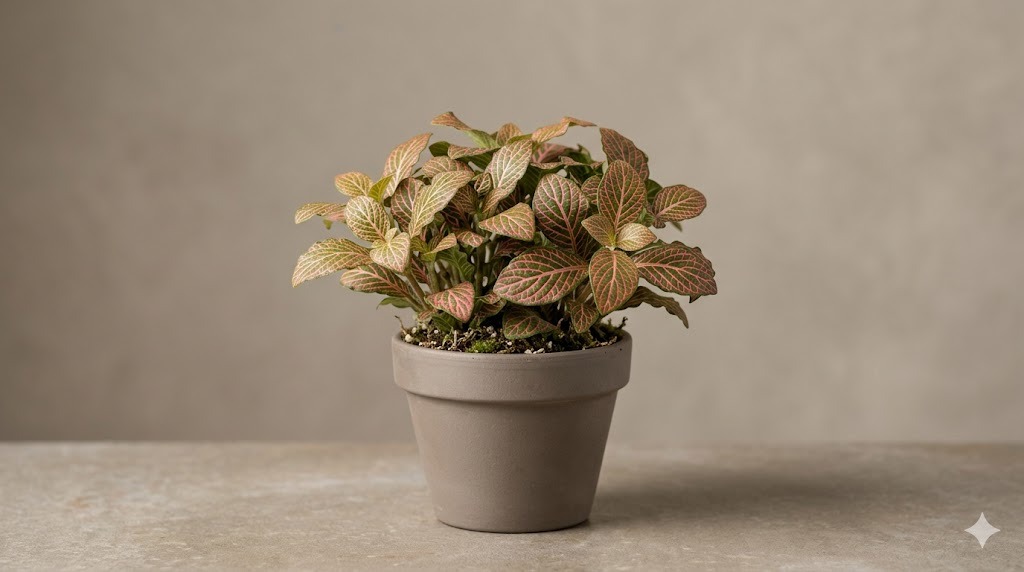
The Nerve Plant is a small, vivid, dramatic little houseplant - its olive-green leaves are laced with a fine network of bright white, pink, or red veins, like delicate stitching.
🗓️ Last reviewed: June 2026
Overview
The Nerve Plant is a small, vivid, dramatic little houseplant - its olive-green leaves are laced with a fine network of bright white, pink, or red veins, like delicate stitching. It is compact, colorful, and pet-safe, and it has one famous, unmistakable habit: when it gets too dry, the whole plant dramatically faints, collapsing flat - then springs back to life within hours of watering. That theatrical "fainting" makes it surprisingly easy to read, but it also means the Nerve Plant has firm opinions: it craves humidity and steady moisture, and it punishes neglect. It is a perfect terrarium plant and a charming, attention-loving little companion.
Origin & Natural Habitat
Fittonia is native to the tropical rainforests of South America, especially Peru. It grows as a creeping ground cover on the warm, humid, deeply shaded forest floor, beneath a dense canopy. This humid, shaded, evenly moist origin is the whole care guide - the Nerve Plant simply was not built to dry out or to sit in dry air.
Appearance
The Nerve Plant is a low, spreading plant, usually only 10-15 cm tall, with small oval leaves densely netted with contrasting veins - white, pink, rose, or red against deep green. It creeps and trails, forming a dense mat. Tiny, insignificant flower spikes may appear. Compact size and bold color make it a favorite for terrariums, dish gardens, and small pots.
Why People Love It - Qualities & Benefits
- Bold, intricate color: the netted veins are striking and unusual on such a small plant.
- Pet-safe: non-toxic to cats and dogs.
- Tiny: fits anywhere - desks, shelves, terrariums, dish gardens.
- Easy to read: the dramatic "faint" tells you exactly when it needs water.
- Perfect for terrariums: loves the humid, enclosed environment.
- Easy to propagate: roots readily from cuttings.
Care
Light
Bright, indirect light, or medium light - never direct sun, which scorches the delicate leaves and fades the veins. It tolerates lower light than many colorful plants, making it adaptable, though good indirect light keeps the color strong.
Watering
The Nerve Plant wants the soil consistently lightly moist - never dried out, never waterlogged. It does not store water, so if it dries out it faints dramatically. Water promptly when the surface starts to feel dry. The good news: the faint is a clear, harmless alarm, and the plant usually recovers fully within hours of watering - though repeated fainting stresses it, so try to water before it collapses.
Soil & Potting
Use a moisture-retentive but draining potting mix. Drainage holes help, though in terrariums it grows without them in a carefully balanced setup.
Humidity & Temperature
High humidity is essential - this is the make-or-break factor. In dry indoor air the Nerve Plant develops crispy, shriveling leaves. It thrives at 50%+ humidity; a terrarium, a humidifier, a pebble tray, or a humid bathroom suits it perfectly. Keep warm: 18-26 °C, away from cold drafts.
Feeding
Feed lightly every 4-6 weeks in spring and summer with a diluted balanced fertilizer.
Repotting & Pinching
Repot as needed when it outgrows its small pot. Pinch back the growing tips regularly to keep the plant bushy and compact rather than straggly.
Propagation
Very easy from stem cuttings: take a cutting with a few leaves and a node, and root it in water or directly in moist soil. Keep cuttings warm and humid (a covered container works well) and they root within a couple of weeks.
Common Problems & Pests
- Dramatic fainting / wilting: the soil dried out - water it and it should recover within hours. Frequent fainting means you need to water more consistently or raise humidity.
- Crispy, shriveled leaves: low humidity or letting it dry out too far (sometimes past the point of recovery for those leaves).
- Yellowing leaves: overwatering - the soil should be moist, not soggy.
- Faded veins / leggy growth: too little light, or too much direct sun (scorching).
- Pests: fungus gnats in consistently moist soil; occasionally aphids, mealybugs, and spider mites.
Toxicity & Safety
Non-toxic and pet-safe. The Nerve Plant is considered safe for cats, dogs, and humans - a good choice of colorful plant for a pet household.
Pros & Cons
Pros
- Bold, intricate, colorful foliage.
- Non-toxic and pet-safe.
- Tiny - fits anywhere, ideal for terrariums.
- Clearly signals when it needs water.
- Easy to propagate.
Cons
- Needs high humidity - crisps in dry air.
- Faints quickly if it dries out; not drought-tolerant.
- Needs consistent watering attention.
- Can get leggy without pinching.
Best Suited For
- Terrariums and dish gardens.
- Humid rooms and bright bathrooms.
- Desks and small spaces.
- Pet households wanting safe color.
Not ideal for dry homes without humidity help, forgetful waterers, or frequent travelers.
FAQ
Why does my Nerve Plant keep collapsing? It has dried out. The Nerve Plant faints dramatically when the soil gets too dry - water it, and it usually springs back within a few hours. Frequent fainting means you need to water more consistently and raise the humidity.
Why are the leaves going crispy? Low humidity, or the soil drying out too far. The Nerve Plant needs humid air and steady moisture. Move it to a humid spot - a terrarium or bright bathroom is ideal - or run a humidifier.
Is the Nerve Plant safe for pets? Yes - it is non-toxic and pet-safe for cats and dogs.
Can I grow a Nerve Plant in a terrarium? Absolutely - it is one of the best terrarium plants. The enclosed, humid environment provides exactly the steady moisture and high humidity it craves.
How do I keep it bushy? Pinch back the growing tips regularly. This encourages branching and keeps the plant dense and compact instead of straggly.