Oxalis (False Shamrock / Purple Shamrock)
Oxalis triangularis - the "False Shamrock" or "Purple Shamrock" - is one of the most charming and characterful houseplants there is.
🗓️ Last reviewed: June 2026
Overview
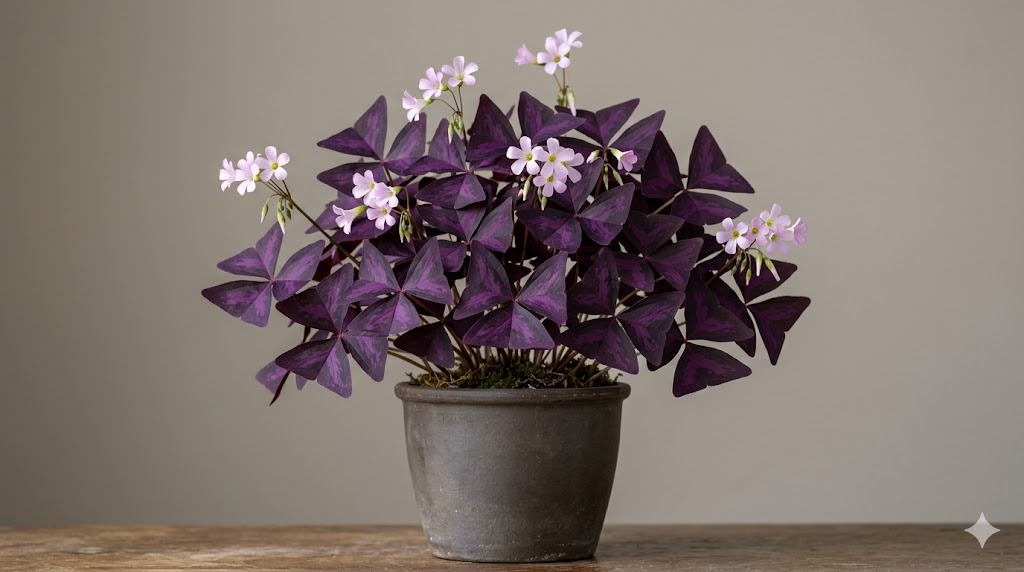
Oxalis triangularis - the "False Shamrock" or "Purple Shamrock" - is one of the most charming and characterful houseplants there is. Its deep-purple, triangular, three-part leaves look like a cluster of butterflies, and they move: every evening the leaves and delicate flowers fold down and close, and every morning they open again. It is easy, fast, pet-cautious, and produces sweet little pale flowers on and off through the year. It grows from small bulbs, which means - like Cyclamen - it has a natural dormancy period that surprises new owners but is completely normal.
Origin & Natural Habitat
Oxalis triangularis is native to South America, particularly Brazil. It grows from small underground bulbs/rhizomes in conditions where it experiences seasonal cycles - periods of active growth and periods of rest. This bulbous nature is the key to one of its quirks: when stressed or simply on its natural schedule, the foliage dies back and the plant rests, then re-sprouts from the bulbs. The genus Oxalis is large and found worldwide (some species are garden weeds); this guide covers the popular purple houseplant.
Appearance
The Purple Shamrock has slender stalks, each topped with a leaf divided into three triangular leaflets in a rich, deep burgundy-purple (there are also green-leaved forms). The leaves perform nyctinasty - they fold up and droop down at night, or in low light, and open out flat in daylight, giving a constant, gentle, living motion. It produces dainty, pale pink or white five-petaled flowers held above the foliage. It stays compact, usually 15-30 cm tall.
Why People Love It - Qualities & Benefits
- Striking purple foliage: the deep burgundy butterfly-leaves are unlike most houseplants.
- The daily movement: the leaves opening by day and folding at night is captivating and makes the plant feel alive.
- Pretty flowers: dainty pale blooms appear on and off through the year.
- Easy and fast: quick-growing, undemanding, and rewarding.
- Compact: small and tidy - perfect for desks and windowsills.
- Easy to propagate and revive: grows readily from its bulbs.
Care
Light
Bright, indirect light is ideal - and good light keeps the purple color rich and supports flowering. A little gentle direct sun is tolerated and deepens the color. In low light it grows leggy and pale, and the leaves stay more closed. Avoid harsh, hot direct sun.
Watering
Water when the top 2-3 cm of soil is dry, keeping it lightly moist during active growth. Avoid soggy soil, which rots the bulbs. Let it dry a little more between waterings than a typical tropical plant. During dormancy (see below), watering is greatly reduced or stopped.
Soil & Potting
Use a well-draining potting mix. Drainage holes are essential.
Humidity & Temperature
Tolerates normal room humidity. It prefers cooler-to-average rooms, comfortable around 15-24 °C, and dislikes very hot conditions, which can push it into dormancy. Keep above about 10 °C.
Feeding
Feed every 4-6 weeks during active growth with a diluted balanced fertilizer. Do not feed during dormancy.
The Dormancy Cycle
This is the quirk that confuses owners. Because Oxalis grows from bulbs, it naturally goes dormant. After a period of active growth and flowering, or when stressed by heat, the foliage may yellow, flop, and die back - the plant can look like it has died. It usually hasn't. This is a rest period. When it happens:
- Cut back the dead foliage.
- Reduce or stop watering, and move the pot somewhere cooler and out of strong light.
- After a few weeks to a couple of months of rest, resume normal watering and light.
Fresh new leaves sprout from the bulbs, and the plant returns better than ever. A dormant Oxalis is resting, not dead - do not throw it out.
Propagation
Very easy, by bulb division. At repotting (or whenever the pot is crowded), tip out the plant and separate the small bulbs/rhizomes - pot up clusters of a few bulbs each. They establish quickly. This is the simplest and most reliable way to make more Oxalis.
Common Problems & Pests
- Foliage flopping, yellowing, dying back: usually natural dormancy (especially after flowering or in heat), or sometimes overwatering - assess the season and the soil.
- Leggy, pale growth; leaves staying closed: too little light.
- Faded purple color: insufficient light.
- Mushy bulbs / rot: overwatering and soggy soil.
- Pests: generally pest-resistant, but spider mites, aphids, and mealybugs can occasionally appear.
Toxicity & Safety
Toxic to cats and dogs if eaten in quantity. Oxalis contains soluble oxalates (oxalic acid); small nibbles are generally only mildly irritating, but eating larger amounts can cause vomiting, and - by interfering with calcium - potentially more serious effects, especially in smaller pets or with repeated grazing. It is best kept away from pets that chew plants. The plant is also generally not recommended for eating by people in any quantity.
Pros & Cons
Pros
- Striking deep-purple butterfly foliage.
- Captivating daily leaf movement.
- Pretty flowers through the year.
- Easy, fast, compact.
- Very easy to propagate by bulb division.
Cons
- Toxic to pets if eaten in quantity.
- Goes dormant - alarms owners who don't expect it.
- Fades and gets leggy in low light.
- Bulbs rot if overwatered.
Best Suited For
- Anyone wanting unusual color and a "living," moving plant.
- Bright windowsills and desks.
- Beginners (once they know about dormancy).
- Cooler-to-average rooms.
Not ideal for very hot rooms, dark spots, or pet households with determined plant-eaters.
FAQ
Why do the leaves open and close? It is a natural process called nyctinasty. Oxalis leaves (and flowers) fold down and close in the evening or in low light, and open out again in daylight - a daily rhythm that makes the plant feel alive.
My Oxalis collapsed and looks dead - what happened? Most likely it has gone dormant. Oxalis grows from bulbs and naturally rests - the foliage dies back after flowering or in heat. Cut back the dead leaves, reduce watering, move it somewhere cooler, and after a few weeks of rest it will re-sprout from the bulbs. Don't throw it away.
Why is my Oxalis pale and leggy? Not enough light. The rich purple color and compact growth need bright, indirect light. Move it brighter, and the color and form improve.
How do I propagate Oxalis? By bulb division - tip the plant out, separate the small bulbs, and pot them up in clusters. It is one of the easiest plants to propagate.
Is Oxalis safe for pets? It is toxic to cats and dogs if eaten in quantity - it contains oxalic acid. A small nibble is mildly irritating; larger amounts can cause vomiting and more serious effects. Keep it away from pets that chew plants.