Parlor Palm (Chamaedorea elegans)
The Parlor Palm is the easy, elegant, pet-safe palm that has been gracing indoor rooms since Victorian times - its name comes from the parlors it once decorated.
🗓️ Last reviewed: June 2026
Overview
The Parlor Palm is the easy, elegant, pet-safe palm that has been gracing indoor rooms since Victorian times - its name comes from the parlors it once decorated. Compact, soft, and feathery, it brings a gentle tropical touch without the size or fuss of larger palms, and it is one of the few palms that genuinely tolerates low light. Tough, slow-growing, non-toxic, and undemanding, the Parlor Palm is a reliable favorite for beginners, offices, and dim corners.
Origin & Natural Habitat
Chamaedorea elegans is native to the rainforests of southern Mexico and Guatemala, where it grows as a small understory palm on the shaded forest floor beneath the canopy. Unlike sun-loving palms, it evolved in shade - which is precisely why it copes so well with low indoor light. Its warm, humid, shaded rainforest origin defines its easygoing care.
Appearance
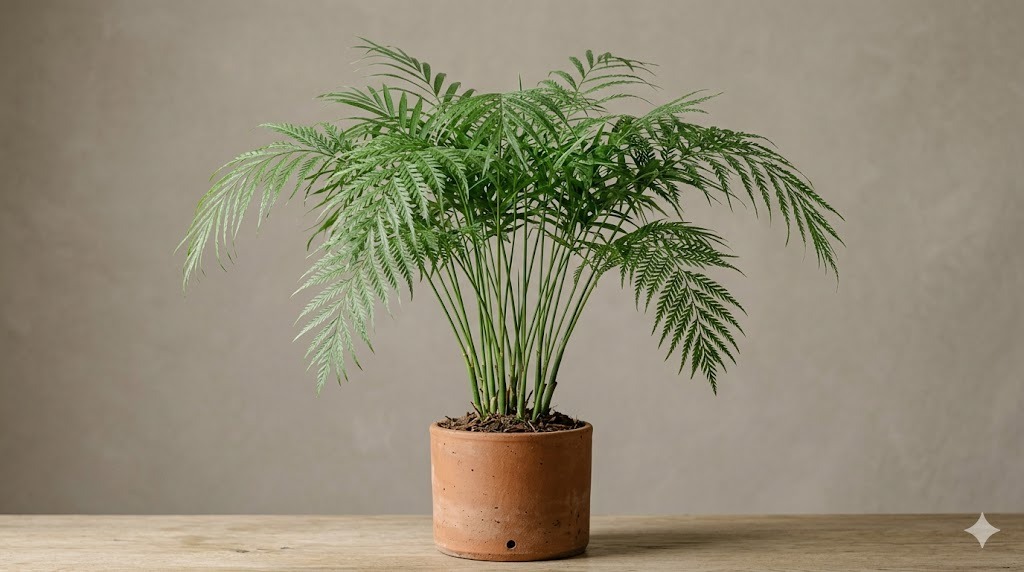
The Parlor Palm forms clumps of slender, cane-like green stems topped with delicate, arching, feathery fronds of narrow leaflets. It is compact and slow-growing, typically reaching 0.6-1.2 m indoors over many years. Mature plants may produce sprays of tiny, harmless yellow flowers. Its small size and soft texture make it a graceful tabletop or floor plant.
Why People Love It - Qualities & Benefits
- Pet-safe: non-toxic to cats and dogs.
- Low-light tolerant: one of the few palms that genuinely thrives away from bright windows.
- Compact and elegant: soft, feathery greenery without taking over a room.
- Easy and forgiving: undemanding, slow-growing, beginner-friendly.
- Long-lived: a well-kept Parlor Palm lasts for many years.
- Air quality: a notable performer in NASA's Clean Air Study.
Care
Light
Adaptable, and notably shade-tolerant - it grows well in low to medium indirect light, making it excellent for dim corners and offices. It also does well in brighter indirect light. Avoid direct sun, which scorches the fronds.
Watering
Water when the top 3-5 cm of soil is dry - typically every 1-2 weeks, less in winter. The Parlor Palm dislikes soggy soil and is prone to root rot if overwatered; it also dislikes drying out completely. Aim for lightly moist, well-drained. Overwatering is the most common cause of failure.
Soil & Potting
Use a well-draining potting mix. Drainage holes are essential. Parlor Palms are often sold several plants to a pot for a full look, and they dislike root disturbance - so repot infrequently.
Humidity & Temperature
Tolerates normal room humidity; appreciates a little extra, and dry air can cause brown tips. Comfortable at 18-27 °C; keep above about 13 °C and away from cold drafts.
Feeding
Feed lightly every 2-3 months in spring and summer; it is a slow grower and needs little.
Repotting
Repot only every 2-3 years, or when truly crowded - it resents having its roots disturbed, so do it gently and infrequently.
Propagation
Parlor Palms are difficult to propagate at home. They grow naturally from seed (slow and unreliable indoors) and do not grow from cuttings. The clumps sold in pots are multiple seed-grown plants, not divisions, and dividing them often damages the sensitive roots. In practice, most people simply buy new plants rather than propagate.
Common Problems & Pests
- Brown frond tips: dry air, inconsistent watering, tap-water chemicals, or over-fertilizing.
- Yellowing fronds: overwatering (most common), underwatering, or too little light.
- Brown, mushy stem base: root rot from soggy soil.
- Spider mites: very common on indoor palms in dry air - inspect the frond undersides regularly.
- Other pests: scale and mealybugs.
Toxicity & Safety
Non-toxic and pet-safe. The Parlor Palm is considered safe for cats, dogs, and humans - one of the best pet-safe indoor palms, and a reassuring choice for households with curious pets.
Pros & Cons
Pros
- Non-toxic and pet-safe.
- Genuinely tolerates low light.
- Compact, elegant, soft greenery.
- Easy, forgiving, beginner-friendly.
- Long-lived.
Cons
- Slow-growing - limited visible change.
- Prone to spider mites in dry air.
- Brown tips common with dry air or hard water.
- Hard to propagate at home.
Best Suited For
- Low-light rooms, offices, and dim corners.
- Pet households.
- Beginners.
- Tabletops and modest floor spaces.
Not ideal for anyone wanting fast growth or a large statement palm, or those who won't watch for spider mites.
FAQ
Can a Parlor Palm really grow in low light? Yes - it is one of the few palms that genuinely tolerates low to medium indirect light, because it evolved as a shade-loving understory plant. It grows slowly there but stays healthy. It does fine in brighter indirect light too.
Why are the frond tips turning brown? Usually dry air, inconsistent watering, chemicals in tap water, or over-feeding. Raise humidity, water consistently, use filtered water, and feed lightly. Trim brown tips with scissors for appearance.
Why are whole fronds yellowing? Most often overwatering - the leading cause of trouble in Parlor Palms. Let the top few centimeters of soil dry before watering and make sure the pot drains. It can also be underwatering or too little light.
Is the Parlor Palm safe for pets? Yes - it is non-toxic and pet-safe, one of the safest indoor palms for homes with cats and dogs.
Can I divide my Parlor Palm? It is best not to. Those clumps are multiple seed-grown plants, and the roots are sensitive - dividing usually damages them. Repot the clump as a whole, infrequently.