Phalaenopsis Orchid (Moth Orchid)
The Phalaenopsis, or Moth Orchid, is the orchid for everyone.
🗓️ Last reviewed: June 2026
Overview
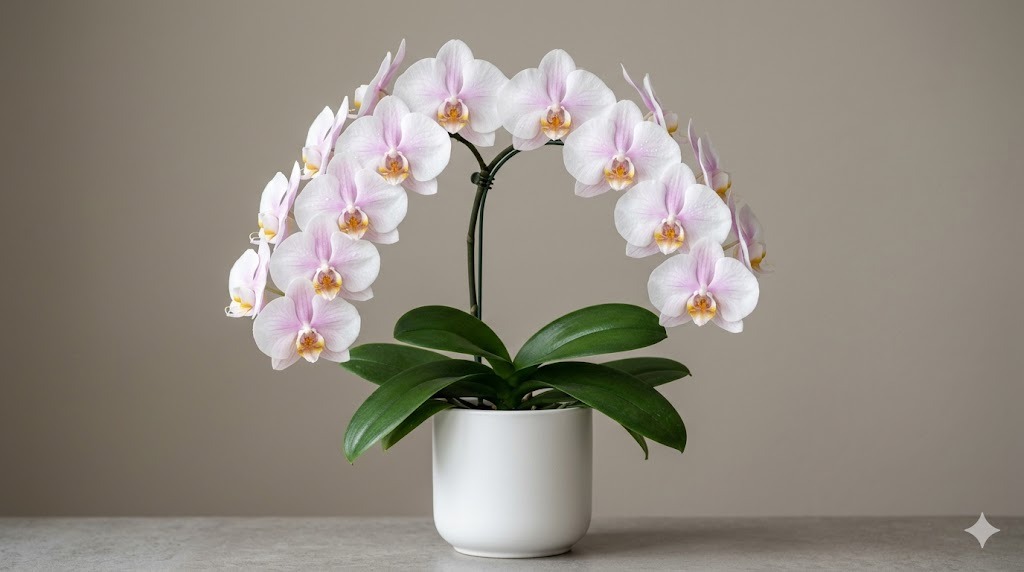
The Phalaenopsis, or Moth Orchid, is the orchid for everyone. Despite the long-standing reputation of orchids as exotic and difficult, the Phalaenopsis is genuinely one of the easiest flowering houseplants you can own - its care is just unusual rather than hard. Its arching sprays of broad, rounded blooms last for months, often two to four months from a single flowering, and with a little understanding the same plant will rebloom year after year. The key is to stop thinking of it like a normal potted plant: it does not grow in soil, and it does not want to be watered like one.
Origin & Natural Habitat
Phalaenopsis orchids are native to the tropical forests of Southeast Asia, from the Himalayas through the Philippines and into northern Australia. Crucially, they are epiphytes - they do not grow in the ground. In the wild they anchor themselves to tree trunks and branches, with their thick roots clinging to bark, exposed to air, dappled light, and warm, humid conditions. Rain drenches the roots, then they dry quickly in the breeze. That single fact - air-exposed roots, drenched then dried - is the entire secret to growing them at home.
Appearance
A Phalaenopsis has a small base of a few broad, thick, leathery, dark-green leaves. From between the leaves it sends up a long, often arching flower spike carrying a row of blooms. The flowers are broad, rounded, and flat-faced - said to resemble moths in flight - and come in white, pink, purple, yellow, and spotted or striped patterns. Below, thick silvery-green aerial roots sprawl out of the pot and over its rim; this is completely normal and healthy. Plants are usually sold in clear plastic pots, because the roots photosynthesize and the grower needs to see them.
Why People Love It - Qualities & Benefits
- Months of flowers: a single bloom cycle lasts two to four months - far longer than almost any other flowering houseplant.
- Reblooms for years: with simple care the same plant flowers again and again, often for many years.
- Elegant and refined: the arching sprays of blooms bring a calm, luxurious, sophisticated look to any room.
- Compact: small footprint - perfect for tabletops, desks, windowsills, and bathrooms.
- Easier than its reputation: once you understand its epiphyte nature, it is genuinely low-effort.
- Widely available and affordable: sold everywhere, inexpensive, and rewarding far beyond its price.
Care
Light
Bright, indirect light - an east-facing window is ideal. Phalaenopsis evolved under a dappled canopy, so it wants gentle light, never harsh direct sun, which scorches the leaves. A healthy leaf is a bright, medium green; very dark green leaves indicate too little light (and a plant that may not rebloom), while yellowish or reddish leaves indicate too much.
Watering
This is where most people go wrong. Never let a Phalaenopsis sit in water, and never water it on a fixed daily schedule. Water thoroughly about once a week - less in winter - by drenching the bark, letting it drain completely, and then leaving the roots to dry before the next watering. The clear pot is your guide: green, plump roots mean the plant has enough water; silvery-grey roots mean it is ready for a drink. Soft, mushy, brown roots mean it has been overwatered and is rotting. The old "ice cube" method is unnecessary and not recommended - just water with room-temperature water and let it drain.
Potting Medium
Phalaenopsis is not potted in soil - soil would suffocate and rot its roots. It is grown in chunky, airy orchid bark (sometimes with sphagnum moss or charcoal). The bark holds the plant and lets the roots breathe.
Humidity & Temperature
Enjoys moderate to high humidity (50-70%) - bathrooms and kitchens suit it well. Comfortable at 18-27 °C. A drop in night temperature in autumn (a cooler spell of around 13-18 °C for a few weeks) is the natural trigger that prompts a new flower spike.
Feeding
Feed regularly but weakly during active growth - a balanced orchid fertilizer at quarter to half strength, roughly every second or third watering ("weakly, weekly"). Ease off in winter.
Repotting
Repot every 1-2 years, into fresh orchid bark, because old bark breaks down and suffocates the roots. The best time is after flowering or when new roots appear. Trim away any dead, mushy roots when you do.
Reblooming
Getting a Phalaenopsis to rebloom is simpler than people think. After the flowers drop, the plant rests. If the old flower spike is still green, you can cut it just above a lower node - sometimes a side branch of flowers will form; if the spike turns brown, cut it off at the base. Then ensure good light, steady feeding, and - the key trigger - a few weeks of cooler night temperatures in autumn. A new flower spike usually emerges within a couple of months.
Common Problems & Pests
- Mushy, brown, soft roots; yellowing leaves: root rot from overwatering or sitting in water - the most common killer. Repot into fresh bark and cut away dead roots.
- Wrinkled, limp, leathery leaves: dehydration - often, paradoxically, from rotted roots that can no longer absorb water; check the roots.
- No reblooming: usually too little light, or no autumn temperature drop.
- Bud blast (buds dropping before opening): a sudden change - draft, temperature swing, dry air, or being moved.
- Sunburn (bleached or scorched patches): too much direct sun.
- Pests: mealybugs and scale can appear, often hidden in leaf joints and under the pot rim; wipe off and treat.
Toxicity & Safety
Non-toxic and pet-safe. Phalaenopsis orchids are considered safe for cats, dogs, and humans. This makes them an excellent choice of long-lasting flowers for a pet household - a rare combination of elegant, floral, and safe.
Pros & Cons
Pros
- Flowers last 2-4 months; reblooms for years.
- Non-toxic and pet/child-safe.
- Elegant, refined, compact.
- Genuinely easy once understood.
- Affordable and widely available.
Cons
- Care is unusual - must unlearn normal potted-plant habits.
- Overwatering and sitting in water kill it fast.
- Needs an autumn cool spell to rebloom.
- Aerial roots sprawling out of the pot surprise new owners.
Best Suited For
- Anyone wanting long-lasting flowers indoors.
- Beginners willing to learn its (simple) unusual care.
- Pet households wanting a safe flowering plant.
- Bright bathrooms, kitchens, and east-facing windowsills.
Not ideal for people who water everything on a fixed schedule, or very dark rooms.
FAQ
How often should I water a Phalaenopsis orchid? Roughly once a week - drench the bark, let it drain fully, and never leave the plant standing in water. Use the roots as your guide: green and plump means wait; silvery-grey means water. Overwatering is the main way orchids die.
My orchid finished flowering - is it dead? No - it is just resting. After the blooms drop, the plant rebuilds energy. With good light, feeding, and a cool autumn spell, it will send up a new flower spike, often within a couple of months.
Why are there roots growing out of the pot? Those are aerial roots, and they are completely normal and healthy. Phalaenopsis is an epiphyte - in the wild its roots cling to tree bark, exposed to the air. Leave them be.
Should I use ice cubes to water my orchid? It is not necessary and not recommended. Phalaenopsis is a tropical plant; cold can stress it. Simply water with room-temperature water and let it drain.
Why won't my orchid rebloom? Usually two reasons: not enough light, or no autumn temperature drop. Give it bright indirect light, feed it weakly through the year, and let it experience a few weeks of cooler nights in autumn to trigger a new spike.
Is the orchid safe for cats and dogs? Yes - Phalaenopsis orchids are non-toxic and pet-safe.