Philodendron Birkin
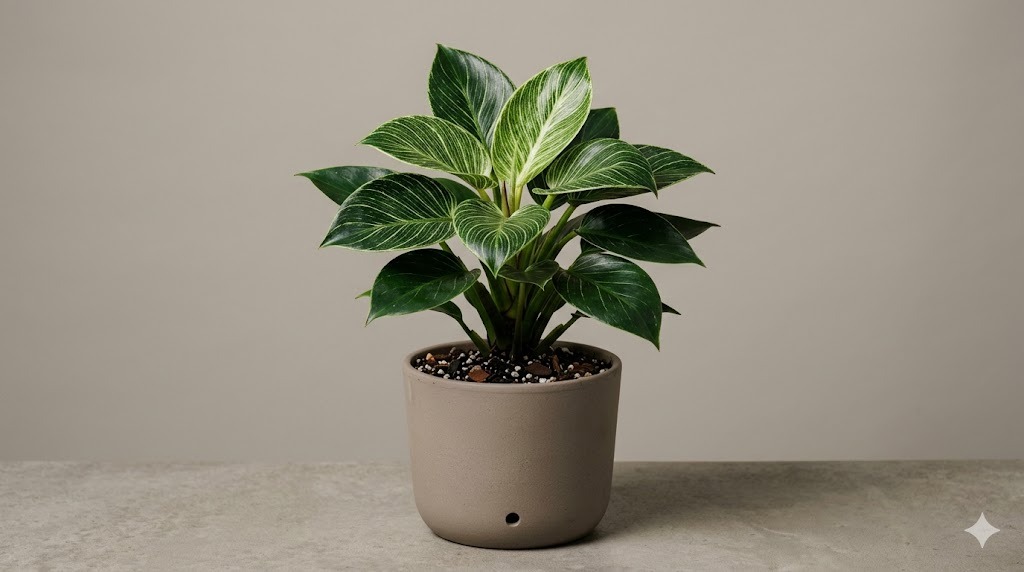
The Philodendron Birkin is one of the most elegant and popular of the modern "designer" philodendrons - a compact, upright plant whose deep-green leaves are finely painted with delicate creamy-white pinstripes.
🗓️ Last reviewed: June 2026
Overview
The Philodendron Birkin is one of the most elegant and popular of the modern "designer" philodendrons - a compact, upright plant whose deep-green leaves are finely painted with delicate creamy-white pinstripes. It looks refined and architectural, it stays a manageable size, and - unlike most upright philodendrons - it does not need to climb. Easy to grow and steadily collectible, the Birkin is a near-perfect houseplant for someone who wants something special without the demands of a true rare plant. Its one fascinating quirk: every leaf is a little different, and the plant can spontaneously change its variegation.
Origin & Natural Habitat
The Philodendron Birkin is not a wild species - it is a cultivated variety that arose as a spontaneous mutation, believed to have originated from Philodendron 'Rojo Congo'. Because it is a mutation rather than a stable species, the Birkin is genetically unstable, which is the source of its quirky, variable leaves. As a philodendron, its ancestors come from the tropical rainforests of Central and South America - warm, humid, shaded understory conditions - and that origin still defines its care.
Appearance
The Philodendron Birkin forms a compact, upright, self-heading clump (it does not vine or trail) of glossy, oval, dark-green leaves, each marked with fine, feathery, creamy-white or pale-yellow pinstripes radiating from the central vein. No two leaves are identical - the striping varies. Indoors it stays fairly small, usually 30-45 cm tall. New leaves sometimes emerge with a pink or reddish blush. Because of its genetic instability, a Birkin can occasionally produce a leaf that is all green (reverting) or heavily pale/white (a "highly variegated" sport).
Why People Love It - Qualities & Benefits
- Elegant, refined look: the crisp pinstripes are sophisticated and distinctive.
- Compact and upright: stays small and tidy, with no need for a moss pole or trellis.
- Easy care: forgiving and undemanding - a "designer" plant without diva behavior.
- Every leaf is unique: the variable striping makes each leaf a small surprise.
- Collectible: a gateway into the world of variegated philodendrons.
- Affordable: once rare, now widely available and reasonably priced.
Care
Light
Bright, indirect light is ideal - it keeps the pinstripe variegation crisp and the growth compact. It tolerates medium light. Avoid direct sun, which scorches the leaves. In low light, the variegation fades, new leaves come out greener, and growth gets leggy.
Watering
Water when the top 3-5 cm of soil is dry, then drain well - typically every 1-2 weeks, less in winter. The Birkin likes lightly moist but not soggy soil; overwatering causes yellowing leaves and root rot, while prolonged dryness causes drooping and crispy edges.
Soil & Potting
Use a chunky, airy, well-draining aroid mix - potting soil with perlite, bark, and a little coco coir. Drainage holes are essential.
Humidity & Temperature
Tolerates normal room humidity but grows best and fastest with moderate-to-high humidity (50%+). Comfortable at 18-27 °C; keep above about 13 °C and away from cold drafts.
Feeding
Feed monthly in spring and summer with a balanced fertilizer at half strength.
Repotting
Repot every 1-2 years in spring when roots fill the pot.
Propagation
Propagated by stem cuttings or division. The Birkin is self-heading and short-stemmed, so propagation is less casual than with vining philodendrons: take a cutting that includes a node (and ideally some roots), or divide the plant if it has produced multiple growth points/offsets. Root cuttings in water, moss, or airy mix, kept warm and humid.
Reversion & Variegation
The Birkin's defining quirk: because it is an unstable mutation, it can revert - producing solid green leaves - or sport the opposite way, producing leaves that are heavily white/pale. To keep the classic pinstriped look, give it good bright light, and prune out any all-green leaves promptly (green growth is more vigorous and can take over the plant). Highly white leaves, while beautiful, have little chlorophyll and weaken the plant if they dominate.
Common Problems & Pests
- Reverting to all-green leaves: genetic instability, encouraged by low light - give brighter light and prune green leaves.
- Faded, weak variegation: insufficient light.
- Yellowing leaves: overwatering, or natural aging of old leaves.
- Brown, crispy edges: low humidity or underwatering.
- Drooping: under- or overwatering - check the soil and roots.
- Pests: spider mites, mealybugs, scale, and fungus gnats; inspect and treat.
Toxicity & Safety
Toxic to cats, dogs, and humans if chewed. Like all philodendrons, the Birkin contains insoluble calcium oxalate crystals; chewing causes mouth and throat irritation, drooling, and vomiting. Keep it away from pets and children.
Pros & Cons
Pros
- Elegant, distinctive pinstriped foliage.
- Compact and upright - no climbing support needed.
- Easy, forgiving care.
- Every leaf is unique.
- Affordable and widely available.
Cons
- Toxic to pets and kids if chewed.
- Can revert to plain green, especially in low light.
- Variegation fades without good light.
- Less casual to propagate than vining philodendrons.
Best Suited For
- Beginners wanting something a little special.
- Bright rooms, desks, shelves, and small spaces.
- Aspiring philodendron collectors.
- Anyone wanting an elegant, low-fuss plant.
Not ideal for dark rooms, or pet households with leaf-chewers.
FAQ
Why is my Philodendron Birkin growing all-green leaves? The Birkin is a genetically unstable mutation and can revert to plain green - especially in low light. Move it to brighter, indirect light, and prune out all-green leaves promptly, because green growth is more vigorous and can take over the whole plant.
Why is the variegation fading? Not enough light. The crisp pinstripes need bright, indirect light. In dim conditions, new leaves come out greener and the pattern weakens.
Does the Birkin need a moss pole? No - unlike vining philodendrons, the Birkin is self-heading and grows as a compact, upright clump. It does not climb and does not need a support.
Is the Philodendron Birkin safe for pets? No - like all philodendrons, it is toxic to cats and dogs if chewed, causing mouth irritation and vomiting. Keep it out of reach.
My Birkin produced a nearly white leaf - is that good? It is a beautiful sport, but be cautious. Highly white leaves have little chlorophyll and can't feed the plant well. A few are fine and striking; if pale leaves dominate, the plant weakens.