Chinese Money Plant (Pilea peperomioides)
The Chinese Money Plant is the friendly, quirky houseplant that became an internet sensation.
🗓️ Last reviewed: June 2026
Overview
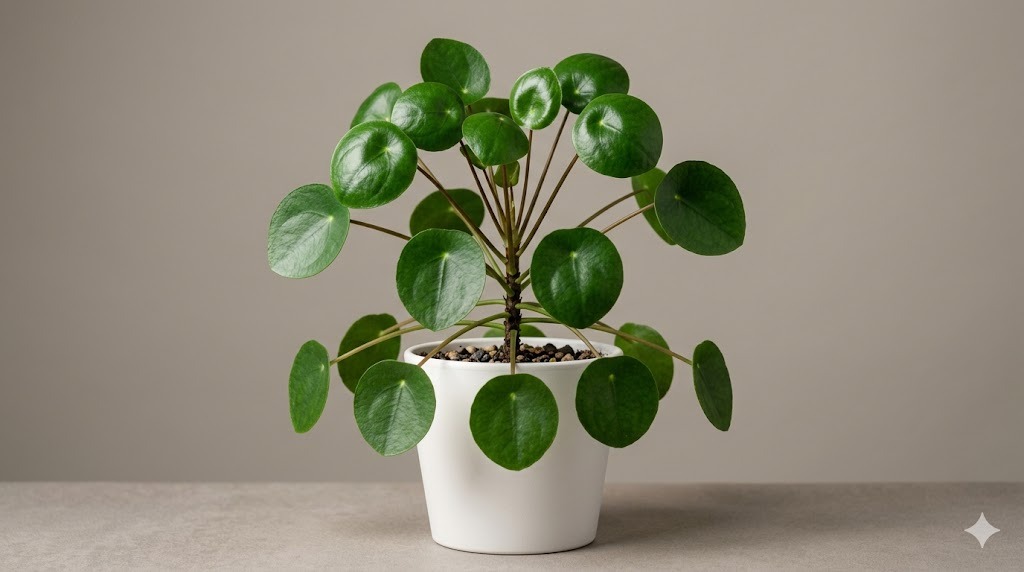
The Chinese Money Plant is the friendly, quirky houseplant that became an internet sensation. With round, coin-shaped leaves held up on slender stalks like tiny lily pads, it has a cheerful, almost cartoonish charm. It is compact, easy to care for, and famously generous - a happy plant constantly pushes up baby plants ("pups") around its base, which is how this once-rare plant spread across the world entirely through friends sharing cuttings. It is also pet-safe, making it one of the best easy, shareable, non-toxic plants you can own.
Origin & Natural Habitat
Pilea peperomioides is native to the forests at the base of the Himalayas in Yunnan Province, southwestern China, where it grows on shaded, damp rocks and slopes. It was largely unknown to Western horticulture until a Norwegian missionary brought it home in the 1940s. From there it spread person-to-person, hand to hand, as cuttings - for decades it was almost impossible to buy and known only as a "pass-along plant." It finally entered mainstream commercial production in the 2010s and exploded in popularity. Its folk names - Chinese Money Plant, Friendship Plant, Pancake Plant, UFO Plant - all reflect either its coin-like leaves or its history of being shared.
Appearance
The Chinese Money Plant has distinctive round, flat, glossy, dark-green leaves, each attached in the center to a long, upright leaf stalk (petiole) - giving the "lily pad on a stick" look. It grows from a central upright stem and stays compact, typically 20-30 cm tall and wide indoors. Mature plants develop a slightly woody main stem and a generous skirt of pups around the base.
Why People Love It - Qualities & Benefits
- Pet-safe: non-toxic to cats and dogs - a genuine, attractive, easy plant you can place anywhere.
- Endlessly shareable: the constant supply of pups makes it the ultimate friendship plant; one plant becomes gifts for everyone you know.
- Quirky, cheerful look: the round-coin foliage is unlike anything else and brings personality to a shelf or desk.
- Compact: stays small and tidy, ideal for desks, windowsills, and small spaces.
- Easy and fast: undemanding care and quick, visible growth.
- A talking point: its romantic pass-along history makes it a plant with a story.
Care
Light
Bright, indirect light is ideal. Good light keeps it compact, full, and well-colored. In low light it grows leggy, with a long bare stem and sparse leaves. Avoid harsh direct sun, which scorches the leaves. Rotate the pot regularly - it leans strongly toward the light, and rotating keeps it growing straight and even.
Watering
Water when the top 3-5 cm of soil is dry - typically weekly in summer, every 10-14 days in winter. It droops slightly when thirsty and recovers after watering. Avoid soggy soil; overwatering causes yellowing leaves and root rot.
Soil & Potting
Use a well-draining potting mix with added perlite. Drainage holes are essential.
Humidity & Temperature
Tolerates normal room humidity. Comfortable at 15-25 °C; it prefers cooler-to-average rooms and dislikes hot, dry spots near radiators. Keep above about 10 °C.
Feeding
Feed monthly in spring and summer with a balanced liquid fertilizer at half strength. None in winter.
Repotting
Repot every 1-2 years in spring. It is easy to find the pups for separating at repotting time.
Propagation
The Chinese Money Plant is wonderfully easy to propagate from its pups:
- Root pups: small pups grow from the soil (from the roots) and from the main stem. Soil pups can be cut off with a clean knife below the soil line, keeping some roots, then potted up directly.
- Stem pups: pups growing on the main stem can be cut off and rooted in water, then potted.
Let cut surfaces dry briefly, pot in moist mix, and keep humid until established. Each plant produces a steady supply - this is the "friendship plant" in action.
Common Problems & Pests
- Leggy growth, long bare stem: too little light - move it brighter. (Note: some lower-leaf drop and a visible stem is natural with age.)
- Curling or cupping leaves: often a light or watering inconsistency; usually harmless and self-corrects.
- Yellow leaves: overwatering, or natural aging of the oldest leaves.
- Brown spots / crispy edges: sunburn from direct sun, or underwatering.
- White, chalky spots on leaves: harmless - Pilea naturally exudes mineral deposits through small leaf pores.
- Pests: generally resistant, but watch for spider mites, fungus gnats, and mealybugs.
Toxicity & Safety
Non-toxic and pet-safe. The Chinese Money Plant is considered safe for cats, dogs, and humans, which - combined with its easy care and shareability - is a major reason for its popularity. As with any plant, discourage pets from eating large amounts of foliage, but it poses no poisoning risk.
Pros & Cons
Pros
- Non-toxic and pet/child-safe.
- Constantly produces free pups - easy to share.
- Quirky, cheerful, distinctive look.
- Compact and tidy.
- Easy, fast-growing, beginner-friendly.
Cons
- Goes leggy in low light.
- Leans hard toward light - needs regular rotating.
- Dislikes hot, dry spots.
- The bare-stemmed mature form is not to everyone's taste.
Best Suited For
- Beginners who want an easy, characterful plant.
- Pet households wanting a safe, attractive plant.
- Desks, shelves, windowsills, and small spaces.
- Anyone who likes to propagate and gift plants.
Not ideal for dark rooms, or hot dry spots beside radiators.
FAQ
Why is my Pilea leggy with a long bare stem? Mostly too little light - move it to a brighter spot. Some bare stem is also natural as the plant matures and lower leaves drop; many owners like the "tree" look, or they propagate the top to restart a compact plant.
What are the little plants around the base? Pups - baby Pileas. They grow from the roots (popping up through the soil) and on the main stem. Separate them with some roots and pot them up. This is why it's called the Friendship Plant.
Why does my Pilea lean to one side? It grows strongly toward light. Rotate the pot a little every few days and it will grow straight and even.
Are the white spots on the leaves a disease? No. Pilea naturally pushes out tiny mineral deposits through pores, leaving harmless white chalky specks. Just wipe them off if you like.
Is the Chinese Money Plant safe for pets? Yes - it is non-toxic to cats and dogs. It is one of the best pet-safe, easy houseplants.