Polka Dot Plant (Hypoestes phyllostachya)
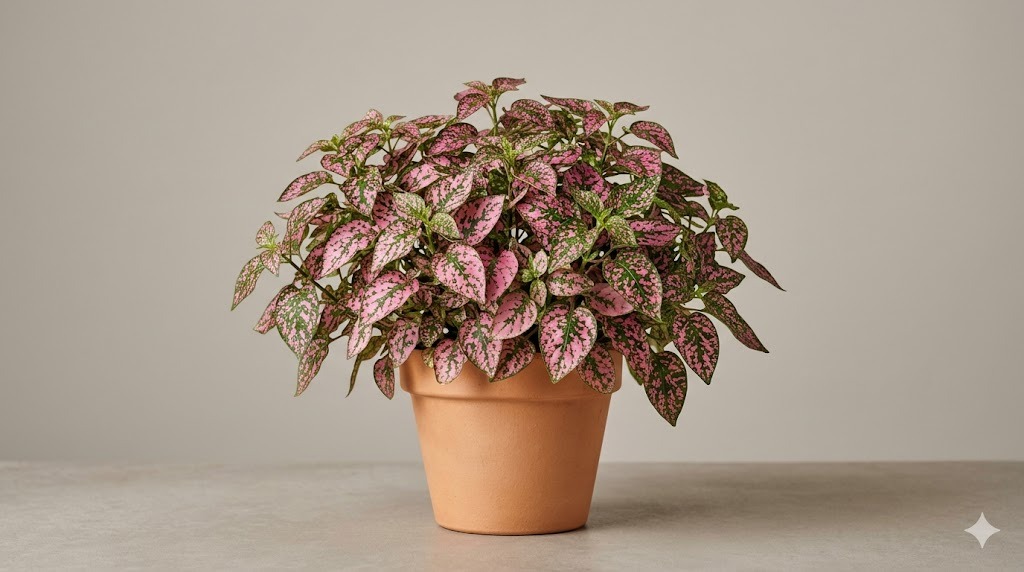
The Polka Dot Plant is pure cheerful color - a small, bushy houseplant whose green leaves are freckled and splashed with bright pink, white, or red, as if spattered with paint.
🗓️ Last reviewed: June 2026
Overview
The Polka Dot Plant is pure cheerful color - a small, bushy houseplant whose green leaves are freckled and splashed with bright pink, white, or red, as if spattered with paint. It is compact, inexpensive, pet-safe, and instantly charming, making it a favorite for desks, terrariums, and adding a pop of color to plant arrangements. It is easy to grow, with one quirk: it is naturally short-lived and leggy, so the secret to keeping a good-looking Polka Dot Plant is regular pinching - and easy, constant propagation.
Origin & Natural Habitat
Hypoestes phyllostachya is native to Madagascar, where it grows as a low, soft-stemmed plant in warm, humid, partly shaded conditions in forests and clearings. Its warm, humid, dappled-light origin defines its care. As a houseplant it is technically a tender perennial but behaves almost like an annual - vigorous and colorful, then declining after flowering - which is why propagation is part of its lifestyle.
Appearance
The Polka Dot Plant is a small, bushy, soft-stemmed plant, usually 15-30 cm tall, with oval green leaves heavily speckled, splashed, or mottled in pink, rose, white, or red. Modern cultivars (the 'Splash' and 'Confetti' series) come in vivid, almost solid-colored forms. Small lilac flower spikes appear with maturity; the plant often becomes leggy and declines after flowering, so many growers pinch off flower buds.
Why People Love It - Qualities & Benefits
- Vivid, playful color: the painted-on speckles are bright and cheerful, unlike anything else.
- Pet-safe: non-toxic to cats and dogs.
- Tiny and affordable: cheap, compact, and easy to find - great for desks and small spaces.
- Terrarium-friendly: loves the humidity of an enclosed setup.
- Effortless propagation: roots in water in days - endless free plants.
- Adds a pop to arrangements: a colorful filler among other foliage.
Care
Light
Bright, indirect light is the key to strong color - in good light the speckles stay vivid. In low light the plant fades toward plain green and grows leggy. Avoid harsh direct sun, which scorches the leaves and can bleach the color.
Watering
Keep the soil consistently lightly moist - water when the top of the soil starts to feel dry. The Polka Dot Plant wilts when it dries out (recovering after watering) and dislikes soggy soil, which causes rot and yellowing. It is somewhat thirsty and not drought-tolerant.
Soil & Potting
Use a well-draining, moisture-retentive potting mix. Drainage holes are helpful (terrarium setups excepted).
Humidity & Temperature
Prefers moderate to high humidity; dry air causes leaf-edge browning and curling. Comfortable at 18-26 °C; keep warm and away from cold drafts.
Feeding
Feed every 4-6 weeks in spring and summer with a diluted balanced fertilizer.
Pinching & Lifespan
This is the key to a good-looking plant. Pinch the growing tips regularly to force bushy, compact growth - without pinching, the Polka Dot Plant quickly becomes tall, sparse, and leggy. Many growers also pinch off the flower spikes, because flowering hastens the plant's natural decline. Treat it as a short-lived plant and keep propagating to always have fresh, full ones.
Propagation
Wonderfully easy. Take a stem-tip cutting (ideally a piece you pinched off), and place it in water - roots appear within days to a week - or root it directly in moist soil. Pot up the rooted cuttings. Because the plant is short-lived, regular propagation is the normal way to keep Polka Dot Plants going indefinitely. It can also be grown easily from seed.
Common Problems & Pests
- Leggy, sparse growth: not enough light, and/or not pinching - move it brighter and pinch the tips.
- Faded color, reverting to green: insufficient light.
- Wilting: dry soil (waters back up) - keep it consistently moist.
- Brown, curling leaf edges: dry air or underwatering.
- Yellowing leaves / general decline: overwatering, or the natural decline after flowering.
- Pests: whiteflies, aphids, mealybugs, and spider mites; fungus gnats in damp soil.
Toxicity & Safety
Non-toxic and pet-safe. The Polka Dot Plant is considered safe for cats, dogs, and humans - a good, colorful, pet-safe choice.
Pros & Cons
Pros
- Vivid, cheerful, playful color.
- Non-toxic and pet-safe.
- Tiny, cheap, and easy to find.
- Roots almost instantly - endless free plants.
- Great for terrariums.
Cons
- Naturally short-lived and leggy.
- Needs regular pinching to look good.
- Fades to green in low light.
- Not drought-tolerant; needs steady moisture.
Best Suited For
- Desks, small spaces, and terrariums.
- Beginners wanting cheap, easy color.
- Pet households.
- Anyone happy to pinch and propagate.
Not ideal for people wanting a long-lived, low-effort statement plant, or very dark/dry rooms.
FAQ
Why is my Polka Dot Plant tall and leggy? Two reasons: not enough light, and not pinching it. Move it to brighter indirect light, and regularly pinch the growing tips to force bushy, compact growth. Use the pinched pieces as cuttings.
Why is my plant losing its color and turning green? Not enough light. The bright speckles need good, bright, indirect light to stay vivid. Move it closer to a bright window (but out of harsh direct sun).
My Polka Dot Plant is declining - did I do something wrong? Not necessarily. The Polka Dot Plant is naturally short-lived and tends to decline after flowering. The normal approach is to keep propagating cuttings so you always have fresh, full plants. Pinching off flower buds also slows the decline.
Is the Polka Dot Plant safe for pets? Yes - it is non-toxic and pet-safe for cats and dogs.
How do I propagate it? Take a stem-tip cutting and put it in water - it roots within days - then pot it up. It is one of the fastest, easiest plants to propagate.