Rex Begonia (Begonia rex-cultorum)
The Rex Begonia is grown for one reason: its leaves are extraordinary.
🗓️ Last reviewed: June 2026
Overview
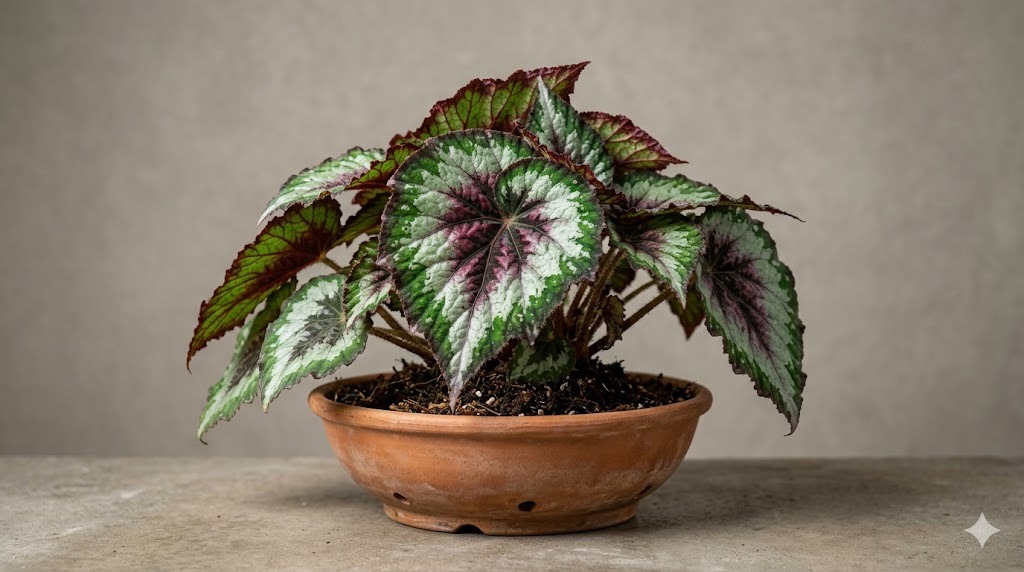
The Rex Begonia is grown for one reason: its leaves are extraordinary. Swirled, spiraled, and splashed with silver, burgundy, purple, pink, green, and near-black - often metallic, often with a satin or velvety sheen - a single Rex Begonia leaf looks like abstract art. It is a foliage plant first and foremost (the flowers are small and insignificant). It is also a little demanding: it wants humidity, gentle light, and careful watering. For a plant lover who wants drop-dead-gorgeous foliage and is willing to fuss a little, the Rex Begonia is unbeatable.
Origin & Natural Habitat
Rex Begonias are hybrids descended largely from Begonia rex, a species native to the humid forests of northeastern India and southern China, with breeding input from other Asian begonias. They grow naturally on the shaded, humid forest floor and on mossy rocks and slopes. This humid, shaded woodland origin is the key to their care - they want warmth, humidity, indirect light, and steady (but not soggy) moisture.
Appearance
The Rex Begonia forms a mounding clump of large, asymmetrical, often spiral-based leaves on short stems growing from a creeping rhizome. The foliage is the show: bold patterns of silver, plum, emerald, rose, and chocolate, frequently with a metallic or velvety texture and contrasting margins. Leaf shapes vary from broad hearts to dramatic spiraled "snail" forms. Most plants stay compact, 20-40 cm tall and wide. Small pink or white flowers appear but are usually unremarkable.
Why People Love It - Qualities & Benefits
- Spectacular foliage: among the most beautiful and varied leaves of any houseplant - living artwork.
- Endless variety: countless named cultivars in every color combination.
- Compact: stays small, suiting shelves and tabletops.
- No flowers needed: year-round drama from the leaves alone.
- Pairs well in displays: stunning grouped with ferns and other foliage plants.
Care
Light
Bright, indirect light brings out the strongest colors and patterns - but never direct sun, which scorches the delicate leaves. It tolerates medium light. Too little light dulls the patterns and makes growth leggy. An east window or a bright spot out of direct sun is ideal.
Watering
Keep the soil lightly and evenly moist - water when the top 2-3 cm feels dry. Rex Begonias dislike both extremes: soggy soil rots the rhizome and roots, while complete drying causes wilting and leaf loss. Water the soil, not the foliage - water sitting on the leaves encourages powdery mildew, a common begonia problem. Water from below or carefully at the base.
Soil & Potting
Use a light, airy, well-draining mix. They have shallow roots and a creeping rhizome, so a wide, shallow pot suits them. Drainage holes are essential.
Humidity & Temperature
High humidity is important - Rex Begonias love 50%+ and often struggle in dry indoor air, browning and shedding leaves. Use a humidifier or group them with other plants - but do not mist the leaves directly, as wet foliage invites mildew. Keep warm: 18-24 °C, away from cold drafts. They are not frost-hardy.
Feeding
Feed every 2-4 weeks in spring and summer with a balanced fertilizer at half strength.
Repotting
Repot every 1-2 years in spring into a wide, shallow pot, keeping the rhizome at or just below the surface.
Propagation
Rex Begonias are propagated from leaf cuttings, which is part of their charm:
- Whole-leaf method: lay a healthy leaf flat on moist soil, make small nicks across the main veins, and pin it down; plantlets form at the cut veins.
- Leaf-wedge method: cut a leaf into wedges, each containing a section of main vein, and insert the vein end into moist soil.
- Rhizome cuttings: a piece of rhizome with roots can be potted up.
Keep cuttings warm and humid (a covered tray helps) until plantlets establish.
Common Problems & Pests
- Powdery mildew: the classic begonia disease - a white powdery coating on leaves, caused by wet foliage, poor air circulation, and high humidity with stagnant air. Keep leaves dry, improve airflow, remove affected leaves.
- Brown, crispy leaf edges: low humidity or dry soil.
- Wilting / leaf drop: under- or overwatering; rhizome rot if soggy.
- Dull, faded patterns: insufficient light.
- Mushy rhizome/stem: rot from overwatering.
- Leggy growth: too little light.
- Pests: mealybugs, thrips, and spider mites; fungus gnats in consistently moist soil.
Toxicity & Safety
Toxic to cats and dogs. Begonias contain insoluble calcium oxalate crystals; the most toxic part is the underground portion (the rhizome/tubers), but ingestion causes intense mouth irritation, drooling, and vomiting in pets. Keep them away from pets. Generally considered only mildly problematic for humans, but not to be eaten.
Pros & Cons
Pros
- Spectacular, artwork-like foliage.
- Huge variety of colors and patterns.
- Compact - fits shelves and tabletops.
- Year-round color without flowers.
Cons
- Toxic to cats and dogs.
- Needs humidity; struggles in dry air.
- Prone to powdery mildew.
- Particular about watering - no wet leaves.
- Not a beginner plant.
Best Suited For
- Plant lovers who want stunning foliage and will fuss a little.
- Humid rooms, terrariums, or homes with a humidifier.
- Shelves and tabletops out of direct sun.
- Collectors.
Not ideal for beginners, very dry homes, sunny windowsills, or pet households with leaf-chewers.
FAQ
Why does my Rex Begonia have white powder on the leaves? That is powdery mildew, a common begonia disease. It is encouraged by wet leaves, high humidity with stagnant air, and poor airflow. Keep the foliage dry, improve air circulation, remove affected leaves, and avoid misting.
Why are the leaf edges going brown and crispy? Usually low humidity or the soil drying out. Rex Begonias need humid air and lightly moist soil - raise the humidity (without wetting the leaves) and water more consistently.
How do I water a Rex Begonia? Keep the soil lightly, evenly moist - water when the top 2-3 cm is dry. Water the soil, not the leaves: wet foliage invites mildew. Watering from below works well.
Can I grow a new Rex Begonia from a leaf? Yes - that is the classic method. Nick the veins of a leaf and pin it on moist soil, or cut the leaf into vein-containing wedges. Plantlets form at the cuts. Keep them warm and humid.
Is the Rex Begonia safe for pets? No - Begonias are toxic to cats and dogs, with the underground rhizome the most toxic part. Keep it away from pets.