Schefflera (Umbrella Plant)
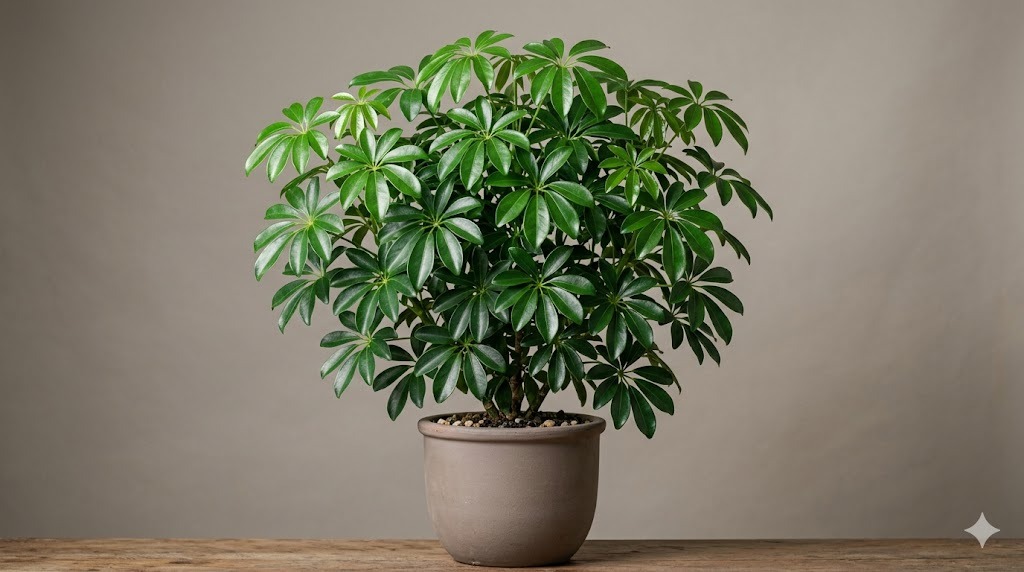
The Schefflera, or Umbrella Plant, is a classic, easy indoor tree - fast-growing, glossy, and forgiving, with leaves arranged like the spokes of an umbrella.
🗓️ Last reviewed: June 2026
Overview
The Schefflera, or Umbrella Plant, is a classic, easy indoor tree - fast-growing, glossy, and forgiving, with leaves arranged like the spokes of an umbrella. It comes in two main forms: the large Schefflera actinophylla (the "Umbrella Tree", with big leaves) and the smaller, denser Schefflera arboricola (the "Dwarf Umbrella Tree", often with variegated leaves). Both bring a lush, tree-like presence to a room without the fuss of a Fiddle Leaf Fig. The Schefflera is a great choice for filling vertical space - with one caveat: it is toxic to pets.
Origin & Natural Habitat
Scheffleras are native to tropical regions - S. actinophylla to Australia and New Guinea, S. arboricola to Taiwan and Hainan. They grow in warm, humid forests, often as understory plants or even starting life as epiphytes on other trees, in bright but filtered light. This tropical, bright-but-shaded forest origin defines their care: they want good light, warmth, and steady (not soggy) moisture.
Appearance
The signature feature is the leaf arrangement: glossy, oval leaflets radiate from a central point on each stalk, like the ribs of an umbrella. S. actinophylla has large leaves with many big leaflets and a bold, open look; S. arboricola has smaller leaves and a denser, bushier habit, with popular variegated forms ('Gold Capella', 'Trinette'). Indoors, both grow into upright, multi-stemmed plants - the dwarf form 1-2 m, the large form taller. Fast-growing in good conditions.
Why People Love It - Qualities & Benefits
- Easy indoor tree: lush, tree-like height and presence with forgiving care.
- Fast-growing: rewards good conditions with quick, visible growth.
- Glossy, attractive foliage: the umbrella-spoke leaves are distinctive and handsome.
- Variety: large bold form or compact bushy dwarf, plain green or variegated.
- Shapeable: responds well to pruning, so you can keep it full and control height.
- Adaptable: tolerates a range of indoor conditions.
Care
Light
Bright, indirect light is ideal - it keeps growth full and compact and the variegation strong. It tolerates medium light but grows leggy and sparse there. Avoid harsh direct sun, which scorches the leaves. Insufficient light is the most common reason a Schefflera becomes thin and droopy. Rotate the plant for even growth.
Watering
Water when the top 3-5 cm of soil is dry, then drain well - typically every 1-2 weeks, less in winter. The Schefflera dislikes soggy soil (root rot, leaf drop, blackened leaves) and also dislikes prolonged drought. Aim for lightly moist and well-drained.
Soil & Potting
Use a well-draining potting mix. Drainage holes are essential.
Humidity & Temperature
Tolerates normal room humidity; appreciates moderate humidity. Comfortable at 16-27 °C; keep above about 13 °C and away from cold drafts.
Feeding
Feed every 2-4 weeks in spring and summer with a balanced fertilizer at half strength.
Repotting & Pruning
Repot every 1-2 years in spring. Prune freely - the Schefflera responds very well to cutting back, branching out to become fuller and bushier, which is the cure for a leggy plant.
Propagation
Propagated from stem cuttings: take a cutting with a few leaves and a node, and root it in water or moist soil with warmth and bright light. Larger or woodier stems can also be air-layered. Rooting takes several weeks.
Common Problems & Pests
- Leggy, sparse, droopy growth: the most common complaint - too little light. Move it brighter and prune to encourage bushiness.
- Leaf drop: overwatering, underwatering, cold drafts, or sudden change; some adjustment drop is normal after a move.
- Black spots / blackened leaves: often overwatering and root rot.
- Yellowing leaves: overwatering, or natural aging.
- Loss of variegation: insufficient light.
- Pests: Scheffleras are notably prone to spider mites, scale, mealybugs, and aphids - inspect regularly and treat promptly.
Toxicity & Safety
Toxic to cats, dogs, and humans if chewed. Scheffleras contain insoluble calcium oxalate crystals; chewing causes intense mouth and throat irritation, drooling, and vomiting. Keep them away from pets and children.
Pros & Cons
Pros
- Easy, fast-growing indoor tree.
- Glossy, distinctive umbrella-leaf foliage.
- Large or compact forms; plain or variegated.
- Responds well to pruning - easy to shape.
- Adaptable and forgiving.
Cons
- Toxic to pets and kids if chewed.
- Gets leggy and droopy in low light.
- Drops leaves in response to change.
- Prone to spider mites and scale.
Best Suited For
- Anyone wanting an easy, fast indoor tree.
- Bright rooms with floor space.
- Beginners ready for a larger plant.
- Owners who like to prune and shape.
Not ideal for dark rooms, or pet households with leaf-chewers.
FAQ
Why is my Schefflera leggy and droopy? Too little light - the most common Schefflera problem. The plant stretches, thins out, and droops in dim conditions. Move it to bright, indirect light and prune it back hard; it will branch out and grow full and bushy again.
Why is my Schefflera dropping leaves? Usually overwatering or underwatering, a cold draft, or a sudden change in conditions. Some leaf drop is normal after you bring it home or move it. Give it a stable, bright spot and steady watering.
Why does my Schefflera have black spots on the leaves? Often overwatering and root rot. Check that the soil drains well, let the top few centimeters dry between waterings, and inspect the roots.
Is the Schefflera safe for pets? No - it is toxic to cats and dogs if chewed, causing mouth irritation and vomiting. Keep it away from pets.
How do I make my Schefflera fuller? Prune it. Scheffleras respond very well to being cut back - each cut stem branches into multiple new ones, making the plant denser. Combine pruning with bright light for a full, bushy plant.