Spider Plant (Chlorophytum comosum)
The Spider Plant is the cheerful, generous, almost foolproof classic of the houseplant world.
🗓️ Last reviewed: June 2026
Overview
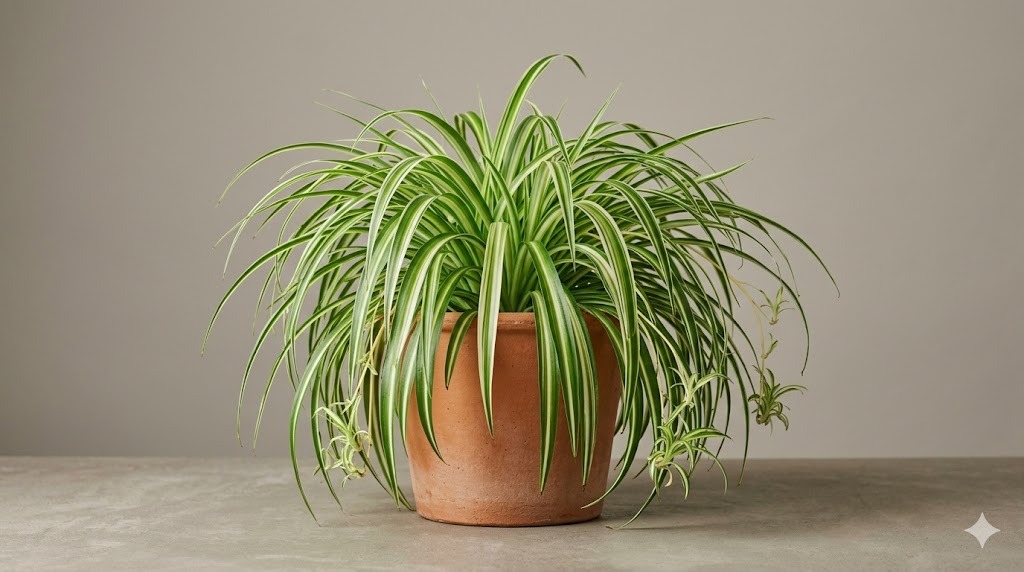
The Spider Plant is the cheerful, generous, almost foolproof classic of the houseplant world. It has been a windowsill staple for generations - and for good reason. It grows fast, tolerates a wide range of conditions, recovers from neglect, and, best of all, produces a constant supply of baby plants ("spiderettes") dangling on long stems, each one a free new plant. It is non-toxic to pets, safe around children, and almost impossible to truly kill. If you want one easy, family-friendly, endlessly multiplying plant, this is it.
Origin & Natural Habitat
The Spider Plant is native to the coastal regions and forests of southern Africa. It grows as a ground-covering perennial in dappled shade, spreading by sending out runners - the same runners that, indoors, become the famous dangling babies. It also stores water and energy in thick, tuberous roots, which is the secret to its toughness: those reserves let it survive drought and the occasional missed watering with ease.
Appearance
The Spider Plant forms a dense rosette of long, narrow, arching leaves that cascade outward and downward, making it a natural for hanging pots and high shelves.
Common varieties:
- 'Vittatum' - classic, with a creamy-white central stripe.
- 'Variegatum' - green leaves with white margins.
- 'Bonnie' - curly, twisting leaves; compact.
- 'Ocean' - compact with bold white edges.
- All-green Chlorophytum - plain green, the toughest and most shade-tolerant.
Mature plants send out long, wiry stems carrying small white star-shaped flowers, which then develop into plantlets - miniature spider plants complete with their own tiny roots.
Why People Love It - Qualities & Benefits
- Free plants forever: the endless supply of spiderettes makes it the most generous plant to propagate and give away.
- Genuinely pet-safe: non-toxic to cats and dogs and safe around children - one of the few attractive, multiplying plants you can place anywhere.
- Tough and forgiving: tolerates low and bright light, irregular watering, and beginner mistakes.
- Fast and rewarding: grows quickly, with visible new growth and babies through the season.
- Great in hanging pots: the arching, cascading shape is made for hanging baskets and high shelves.
- Air quality: a famous performer in NASA's Clean Air Study; the real-home effect is modest, but it is a healthy, easy way to add greenery.
Care
Light
Very adaptable. Bright, indirect light gives the best growth, the strongest variegation, and the most babies. It also tolerates low to medium light, though more slowly and with fewer spiderettes. Avoid harsh direct sun, which bleaches and scorches the leaves.
Watering
Water when the top 3-5 cm of soil is dry - typically weekly in summer, less in winter. The thick tuberous roots store water, so it tolerates the occasional lapse. It is somewhat sensitive to chemicals in tap water - brown leaf tips are commonly caused by chlorine, fluoride, or salts; filtered, distilled, or left-out water reduces this.
Soil & Potting
Ordinary well-draining potting mix is fine. Drainage holes are important. Spider Plants grow fast and fill a pot quickly.
Humidity & Temperature
Tolerates normal room humidity; appreciates a little extra. Comfortable at 13-27 °C. Keep above about 10 °C and away from cold drafts.
Feeding
Feed monthly in spring and summer with a balanced liquid fertilizer at half strength. Over-feeding can worsen brown tips, so keep it light.
Repotting
Repot every 1-2 years in spring. The fleshy tuberous roots grow vigorously and can push the plant up out of the pot or crack a plastic one - that is the signal to size up.
Propagation
The Spider Plant is the easiest of all plants to propagate, thanks to the ready-made plantlets:
- Plant in soil while attached: sit a baby (still connected to the mother by its runner) on a small pot of moist soil; once it roots, snip the runner.
- Root in water: cut off a plantlet and stand its base in water until roots grow, then pot it up.
- Pot directly: plant a plantlet straight into moist soil and keep it humid until established.
- Division: large clumps can also be divided at repotting time.
Common Problems & Pests
- Brown leaf tips: the most common complaint - usually tap-water chemicals, over-fertilizing, dry air, or inconsistent watering. Switch to filtered water and feed lightly.
- Pale, washed-out, or scorched leaves: too much direct sun.
- No babies: the plant is too young, or in too little light; mature, well-lit plants produce the most spiderettes.
- Yellowing leaves: overwatering, or natural aging of old leaves.
- Limp, soft base: root rot from soggy soil.
- Pests: spider mites, mealybugs, and aphids can appear; rinse the plant and treat with insecticidal soap.
Toxicity & Safety
Non-toxic and safe for cats, dogs, and humans. The Spider Plant is one of the truly pet- and child-safe choices, which is a major reason for its popularity. Cats are sometimes drawn to nibble the dangling leaves; this is not dangerous, though heavy chewing can cause a mild stomach upset simply from eating greenery.
Pros & Cons
Pros
- Non-toxic and pet/child-safe.
- Produces endless free baby plants.
- Tough, forgiving, and beginner-proof.
- Fast-growing and rewarding.
- Perfect for hanging pots and shelves.
Cons
- Brown leaf tips are common with hard tap water.
- Can look untidy if not occasionally groomed.
- Plain-green look is less "designer" than trendier plants.
- Vigorous roots need regular repotting.
Best Suited For
- Absolute beginners and children's first plant.
- Pet households that want a safe, attractive plant.
- Hanging pots, high shelves, and bright windowsills.
- Anyone who wants to propagate and give away plants.
Not ideal for people seeking a rare, "designer" statement plant, or anyone unwilling to occasionally trim brown tips and repot a fast grower.
FAQ
Why does my Spider Plant have brown tips? Most often chemicals in tap water - chlorine, fluoride, and salts. Use filtered, distilled, or left-out water. Over-fertilizing, dry air, and erratic watering also cause brown tips. Trim the brown bits off with scissors for looks; it does not harm the plant.
How do I grow the baby plants? Either snip a plantlet and root it in water, then pot it up - or sit a still-attached baby on a small pot of moist soil and cut the runner once it roots. Both are nearly foolproof.
Why isn't my Spider Plant making babies? It is usually too young or not getting enough light. Mature plants in bright, indirect light produce the most plantlets. Give it time and brighter light.
Is the Spider Plant safe for cats and dogs? Yes - it is non-toxic. Cats often nibble the dangling leaves; that is harmless, though eating a lot of any plant can mildly upset a pet's stomach.
Can I grow it in low light? Yes, it tolerates low to medium light, but it grows slower, has weaker variegation, and makes fewer babies. Bright, indirect light is best.