Tradescantia (Inch Plant / Wandering Dude)
Tradescantia is the fast, lush, colorful trailing plant that fills a hanging pot almost before your eyes.
🗓️ Last reviewed: June 2026
Overview
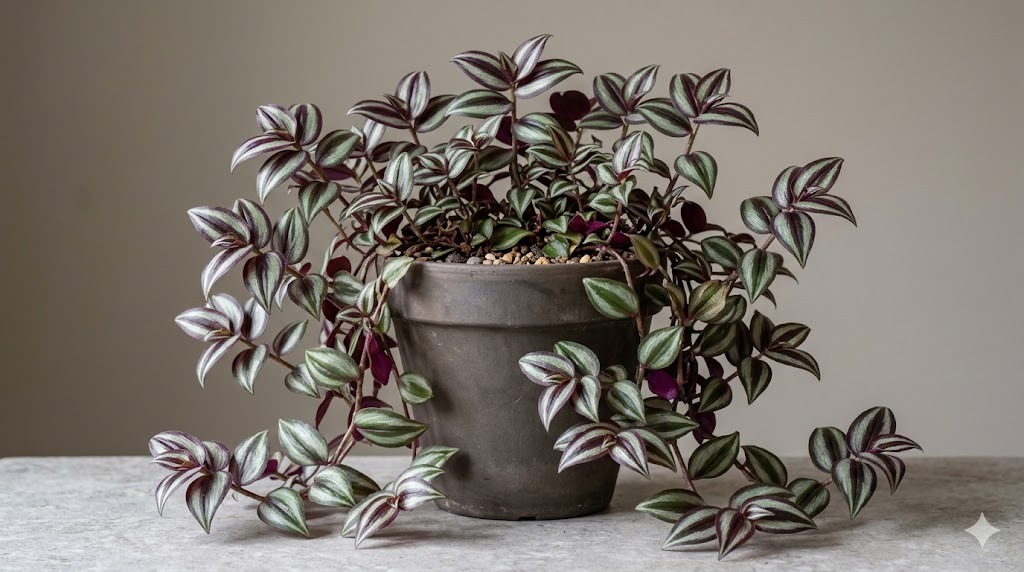
Tradescantia is the fast, lush, colorful trailing plant that fills a hanging pot almost before your eyes. Its overlapping leaves come in shimmering purple, silver, green, pink, and cream stripes, and it grows so quickly and roots so easily that it is one of the most generous, beginner-friendly plants there is. Often called the Inch Plant (for the spacing of its leaf nodes) or the Wandering Dude, it is cheerful, vigorous, and almost free to multiply. The main quirks: it gets leggy if not pinched, and most types are mildly irritating to pets.
Origin & Natural Habitat
Tradescantia species are native to the Americas, ranging from the southern United States through Mexico and Central America into South America. They grow as fast-spreading ground covers in warm, humid conditions, often in dappled light at forest edges and clearings - and many are vigorous enough to be considered weeds or invasive in warm climates. That fast-spreading, adaptable nature is exactly what makes them such easy, rapid houseplants.
Appearance
Tradescantias are trailing or sprawling plants with soft stems and pointed, oval leaves that clasp the stem. Color is the draw: Tradescantia zebrina has purple-and-silver striped leaves with purple undersides; T. fluminensis and its cultivars come in green, cream, and pink variegation ('Tricolor', 'Nanouk'); T. pallida ('Purple Heart') is a deep solid purple. Small three-petaled flowers - pink, white, or purple - appear on healthy plants. Stems trail 30-90 cm and longer.
Why People Love It - Qualities & Benefits
- Fast and rewarding: grows visibly quickly - instant gratification.
- Vivid color: shimmering purples, silvers, pinks, and stripes.
- Effortless propagation: roots in days from any cutting - endless free plants.
- Cheap and easy: inexpensive, widely available, beginner-friendly.
- Great for hanging pots: lush, full cascades in no time.
- Easy to refresh: when it gets leggy, you simply re-propagate.
Care
Light
Bright, indirect light is the key to vivid color - good light keeps the purples and pinks strong and the growth compact. Some gentle direct sun is tolerated and intensifies color. In low light, Tradescantia fades toward green, the variegation weakens, and growth becomes leggy and sparse.
Watering
Water when the top 2-3 cm of soil is dry - keep it lightly moist during active growth, slightly drier in winter. It is fairly thirsty and fast-growing, but soggy soil causes rot, and the soft stems can rot easily. It wilts a little when very dry and recovers after watering.
Soil & Potting
Use a standard well-draining potting mix. Drainage holes are helpful. It also roots and grows in water.
Humidity & Temperature
Tolerates normal room humidity; appreciates a little extra. Comfortable at 18-27 °C; keep above about 10 °C and away from cold drafts.
Feeding
Feed every 2-4 weeks in spring and summer with a balanced fertilizer - it grows fast and uses it.
Pinching & Refreshing
The key to a good-looking Tradescantia: pinch the growing tips regularly to force bushy growth. Without pinching it becomes long, bare, and leggy, with leaves only at the tips. When a plant gets too leggy and tired, the standard move is to take fresh cuttings and start over - Tradescantias are often treated as plants you continually refresh rather than keep forever.
Propagation
Possibly the easiest propagation of any houseplant. Cut a stem section with a few leaves and a node, and place it in water or directly into moist soil - it roots within days. Plant several rooted cuttings together for an instantly full pot. Re-propagating into the same pot is the best way to keep a Tradescantia lush.
Common Problems & Pests
- Leggy, bare stems with leaves only at the tips: too little light, and/or not pinching.
- Fading color, reverting to green: insufficient light.
- Mushy, rotting stems: overwatering - the soft stems rot readily in soggy soil.
- Crispy brown leaf tips: dry air or underwatering.
- Tired, sparse old plant: natural - refresh by re-propagating cuttings.
- Pests: spider mites, aphids, and occasionally mealybugs; fungus gnats in damp soil.
Toxicity & Safety
Mildly toxic / irritating to cats and dogs. Tradescantia sap can cause skin and stomach irritation - pets that chew or brush against it may develop dermatitis, drooling, or mild digestive upset. It is not seriously poisonous, but it is best kept away from pets, and the sap can irritate sensitive human skin too.
Pros & Cons
Pros
- Very fast-growing and rewarding.
- Vivid, shimmering color.
- Roots in days - endless free plants.
- Cheap, easy, beginner-friendly.
- Excellent for hanging pots.
Cons
- Goes leggy without regular pinching.
- Mildly irritating to pets and sensitive skin.
- Fades to green in low light.
- Soft stems rot if overwatered.
- Older plants get tired and need refreshing.
Best Suited For
- Beginners wanting fast, rewarding color.
- Hanging pots and trailing displays.
- Anyone who enjoys propagating.
- Bright rooms.
Not ideal for dark rooms, pet households with leaf-chewers, or anyone wanting one permanent, unchanging plant.
FAQ
Why is my Tradescantia leggy with bare stems? Too little light and/or not pinching. Move it to brighter, indirect light and pinch the growing tips regularly to force bushy growth. Replant the pinched cuttings into the same pot to fill it out.
Why is my Tradescantia losing its purple/pink color? Not enough light. The vivid colors and variegation need bright, indirect light (even some gentle sun). In low light it fades toward plain green.
Is Tradescantia safe for pets? Not really - Tradescantia is mildly toxic/irritating. The sap can cause skin and stomach irritation in cats and dogs. It is best kept out of their reach.
My Tradescantia looks old and sparse - what do I do? Refresh it. Take fresh, healthy cuttings from the tips and root them - they root in days - then start a new full pot. Tradescantias are best treated as plants you continually renew.
How do I propagate it? Cut a stem with a node and a few leaves, put it in water or moist soil, and it roots within days. It is one of the easiest plants in the world to propagate.