ZZ Plant (Zamioculcas zamiifolia)
The ZZ Plant is the houseplant for the darkest, most neglected corner of your home.
🗓️ Last reviewed: June 2026
Overview
The ZZ Plant is the houseplant for the darkest, most neglected corner of your home. With glossy, almost artificial-looking leaves and a near-supernatural tolerance for low light and drought, it has become the default choice for offices, windowless bathrooms, and people who genuinely forget plants exist. It grows slowly but steadily, asks for almost nothing, and looks polished and modern doing it. Its botanical name, Zamioculcas zamiifolia, is such a mouthful that everyone just calls it the "ZZ."
Origin & Natural Habitat
The ZZ Plant is native to the dry grasslands and forests of eastern Africa - from Kenya and Tanzania down to South Africa. It evolved in a climate of seasonal drought, and its survival secret is hidden underground: large, potato-like rhizomes that store water and energy. When the dry season hits, the ZZ lives off those reserves. That is exactly why it shrugs off your forgetfulness - it is built to wait out months of neglect.
It only entered the houseplant trade in the 1990s, when Dutch nurseries began propagating it commercially, and it has been climbing in popularity ever since.
Appearance
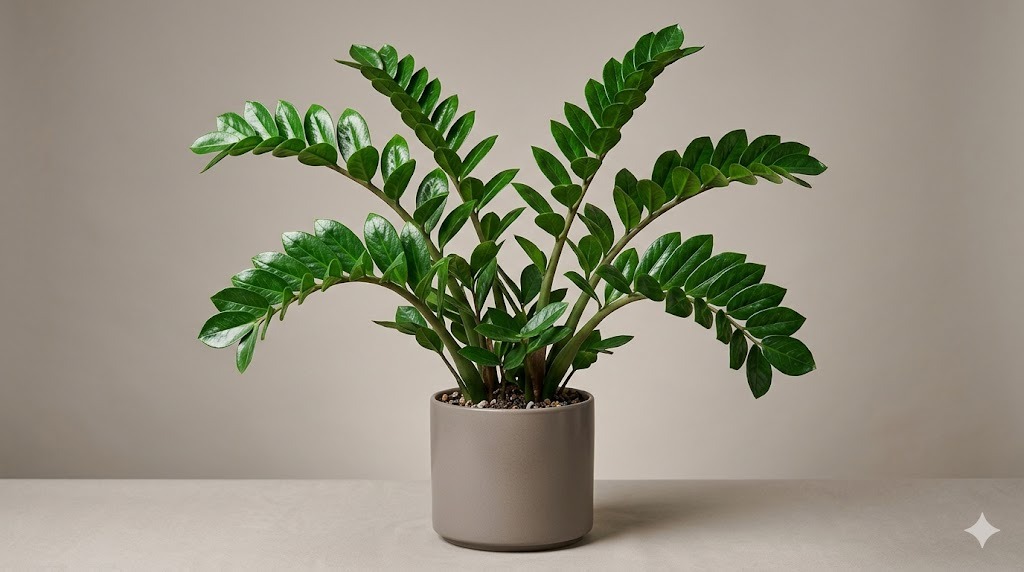
The ZZ has a distinctive look: long, arching stems lined with paired, glossy, dark-green leaflets that are so smooth and waxy they often look fake. New growth emerges as bright lime-green spears that slowly unfurl and darken.
Indoors it typically reaches 60-100 cm tall and equally wide, growing in an elegant, slightly outward-arching shape. Popular variety:
- 'Raven' - new growth emerges bright green, then matures to a dramatic near-black purple. Very popular, slightly slower and pricier.
- Variegated ZZ - rare and expensive, with cream marbling.
Why People Love It - Qualities & Benefits
- Survives extreme low light: one of the very few attractive plants that genuinely lives in dim offices, hallways, and near-windowless rooms.
- Drought-proof: the underground rhizomes mean it tolerates weeks - even a couple of months - without water.
- Glossy, polished look: the waxy leaves reflect light and always look clean and "designed," suiting modern interiors.
- Pest-resistant and tough: rarely bothered by anything.
- Air and atmosphere: included in NASA's Clean Air Study; the realistic benefit at home is greenery and calm in spots where nothing else will grow.
- Low effort, high reliability: the ultimate "set it and forget it" plant.
Care
Light
The ZZ's headline feature is low-light tolerance - it survives in dim corners and windowless offices lit only by overhead lighting. That said, it does not prefer darkness; it simply tolerates it. It grows fastest and fullest in bright, indirect light. Keep it out of harsh direct sun, which scorches the glossy leaves.
Watering
Underwater it, on purpose. The ZZ stores water in its rhizomes and the fastest way to kill it is to keep the soil moist. Water only when the soil is completely dry - usually every 2-4 weeks, and even less in winter or low light. When unsure, do not water. Yellowing, mushy stems mean rot from overwatering; this is the only common cause of a dead ZZ.
Soil & Potting
Use a well-draining mix - regular potting soil with added perlite, or a cactus/succulent mix. Drainage holes are essential. The rhizomes can crack a thin plastic pot as the plant matures.
Humidity & Temperature
Indifferent to humidity; normal dry room air is fine. Comfortable at 18-26 °C. Keep above about 10 °C and away from cold drafts.
Feeding
Minimal. Feed once or twice during spring and summer with diluted balanced fertilizer. It grows fine with none.
Repotting
Repot every 2-3 years, or when rhizomes are visibly crowding or distorting the pot. Spring is best. The rhizomes are large - expect them to take up much of the pot.
Propagation
ZZ Plants propagate slowly but reliably:
- Division: at repotting, separate the rhizome clump into sections, each with stems and roots. Fastest method.
- Stem cuttings: place a whole stem in water or soil.
- Leaf cuttings: lay individual leaflets on soil; each can eventually form a tiny rhizome and new plant.
Patience is essential - leaf and stem propagation can take many months to produce a visible plant.
Common Problems & Pests
- Yellowing leaves and mushy stems: overwatering and rhizome rot - the classic killer. Unpot, cut away rotten rhizomes, dry, and repot in dry mix.
- Wrinkled stems, dropping leaflets: extreme underwatering (rare) - give it a thorough drink.
- Brown leaf tips: usually inconsistent watering.
- Leggy, sparse, stretched stems: too little light over a long period.
- Pests: very rare; occasionally scale or mealybugs - wipe off and treat.
Toxicity & Safety
Mildly toxic to cats, dogs, and humans if chewed. All parts contain calcium oxalate crystals, causing mouth and throat irritation, drooling, and vomiting. The sap can also irritate skin, so wash your hands after pruning or repotting. Not deadly, but keep it away from pets and small children who chew leaves.
Pros & Cons
Pros
- Survives extreme low light - the best plant for dark rooms.
- Drought-proof; tolerates weeks of neglect.
- Glossy, modern, always looks tidy.
- Pest-resistant and trouble-free.
- Long-lived and reliable.
Cons
- Slow grower - little visible change month to month.
- Rots fast if overwatered.
- Mildly toxic; sap can irritate skin.
- Propagation is very slow.
Best Suited For
- Dark offices, hallways, bathrooms, and windowless-ish rooms.
- Beginners and self-described "plant killers."
- Busy people and frequent travelers.
- Anyone wanting a polished, low-effort, modern plant.
Not ideal for people who want fast growth and constant new leaves, or pet households with leaf-chewers.
FAQ
Can a ZZ Plant really survive with no natural light? It tolerates very low light, including rooms lit mostly by artificial overhead lighting, better than almost any other attractive plant. It will survive there - but it grows faster and fuller with bright, indirect light. Total, permanent darkness will eventually weaken it.
How often should I water a ZZ Plant? Only when the soil is completely dry - usually every 2-4 weeks, less in winter. The rhizomes store water, so when in doubt, wait. Overwatering is the only common way to kill it.
Why are my ZZ leaves turning yellow? Almost always overwatering. Check the rhizomes for soft, rotten patches, cut them away, and repot in dry, well-draining mix. Let the plant dry out before watering again.
Is the ZZ Plant poisonous? It is mildly toxic if chewed - it causes mouth irritation and vomiting in pets and people - and the sap can irritate skin. It is not deadly. Keep it away from pets and toddlers, and wash your hands after handling cut stems.
Why is my ZZ growing so slowly? That is normal - ZZ Plants are naturally slow. To speed it up as much as possible, give it brighter indirect light and feed lightly in spring and summer.