ZZ Raven (Zamioculcas zamiifolia 'Raven')
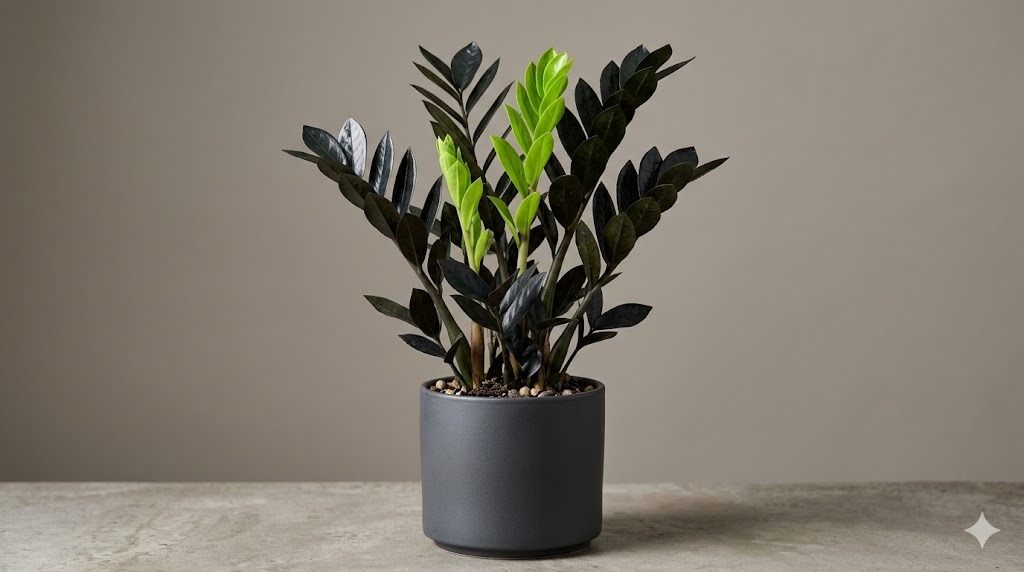
The ZZ Raven is the dramatic dark cousin of the classic ZZ Plant - a striking cultivar whose new leaves emerge bright lime-green and then mature to a deep, glossy, near-black purple.
🗓️ Last reviewed: June 2026
Overview
The ZZ Raven is the dramatic dark cousin of the classic ZZ Plant - a striking cultivar whose new leaves emerge bright lime-green and then mature to a deep, glossy, near-black purple. It combines genuinely unusual, almost gothic foliage with all the famous toughness of the ordinary ZZ: it survives low light, drought, and neglect. It is one of the few "designer" dark-leaved plants that is also genuinely easy to grow. If you want bold, moody foliage without the fuss of a diva plant, the ZZ Raven is a near-perfect choice.
Origin & Natural Habitat
The ZZ Raven is a cultivated variety of Zamioculcas zamiifolia, the ZZ Plant, which is native to the dry grasslands and forests of eastern Africa - Kenya, Tanzania, and southward. Like the standard ZZ, it stores water and energy in large, potato-like underground rhizomes, an adaptation to seasonal drought. The Raven was developed and patented as a dark-foliage cultivar; it shares the species' tough, drought-adapted nature entirely. That arid African origin is the whole care guide: bright-to-low light, gritty soil, and very little water.
Appearance
The ZZ Raven has the same structure as a regular ZZ - long, arching stems lined with paired, glossy, waxy leaflets - but the color is the show. New growth emerges a vivid, almost neon lime-green, then darkens over a few weeks to a deep, rich, glossy purple-black. A mature plant displays both at once: bright new stems against near-black older foliage, a striking contrast. Indoors it reaches about 60-90 cm tall and wide, growing slowly.
Why People Love It - Qualities & Benefits
- Dramatic dark foliage: the glossy near-black leaves are bold, moody, and unusual.
- Striking color contrast: bright lime new growth against black mature leaves.
- As tough as a standard ZZ: survives low light, drought, and neglect.
- Modern, designer look: suits contemporary and minimalist interiors.
- Low-maintenance: the easiest "statement" dark plant you can grow.
- Long-lived and reliable.
Care
Light
Adaptable, like the standard ZZ. It tolerates low light, but bright, indirect light brings out the darkest, richest foliage color - in very low light the leaves may stay greener and less dramatic. Avoid harsh direct sun, which scorches the glossy leaves. For the best "Raven" effect, give it good bright indirect light.
Watering
Underwater it, deliberately. The rhizomes store water, and overwatering - keeping the soil moist - is the only common way to kill it. Water only when the soil is completely dry, usually every 2-4 weeks, and even less in winter or low light. Yellowing, mushy stems mean rot from overwatering. When in doubt, do not water.
Soil & Potting
Use a well-draining mix - potting soil with plenty of perlite, or a cactus/succulent mix. Drainage holes are essential. The rhizomes can crack a thin plastic pot as the plant matures.
Humidity & Temperature
Indifferent to humidity; normal dry room air is fine. Comfortable at 18-26 °C. Keep above about 10 °C and away from cold drafts.
Feeding
Minimal - feed once or twice during spring and summer with diluted balanced fertilizer.
Repotting
Repot every 2-3 years, or when the rhizomes crowd or distort the pot. Spring is best.
Propagation
Like the standard ZZ, the Raven propagates slowly but reliably by division of the rhizome clump (fastest), or from stem and leaf cuttings, which can take many months to form a tiny rhizome and new plant. Patience is essential. Note that the ZZ Raven is a patented cultivar, so commercial propagation for sale is restricted - propagating for personal use is fine.
Common Problems & Pests
- Yellowing, mushy stems: overwatering and rhizome rot - the classic and main killer.
- New leaves staying green / weak dark color: too little light - give it brighter indirect light for the deep black color.
- Wrinkled stems: extreme underwatering (rare) - water thoroughly.
- Brown leaf tips: inconsistent watering.
- Leggy, stretched growth: insufficient light over a long period.
- Pests: very rare; occasionally scale or mealybugs.
Toxicity & Safety
Mildly toxic to cats, dogs, and humans if chewed. Like the standard ZZ, the Raven contains calcium oxalate crystals, causing mouth and throat irritation, drooling, and vomiting if eaten; the sap can irritate skin. Not deadly, but keep it away from pets and children, and wash hands after handling cut stems.
Pros & Cons
Pros
- Dramatic, glossy, near-black foliage.
- Striking lime-vs-black color contrast.
- As tough and forgiving as a standard ZZ.
- Survives low light and drought.
- Low-maintenance designer plant.
Cons
- Slow-growing.
- Rots fast if overwatered.
- Best color needs good light.
- Mildly toxic; sap irritates skin.
- Often pricier than the standard ZZ.
Best Suited For
- Anyone wanting bold, dark, designer foliage with easy care.
- Modern and minimalist interiors.
- Beginners who want a striking but forgiving plant.
- Busy people and travelers.
Not ideal for chronic overwaterers, or pet households with leaf-chewers.
FAQ
Why are my ZZ Raven's new leaves staying green instead of turning black? New ZZ Raven leaves naturally emerge lime-green and darken over a few weeks - that is normal. But if they never deepen to that rich near-black, the plant likely needs more light. Move it to a brighter (still indirect) spot for the darkest color.
How often should I water a ZZ Raven? Only when the soil is completely dry - usually every 2-4 weeks, less in winter. The rhizomes store water, so overwatering is the only common way to kill it. When in doubt, wait.
Why are the stems turning yellow and mushy? Overwatering and rhizome rot. Check the rhizomes, cut away any soft, rotten parts, and repot into dry, well-draining mix. Let the plant dry out before watering again.
Is the ZZ Raven safe for pets? No - like the standard ZZ, it is mildly toxic if chewed, causing mouth irritation and vomiting, and the sap can irritate skin. Keep it away from pets and children.
Is the ZZ Raven harder to care for than a normal ZZ Plant? No - care is essentially identical. It is just as tough and forgiving. The only difference is that good bright light brings out its signature dark color.