Beech Mushroom (Shimeji)
The beech mushroom (Hypsizygus tessellatus), sold as shimeji in two colours - white (bunapi) and brown (buna-shimeji) - grows in neat clusters of small, marble-capped mushrooms on long stems.
🗓️ Last reviewed: June 2026
Overview
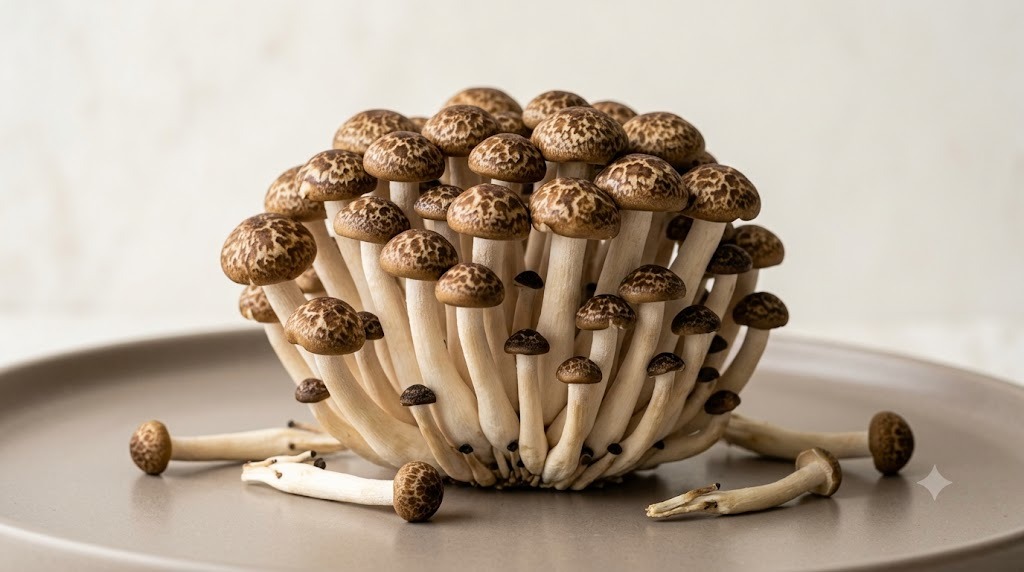
The beech mushroom (Hypsizygus tessellatus), sold as shimeji in two colours - white (bunapi) and brown (buna-shimeji) - grows in neat clusters of small, marble-capped mushrooms on long stems. Raw it is unpleasantly bitter, but cooking transforms it into a firm, nutty, slightly buttery mushroom that holds its shape well. It is a staple of Japanese cooking and a tidy, attractive species to grow on sawdust.
Identification & Appearance
Tight clusters of small mushrooms with rounded caps 1-3 cm across on slender stems fused at a common base. Brown shimeji has marbled tan caps; white shimeji is uniformly ivory. White gills, white spore print. The caps often show a faint cracked or mottled pattern.
Where It Grows
A wood-rotting fungus of dead hardwoods, especially beech (hence the name), across temperate East Asia, Europe, and North America, fruiting in autumn.
How to Grow at Home
Beech mushroom is grown on sterilised supplemented hardwood sawdust, usually in bottles or bags. It colonises fairly slowly and benefits from a longer maturation period before fruiting, which improves the cluster. After colonisation it is given cool temperatures, light, and fresh air to pin and fruit.
Growing Conditions
Light
Indirect light is needed to form well-shaped caps and tidy clusters.
Watering
Humidity around 85-95% with light misting of the air; the firm caps tolerate conditions better than delicate oysters.
Temperature & Substrate
Fruits at 13-18°C after a cool trigger. Substrate: sterilised supplemented hardwood sawdust; allow extra maturation time.
Culinary Use
Never eat shimeji raw - it is bitter. Cooked, the bitterness vanishes and it becomes nutty and firm, excellent in stir-fries, soups, rice dishes, and alongside fish. The whole cluster is trimmed at the base and the mushrooms separated. It holds its shape and texture better than most cultivated mushrooms.
Health & Nutrition
Low calorie, good fibre and protein, B vitamins, and beta-glucans for immune support. A light, easily digestible mushroom once cooked.
Common Problems
- Bitter taste - eaten undercooked; shimeji must be fully cooked.
- Loose, leggy clusters - too little light or fresh air.
- Slow fruiting - needs patience and a proper cool trigger.
Pros & Cons
Pros
- Firm texture that holds up in cooking.
- Attractive, uniform clusters.
- Long shelf life for a cultivated mushroom.
Cons
- Must be cooked - raw it is bitter.
- Needs sterilised substrate.
- Slower than oyster mushrooms.
Best Suited For
- Cooks who want a firm, shape-holding mushroom.
- Growers comfortable with sawdust cultivation.
Not ideal for anyone wanting a raw-edible or very fast mushroom.
FAQ
Why is my shimeji bitter? It was undercooked. Shimeji is always bitter raw and must be cooked through.
What is the difference between white and brown shimeji? Mostly colour and a slight flavour difference - both are Hypsizygus tessellatus; white is a selected strain.
Does it store well? Yes - firmer than most cultivated mushrooms, it keeps several days to a week refrigerated.