Chanterelle
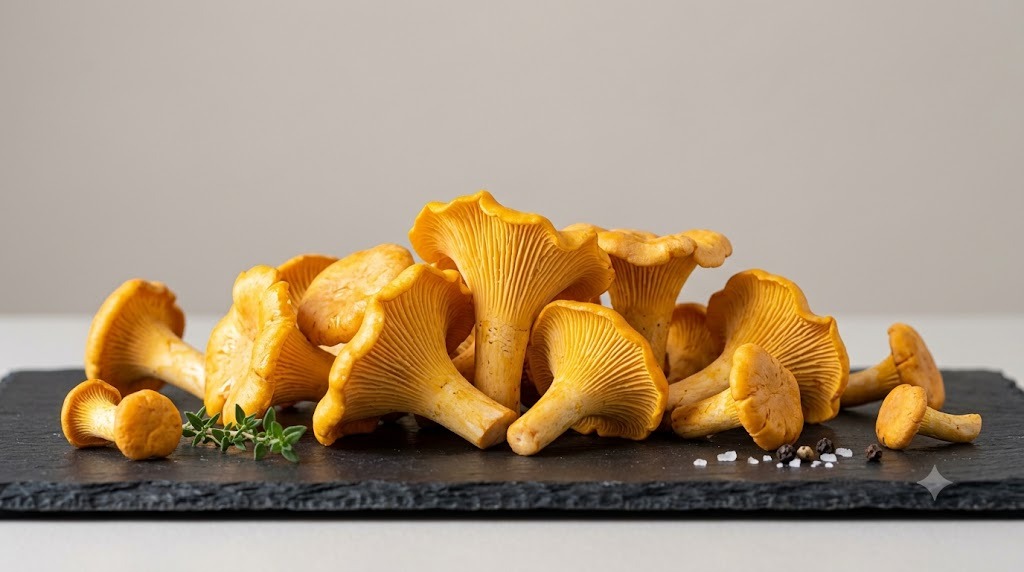
The chanterelle (Cantharellus cibarius and relatives) is a golden, trumpet-shaped wild mushroom with a delicate fruity aroma - often described as apricot - and a firm, gourmet texture.
🗓️ Last reviewed: June 2026
Overview
The chanterelle (Cantharellus cibarius and relatives) is a golden, trumpet-shaped wild mushroom with a delicate fruity aroma - often described as apricot - and a firm, gourmet texture. It is one of the most loved and most gathered wild edibles in the world. Because it lives in partnership with tree roots, it cannot be farmed, so every chanterelle is a foraged one.
Identification & Appearance
A vase- or funnel-shaped mushroom in warm egg-yolk yellow to golden, 3-10 cm across, with a wavy, irregular cap edge. Crucially, it has no true gills - instead, blunt, forking, vein-like ridges run down the stem. The flesh is pale and firm and smells faintly of apricots.
Where It Grows
Chanterelles grow in summer and autumn in mossy woodland - mixed and conifer forests, often near oak, beech, birch, and pine - across the Northern Hemisphere. They form mycorrhizal partnerships with tree roots and reappear in the same spots for years.
Foraging & Cultivation
Chanterelles cannot be commercially cultivated - their dependence on living tree roots has defeated every attempt. They are strictly a foraged mushroom. Foragers return to known patches season after season; cutting rather than uprooting and not over-picking helps a patch persist.
Growing Conditions
Light
Dappled woodland shade; chanterelles fruit on shaded, mossy forest floors, not in the open.
Watering
They need a damp forest - chanterelles fruit best a week or two after summer and autumn rains.
Temperature & Substrate
A warm-season woodland species, fruiting through summer and autumn. They grow only in partnership with tree roots, not on any substrate a grower can supply.
Culinary Use
Chanterelles are a gourmet classic - gently sautéed in butter to release their apricot aroma, added to cream sauces, eggs, and risotto. They hold a firm texture and should be cooked, never eaten raw. They are best fresh; they can also be dried, though some aroma is lost.
⚠️ Safety note
The toxic "false chanterelle" and the poisonous jack-o'-lantern mushroom can be mistaken for true chanterelles. True chanterelles have blunt forking ridges (not sharp, true gills) and grow from soil, not in clusters on wood. Never eat a wild chanterelle without expert confirmation.
Health & Nutrition
Chanterelles are a good source of vitamin D, iron, copper, and antioxidants, and are low in calories. Their appeal is overwhelmingly culinary.
Pros & Cons
Pros
- Exquisite apricot aroma and firm texture.
- A highly prized gourmet mushroom.
- Patches return for years.
Cons
- Impossible to cultivate - foraged only.
- Toxic look-alikes require careful identification.
- Aroma fades somewhat when dried.
Best Suited For
- Foragers with access to mixed or conifer woodland.
- Cooks who prize a delicate, aromatic mushroom.
Not ideal for home growers - chanterelles cannot be farmed.
FAQ
Can I grow chanterelles? No - they depend on living tree roots and cannot be cultivated. They are always foraged.
How do I distinguish a true chanterelle? It has blunt, forking ridges running down the stem - not sharp gills - and grows singly from soil, with an apricot smell.
What is the jack-o'-lantern? A toxic orange mushroom that grows in clusters on wood and has true gills - a dangerous chanterelle look-alike.