Chestnut Mushroom
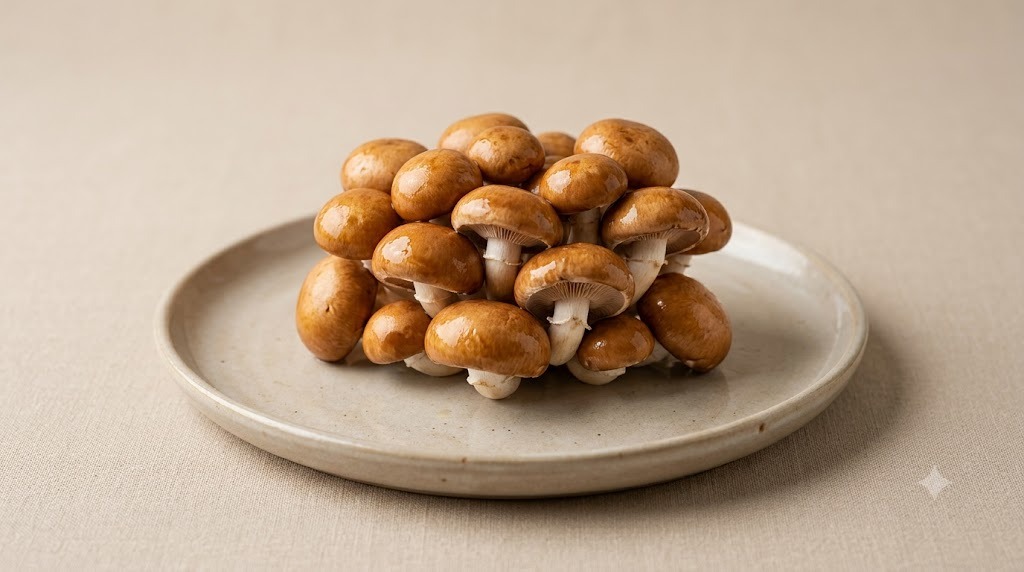
The chestnut mushroom (Pholiota adiposa) is a glossy golden-brown cluster mushroom with small scaly caps and a crisp, nutty flavour that lives up to its name.
🗓️ Last reviewed: June 2026
Overview
The chestnut mushroom (Pholiota adiposa) is a glossy golden-brown cluster mushroom with small scaly caps and a crisp, nutty flavour that lives up to its name. Closely related to nameko but without the heavy gel, it is a handsome, flavourful species grown on supplemented sawdust. Note that "chestnut mushroom" is also a shop name for brown button mushrooms - this profile covers the true Pholiota.
Identification & Appearance
Clusters of convex caps 2-6 cm across, bright honey to chestnut-brown, often slightly sticky and dotted with fine pale scales. Stems are pale and fibrous; gills pale yellow turning rusty. Spore print brown. Young caps are the most attractive and the best eating.
Where It Grows
A wood-rotting fungus of dead and dying hardwoods across cool temperate East Asia, Europe, and North America, fruiting in clusters from trunks and stumps in autumn.
How to Grow at Home
Chestnut mushroom is grown on sterilised supplemented hardwood sawdust. It colonises at a moderate pace and fruits in bright clusters when given a cool trigger, light, fresh air, and high humidity. It rewards patience with a longer maturation before fruiting.
Growing Conditions
Light
Indirect light brings out the golden cap colour and encourages compact clusters.
Watering
Humidity of 85-95% with light misting; the slightly sticky caps tolerate moist air well, but avoid soaking.
Temperature & Substrate
Cool-loving - fruits at 10-18°C. Substrate: sterilised supplemented hardwood sawdust.
Culinary Use
Chestnut mushroom has a genuinely nutty, crisp character. It suits stir-fries, soups, sautés, and rice dishes, and holds its shape and bite well. Cook it through; like its relatives it is not eaten raw. Best used fresh and young.
Health & Nutrition
Low calorie, good fibre and protein, B vitamins, and beta-glucans for immune support.
Common Problems
- Confusion with brown button mushrooms - shops sell creminis as "chestnut mushrooms"; the true Pholiota is a different, cluster-forming species.
- No fruiting in warm rooms - it needs cool temperatures.
- Contamination - sterilised substrate essential.
Pros & Cons
Pros
- Genuinely nutty, crisp flavour.
- Attractive golden clusters.
- Holds texture in cooking.
Cons
- Cool-loving - poor in warm conditions.
- Needs sterilised substrate.
- Name is confusingly shared with brown button mushrooms.
Best Suited For
- Cool-climate and autumn growing.
- Cooks wanting a firm, nutty mushroom.
Not ideal for warm rooms or beginners without sterile technique.
FAQ
Is a chestnut mushroom the same as a brown button mushroom? No. Shops label brown Agaricus as "chestnut mushrooms," but the true chestnut mushroom is Pholiota adiposa, a cluster-forming wood-rotter.
Why won't mine fruit? Most likely the room is too warm - chestnut mushroom needs 10-18°C to fruit.