Chicken of the Woods
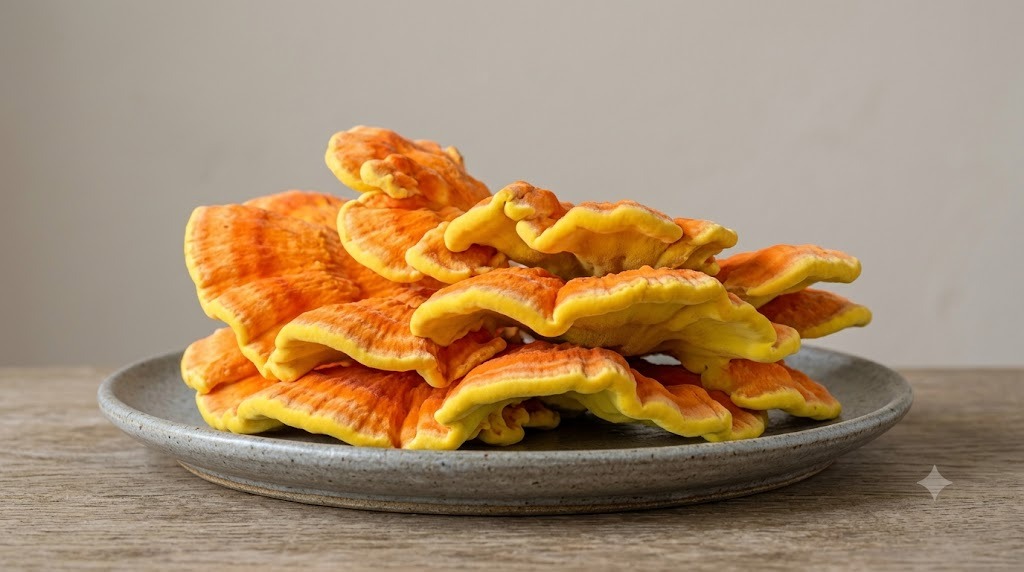
Chicken of the woods (Laetiporus sulphureus and relatives) is a spectacular bright orange-and-yellow bracket fungus that grows in tiered shelves on tree trunks.
🗓️ Last reviewed: June 2026
Overview
Chicken of the woods (Laetiporus sulphureus and relatives) is a spectacular bright orange-and-yellow bracket fungus that grows in tiered shelves on tree trunks. Its claim to fame is texture: cooked young, it genuinely resembles chicken breast in bite and stringiness, which has made it a favourite vegetarian meat substitute. It is a foraged mushroom - too tied to its host trees to be practically cultivated.
Identification & Appearance
Large overlapping shelves, each 10-30 cm across, in vivid sulphur-yellow and orange, with a suede-like upper surface and a bright yellow pored underside (no gills). The whole cluster can be enormous and very heavy. Young growing edges are soft; older parts turn pale, brittle, and inedible.
Where It Grows
A wood-rotting fungus on living and dead hardwoods - especially oak - across temperate forests of the Northern Hemisphere, fruiting from late spring through autumn, often returning to the same tree for years.
Foraging & Cultivation
Chicken of the woods is mainly foraged. It can be coaxed onto inoculated hardwood logs with some success, but it is slow and unreliable, so most is gathered wild. Harvest only the soft, fresh outer edges; the old inner parts are not worth eating.
Growing Conditions
Light
Indirect woodland light; it fruits on shaded and semi-shaded trunks.
Watering
It fruits in damp, warm weather; on logs it needs steady moisture, but cultivation results are inconsistent.
Temperature & Substrate
Fruits from late spring to autumn in mild weather. It grows on hardwood - particularly oak - as living trunks or, with mixed success, inoculated logs.
Culinary Use
Only the tender, fresh-growing portions are eaten. Cooked, they take on a remarkably chicken-like, stringy texture - excellent breaded and fried, in sandwiches, curries, and stews as a meat substitute. It must always be cooked thoroughly.
⚠️ Safety note
Chicken of the woods causes stomach upset in a minority of people, especially when it grows on conifers, eucalyptus, or yew - avoid specimens from those trees and only eat ones from hardwoods. Always cook it well and try a small portion the first time. Never eat any wild mushroom without expert identification.
Health & Nutrition
Low in calories, a source of protein, fibre, and antioxidants. Its real appeal is its meat-like texture rather than any standout nutritional profile.
Pros & Cons
Pros
- Remarkable chicken-like texture - a top meat substitute.
- Large, easy-to-spot, brightly coloured.
- Returns to the same tree for years.
Cons
- Not reliably cultivable - foraged mostly.
- Upsets some stomachs; risky from conifers/yew.
- Only the young edges are edible.
Best Suited For
- Foragers wanting a meat-substitute mushroom.
- Cooks experimenting with vegetarian "chicken" dishes.
Not ideal for home growers wanting a dependable crop.
FAQ
Does it really taste like chicken? The texture is strikingly chicken-like when young and well cooked; the flavour is mild and savoury.
Can I grow it? Only with limited success on inoculated hardwood logs - most chicken of the woods is foraged.
Is it always safe? It disagrees with some people, especially from conifers, eucalyptus, or yew. Eat only hardwood specimens, cooked, and start with a small amount.