Cordyceps Mushroom
Cordyceps militaris is a vivid orange club fungus and the cultivable cousin of the famous wild caterpillar fungus.
🗓️ Last reviewed: June 2026
Overview
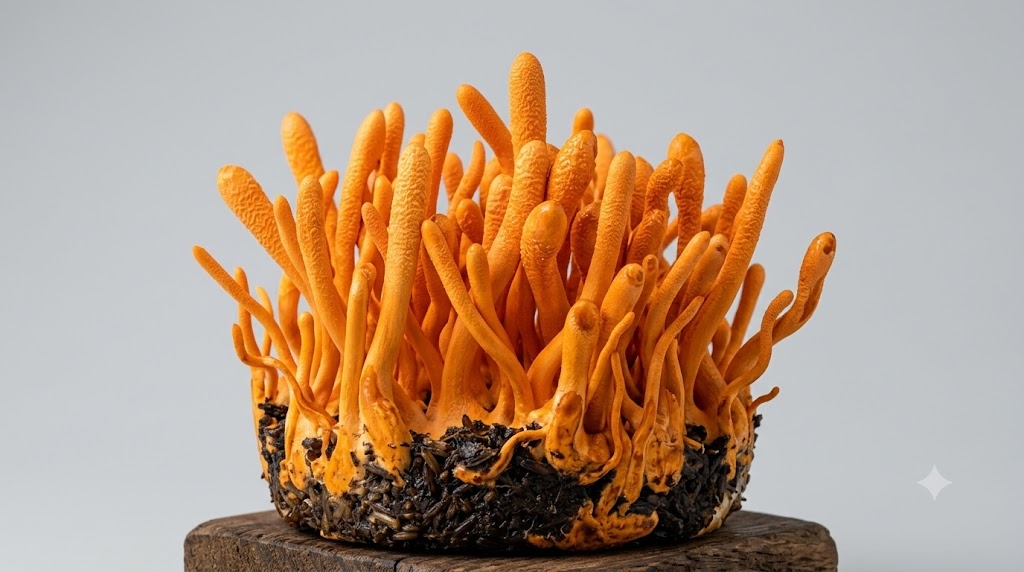
Cordyceps militaris is a vivid orange club fungus and the cultivable cousin of the famous wild caterpillar fungus. In nature it is parasitic on insects, but for home and commercial growing it is raised entirely on a grain or rice substrate - no insects needed. It is grown for its bright orange fruit bodies, dried and used in teas and extracts, and it has become one of the most popular functional mushrooms to cultivate.
Identification & Appearance
Small, finger- or club-shaped fruit bodies 2-8 cm tall, bright orange to deep yellow-orange, growing upright in dense stands from the substrate surface. The texture is firm and slightly spongy. There is no cap-and-gill structure - the whole club bears the spore surface.
Where It Grows
Cordyceps militaris occurs naturally across temperate regions worldwide, where it parasitises the buried pupae of moths and butterflies, sending its orange club up through the soil.
How to Grow at Home
Cultivated cordyceps is grown on a sterilised substrate of cooked rice or grain enriched with a nutrient broth, in jars or containers - insects are not used. After colonisation it is given light and fresh air to trigger the orange clubs, which take several weeks to develop. It needs reliable sterile technique, as the rich substrate is prone to contamination.
Growing Conditions
Light
Cordyceps genuinely needs light to fruit - a key difference from most mushrooms. Bright indirect light or a grow light is used to trigger and colour the orange clubs.
Watering
Humidity around 85-90%; the sealed jars hold moisture, with light fresh-air exchange as the clubs form.
Temperature & Substrate
Cool to moderate - fruits best at 18-22°C. Substrate: sterilised cooked rice or grain with added nutrients.
Culinary Use
Cordyceps is mild and slightly nutty. The dried clubs are simmered into teas and broths or processed into powders and capsules. Some cooks add small amounts to soups for colour and a subtle savoury note, but it is used mainly as a functional ingredient rather than a vegetable.
Health & Nutrition
Cordyceps is a major functional mushroom, studied for energy, stamina, and immune support; cordycepin is its best-known active compound. It is taken as a tea or supplement. Anyone on medication should check for interactions before regular use.
Common Problems
- No orange clubs - not enough light; cordyceps must have light to fruit.
- Contamination - the rich rice substrate spoils easily without good sterile technique.
- Pale or stunted clubs - light, temperature, or fresh air inadequate.
Pros & Cons
Pros
- Grown on rice - no insects involved.
- Striking bright-orange fruit bodies.
- A popular, sought-after functional mushroom.
Cons
- Needs reliable sterile technique.
- Genuinely light-dependent, unlike most mushrooms.
- Slow - several weeks to fruit.
Best Suited For
- Growers with sterile technique wanting a functional mushroom.
- Anyone making their own cordyceps tea or extract.
Not ideal for beginners without a clean working setup.
FAQ
Does growing cordyceps involve insects? No - cultivated Cordyceps militaris is grown entirely on rice or grain substrate.
Why won't mine fruit? Most likely too little light. Unlike most mushrooms, cordyceps needs light to form its orange clubs.
Is it the same as the wild caterpillar fungus? It is a close, cultivable relative - the rare wild Himalayan species (Ophiocordyceps sinensis) is different and not commercially grown.