Enoki Mushroom
Enoki (Flammulina velutipes) has two faces.
🗓️ Last reviewed: June 2026
Overview
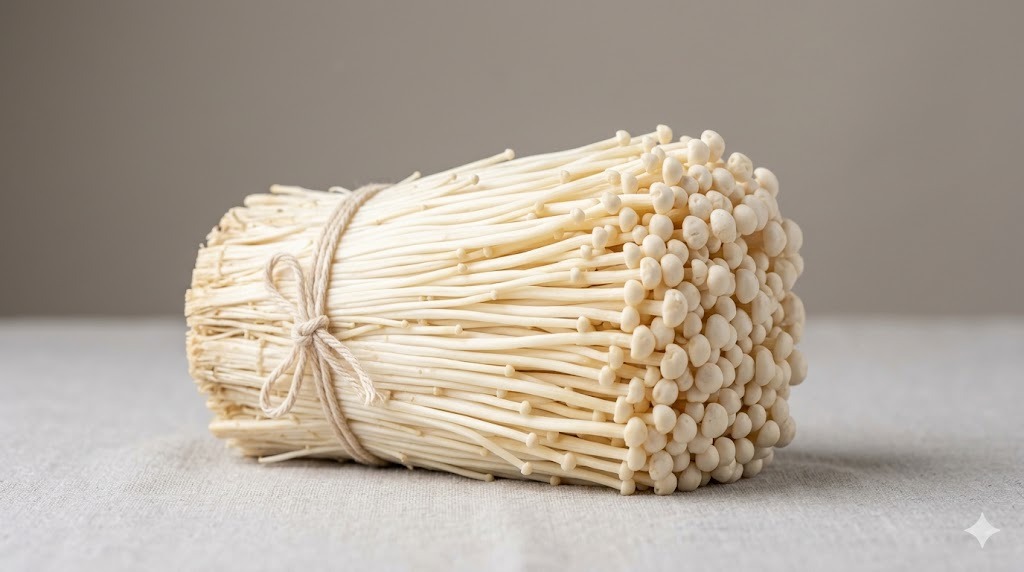
Enoki (Flammulina velutipes) has two faces. The pale, slender, long-stemmed clusters sold in supermarkets are grown in still, carbon-dioxide-rich darkness; the wild mushroom, by contrast, is a stout orange-brown cap that fruits on wood in winter. Both are the same species. The cultivated form is delicate and crisp, popular in East Asian soups and hot pots, and growing it at home means deliberately depriving the mushroom of light and fresh air.
Identification & Appearance
Cultivated enoki: bundles of long, thin, ivory-white stems topped with tiny round caps, grown tall and pale on purpose. Wild enoki ("velvet shank"): a slimy-capped orange-brown mushroom 2-8 cm across with a dark velvety stem, white gills, white spore print, fruiting on dead hardwood through cold months.
Where It Grows
A wood-rotting fungus of dead and dying hardwoods across the Northern Hemisphere, unusual for fruiting in late autumn and winter, even pushing up through snow.
How to Grow at Home
Enoki is grown on sterilised supplemented hardwood sawdust in jars or bottles. To get the elegant pale supermarket form, the colonised substrate is fruited in darkness, in cool temperatures, and with a collar that traps carbon dioxide - this forces long, thin, white stems. Grown in normal light and air, home enoki instead looks like the wild brown mushroom, which is equally edible.
Growing Conditions
Light
Darkness for the pale cultivated form; any light produces the brown, short-capped wild appearance - both are fine to eat.
Watering
Humidity around 80-90%; the substrate is pre-moistened and the surface should not be wetted directly.
Temperature & Substrate
Cool-loving: fruits at 8-15°C, slower in warmth. Substrate: sterilised supplemented hardwood sawdust.
Culinary Use
Cultivated enoki is mild, crisp, and slightly fruity - added near the end of cooking to soups, ramen, and hot pots so it keeps its texture, or wrapped and grilled. The tough cluster base is trimmed away. Always cook enoki thoroughly; raw enoki has been linked to foodborne illness.
Health & Nutrition
Very low calorie, good fibre, B vitamins, and antioxidants. Enoki contains beta-glucans and has been studied for immune and metabolic support.
Common Problems
- Short, brown, fat mushrooms instead of long white ones - exposure to light and fresh air; expected if not grown in a dark, high-CO₂ setup.
- Uneven cluster - temperature too warm; enoki needs cool conditions.
- Contamination - sterile technique is essential on this rich substrate.
Pros & Cons
Pros
- Crisp, delicate texture unlike any other mushroom.
- Thrives in cool conditions when others slow down.
- Distinctive in soups and hot pots.
Cons
- The pale supermarket look needs a deliberate dark, high-CO₂ setup.
- Needs sterilised substrate.
- Must be cooked thoroughly.
Best Suited For
- Cool-climate and winter growing.
- Cooks who love East Asian soups and hot pots.
Not ideal for beginners without sterile technique.
FAQ
Why does my home-grown enoki look brown and stubby? That is the natural form. The white, leggy version is produced by growing in darkness with trapped carbon dioxide.
Is wild "velvet shank" the same as enoki? Yes - Flammulina velutipes is the same species; it just looks very different grown in light.
Can I eat enoki raw? No - cook it well. Raw enoki has caused foodborne illness outbreaks.