Golden Oyster Mushroom
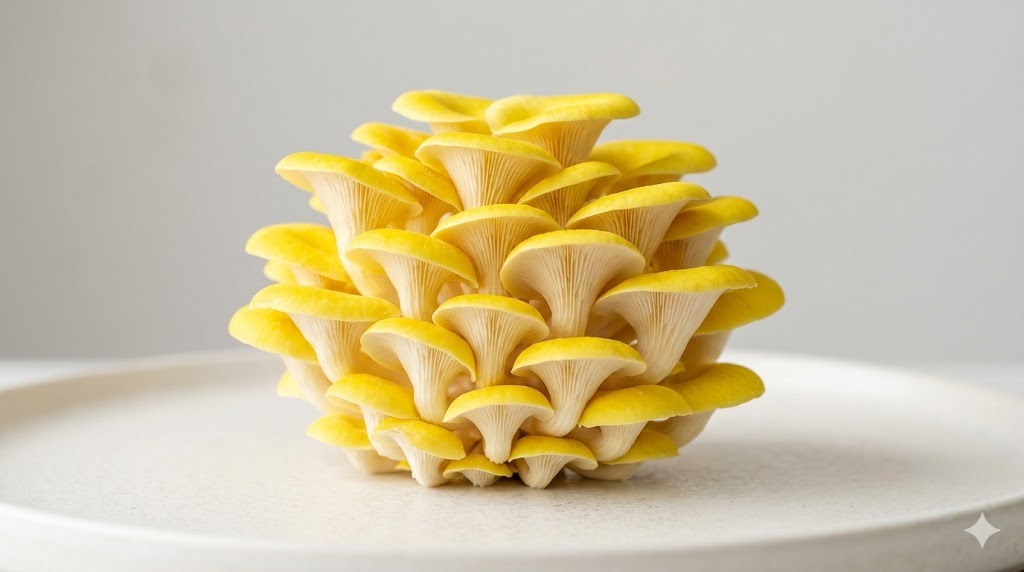
The golden oyster (Pleurotus citrinopileatus) is a warm-season oyster mushroom with brilliant lemon-yellow caps and a delicate, slightly nutty, cashew-like flavour.
🗓️ Last reviewed: June 2026
Overview
The golden oyster (Pleurotus citrinopileatus) is a warm-season oyster mushroom with brilliant lemon-yellow caps and a delicate, slightly nutty, cashew-like flavour. Like the pink oyster it is fast and easy on simple substrates, making it a colourful and beginner-friendly choice. It is best grown in warm months, and the bright clusters are as ornamental as they are edible.
Identification & Appearance
Clusters of small, bright yellow funnel-shaped caps on slender pale stems, growing in tight rosettes. Caps are 2-6 cm across, the colour deepest when young and fading toward cream with age. White gills, white spore print.
Where It Grows
Native to eastern Russia, northern China, and Japan, growing on dead hardwoods, especially elm. In recent years it has become an aggressive introduced species in parts of North America, spreading from cultivation into wild forests.
How to Grow at Home
Golden oyster grows readily on pasteurised straw, sawdust, or coffee grounds. Inoculate with grain spawn, colonise at warm room temperature, and fruit in a humid, bright, airy spot. It fruits in delicate clusters and, like pink oyster, prefers warmth and produces quickly.
Growing Conditions
Light
Bright, indirect light intensifies the yellow colour and encourages compact, well-formed rosettes.
Watering
Maintain 85-95% humidity with regular misting; the thin caps dry and curl quickly if humidity drops.
Temperature & Substrate
Warm-loving - fruits best at 20-30°C. Substrate: pasteurised straw, hardwood sawdust, or spent coffee grounds.
Culinary Use
Golden oyster has a refined, nutty taste best shown off in simple preparations - sautéed in butter, added to omelettes, or crisped as a garnish. The yellow colour fades on cooking. It is fragile and should be cooked within a day or two of harvest.
Health & Nutrition
Low calorie, good source of protein, fibre, B vitamins, and antioxidants, with the immune-supporting beta-glucans common to oyster mushrooms.
Common Problems
- Caps fading to white - light too dim or mushrooms over-mature.
- Brittle, curling caps - humidity too low.
- Bitterness if overcooked - golden oyster can turn slightly bitter; cook gently.
Pros & Cons
Pros
- Fast, easy, and very ornamental.
- Pleasant nutty flavour.
- Grows on free waste substrates.
Cons
- Very short shelf life.
- Needs warmth; weak in cool conditions.
- Can be invasive - do not dump spent substrate in woodland.
Best Suited For
- Warm-season and summer growing.
- Beginners wanting colour and speed.
Not ideal for cool homes or growers needing storable mushrooms.
FAQ
Is the golden oyster invasive? In some regions, yes - it has escaped cultivation. Compost or bag spent blocks; never discard them in forests.
Why are my caps pale? Low light or old mushrooms. Pick young and grow in bright indirect light for the best yellow.