Maitake (Hen of the Woods)
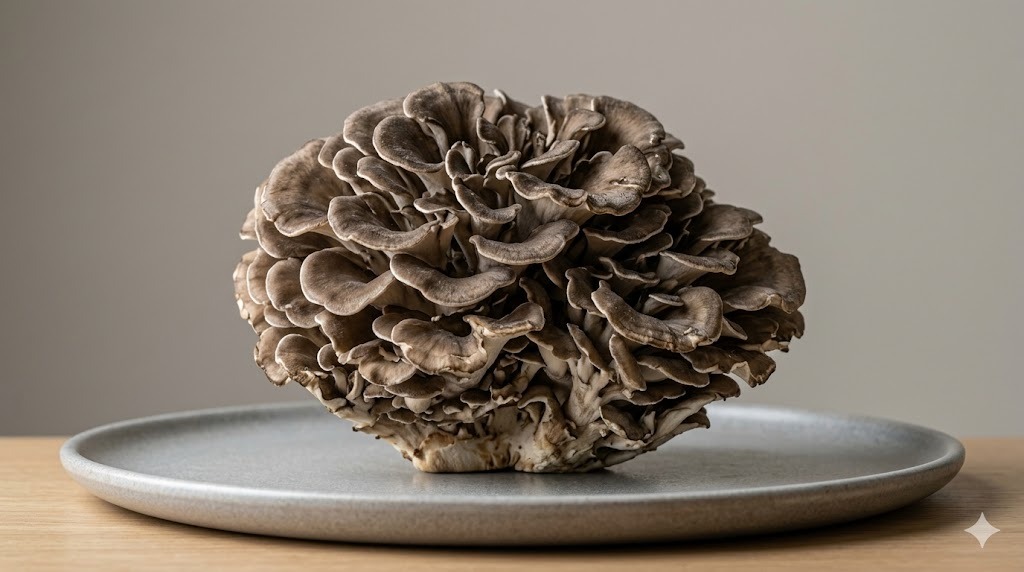
Maitake (Grifola frondosa), known in English as hen of the woods, is a magnificent layered cluster of grey-brown fronds that can grow to enormous size at the base of old oaks.
🗓️ Last reviewed: June 2026
Overview
Maitake (Grifola frondosa), known in English as hen of the woods, is a magnificent layered cluster of grey-brown fronds that can grow to enormous size at the base of old oaks. Its name means "dancing mushroom" - said to be the joy of finding one. It is a choice gourmet edible and a respected medicinal mushroom, and although it is one of the harder species to cultivate, it can be grown at home on enriched sawdust.
Identification & Appearance
A large rosette of many overlapping, spoon-shaped grey to brown fronds, fused into a common base. A whole cluster can weigh several kilograms. There are no true gills - the underside has tiny pores. The flesh is pale and firm; the aroma is earthy and rich.
Where It Grows
Maitake is a parasite and decayer of hardwoods, especially oak, growing year after year from the base of the same trunk or stump in late summer and autumn across temperate Asia, Europe, and eastern North America.
How to Grow at Home
Maitake is grown on sterilised hardwood sawdust heavily supplemented with bran, often in bags buried partly in soil to mimic its stump habitat. Colonisation is slow and the fungus must form a firm mass before fruiting. It is less forgiving than oyster or shiitake and best attempted once a grower has experience, but the payoff is a large, prized cluster.
Growing Conditions
Light
Indirect light helps trigger and shape fruiting; maitake is often fruited where it receives soft daylight.
Watering
High humidity (85-95%) during fruiting; the buried-bag method keeps moisture stable. Avoid waterlogging.
Temperature & Substrate
Colonises around 21-24°C; fruiting triggered by cooler autumn-like temperatures of 13-18°C. Substrate: sterilised oak sawdust with bran, often soil-cased.
Culinary Use
Maitake is one of the finest cooking mushrooms - rich, savoury, and peppery, with fronds that crisp wonderfully when roasted or pan-fried. Tear into clusters and dry-sear, then finish with butter. It holds texture in soups and braises and dries well for storage.
Health & Nutrition
Maitake is a notable medicinal mushroom, rich in beta-glucans - its "D-fraction" has been widely studied for immune support. It is also a good source of fibre, B vitamins, and minerals, and builds vitamin D in sunlight.
Common Problems
- No fruiting after long colonisation - temperature not dropped, or the mass is not yet firm enough.
- Contamination - the bran-rich substrate must be properly sterilised.
- Small or deformed cluster - humidity or fresh air inadequate.
Pros & Cons
Pros
- Superb, rich flavour - a true gourmet mushroom.
- Highly valued medicinal species.
- A single cluster can be very large.
Cons
- One of the harder mushrooms to cultivate.
- Slow to colonise and fruit.
- Needs sterilised substrate and careful conditions.
Best Suited For
- Experienced growers wanting a challenge.
- Cooks and foragers who prize hen of the woods.
Not ideal for beginners - start with oyster or shiitake first.
FAQ
Why is it called hen of the woods? The layered fronds resemble the ruffled feathers of a sitting hen.
Is maitake hard to grow? Relatively - it is slow and needs sterile substrate and precise conditions. It is a step up from beginner mushrooms.
Can I find it wild? Yes, at the base of old oaks in autumn - but only eat wild mushrooms identified by an expert.