Morel Mushroom
The morel (Morchella species) is one of the most prized wild mushrooms in the world - a honeycombed, hollow-bodied spring mushroom with a rich, nutty, savoury flavour that commands high prices and inspires devoted foragers.
🗓️ Last reviewed: June 2026
Overview
The morel (Morchella species) is one of the most prized wild mushrooms in the world - a honeycombed, hollow-bodied spring mushroom with a rich, nutty, savoury flavour that commands high prices and inspires devoted foragers. It is famously difficult to cultivate reliably, so most morels still come from the wild. For a plant-and-mushroom site it sits firmly in the "foraged treasure" category.
Identification & Appearance
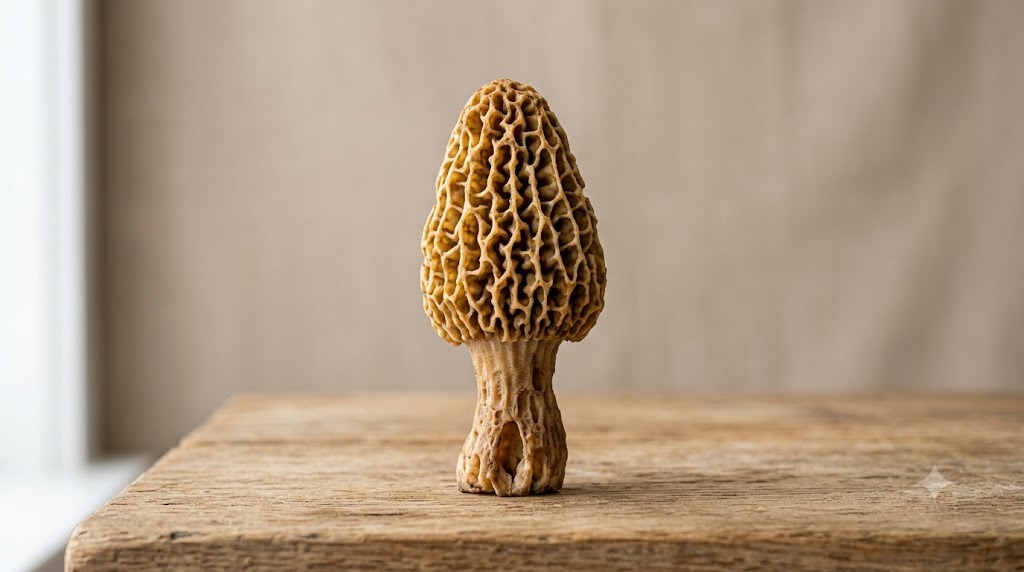
A distinctive cone- to egg-shaped cap covered in a network of ridges and pits like a honeycomb, in tan, yellow, grey, or near-black. The crucial feature: a true morel is completely hollow from cap tip to stem base, and the cap is attached to the stem. Colours vary by species and habitat.
Where It Grows
Morels fruit in spring across temperate forests of the Northern Hemisphere - near ash, elm, poplar, and old apple trees, on disturbed ground, and especially abundantly the year after forest fires. They are notoriously unpredictable from year to year.
Foraging & Cultivation
Morels are mainly foraged, not grown. Reliable cultivation has long resisted growers; some outdoor "morel patch" kits and experimental field methods exist, but results are inconsistent. The realistic path is careful spring foraging in the right habitat - or buying fresh or dried from trusted sellers.
Growing Conditions
Light
Dappled woodland light - morels fruit on the forest floor in spring shade and partial sun.
Watering
Morels need a damp spring; they fruit best after rain when soil is moist and the weather is warming.
Temperature & Substrate
A cool-spring species, fruiting as soil warms to roughly 10-18°C. They associate with tree roots and disturbed forest soil rather than any artificial substrate.
Culinary Use
Morels are a gourmet treasure - deeply savoury and nutty, superb sautéed in butter, in cream sauces, with spring vegetables, or dried for year-round use. The hollow body holds sauce beautifully. They must always be cooked thoroughly, and even cooked morels disagree with some people, especially with alcohol - eat a modest amount the first time.
⚠️ Safety note
True morels have a hollow interior and an attached cap. The dangerous "false morel" (Gyromitra) has a brain-like, wrinkled, often chambered cap and is toxic, sometimes deadly. Never eat any morel raw, and never eat one unless an expert confirms it is a true Morchella.
Health & Nutrition
Morels are a good source of iron, vitamin D, copper, and antioxidants, low in calories and high in flavour. Their value is culinary far more than medicinal.
Pros & Cons
Pros
- Outstanding, sought-after flavour.
- Dries beautifully for year-round use.
- A rewarding spring foraging target.
Cons
- Not reliably cultivable.
- Unpredictable wild harvests.
- Toxic false-morel look-alike; must always be cooked.
Best Suited For
- Foragers willing to learn spring woodland habitats.
- Cooks who prize a rare gourmet mushroom.
Not ideal for home growers wanting a dependable cultivated crop.
FAQ
Can morels be grown at home? Not reliably - cultivation remains inconsistent, so morels are still mostly foraged.
How do I tell a true morel from a false one? A true morel is hollow inside with a cap attached to the stem; a false morel (Gyromitra) is brain-like, wrinkled, and not hollow - and is toxic.
Why must morels be cooked? Raw morels are toxic to many people; thorough cooking is essential, and even then some react, especially when combined with alcohol.