Nameko Mushroom
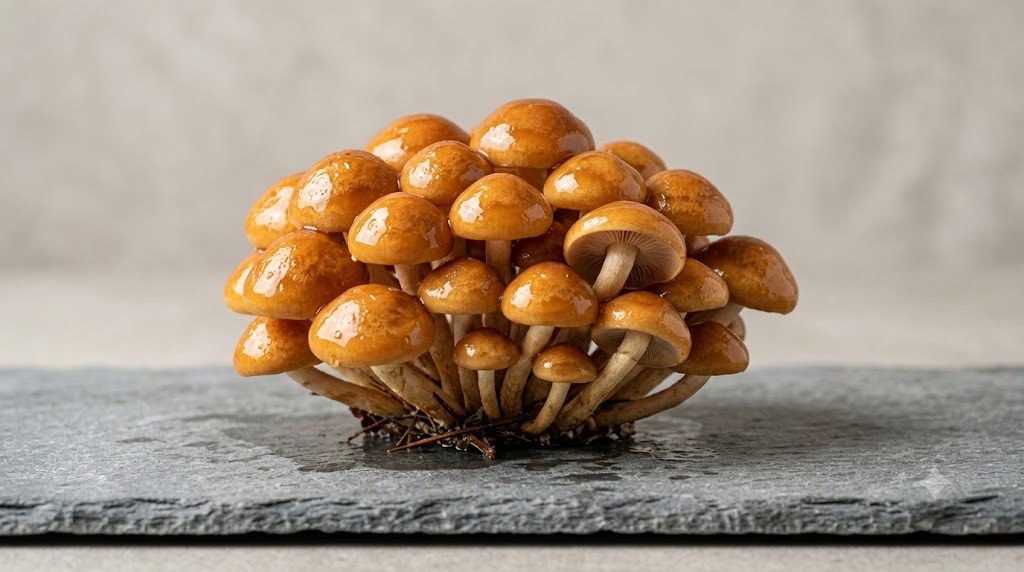
Nameko (Pholiota microspora) is a small amber-capped mushroom famous for a natural glossy gel coating that gives it a silky, slightly slippery texture.
🗓️ Last reviewed: June 2026
Overview
Nameko (Pholiota microspora) is a small amber-capped mushroom famous for a natural glossy gel coating that gives it a silky, slightly slippery texture. It is one of Japan's most popular cultivated mushrooms, treasured in miso soup and nabe hot pots where its gel thickens the broth. The slickness puts some growers off, but cooked nameko has a fine earthy, nutty flavour and the texture is part of its charm.
Identification & Appearance
Clusters of small convex caps 1-3 cm across, orange to amber-brown, coated in a clear gelatinous slime when fresh. Pale stems, a faint ring zone, and rusty-brown gills. Spore print brown. The gel is most pronounced on young mushrooms.
Where It Grows
A wood-rotting fungus of dead hardwoods, particularly beech, across cool temperate East Asia. It fruits in late autumn, often after the first frosts.
How to Grow at Home
Nameko is grown on sterilised supplemented hardwood sawdust, or traditionally on hardwood logs. It is cool-loving and slow, needing patience through colonisation and a genuine cool trigger to fruit. Humidity must stay high, which suits its gel-coated caps.
Growing Conditions
Light
Indirect light helps cap colour and clustering; nameko is not strongly light-demanding.
Watering
Very high humidity (90-95%) keeps the signature gel coating glossy; let it dry and the mushroom loses its prized texture.
Temperature & Substrate
Cool-loving - fruits at 10-16°C. Substrate: sterilised supplemented hardwood sawdust or beech logs.
Culinary Use
Nameko is the classic mushroom for miso soup, where its gel gently thickens and silkens the broth. It also suits nabe hot pots, noodle soups, and grated-radish dishes. Always cook it; the texture and flavour develop with heat. Use fresh - the gel and quality fade quickly.
Health & Nutrition
Low calorie, good fibre, B vitamins, and beta-glucans. The polysaccharide gel itself is studied for digestive and immune benefits.
Common Problems
- Gel coating lost - humidity too low; nameko needs very moist air.
- No fruiting - temperature not cool enough; it will not fruit in warm rooms.
- Contamination - sterile substrate handling is essential.
Pros & Cons
Pros
- Unique silky texture prized in Japanese cooking.
- Excellent in soups and hot pots.
- Thrives in cool conditions.
Cons
- The slippery texture is not to everyone's taste.
- Cool-loving and slow.
- Short shelf life; needs very high humidity.
Best Suited For
- Cool-climate and autumn growing.
- Cooks who love miso soup and Japanese hot pots.
Not ideal for warm rooms or growers who dislike a gelatinous texture.
FAQ
Why is nameko slimy? A natural clear gel coats the caps - it is desirable, thickening soups and giving nameko its silky character.
Can I grow nameko in summer? Poorly - it is a cool-season mushroom that fruits at 10-16°C.
Do I have to eat it slippery? The gel softens in cooking and blends into broths; in soup it is barely noticeable as sliminess.