Oyster Mushroom
The oyster mushroom (Pleurotus ostreatus) is the single best mushroom for a first-time home grower - it is fast, forgiving, fruits on almost any clean organic waste, and produces heavy crops within a few weeks.
🗓️ Last reviewed: June 2026
Overview
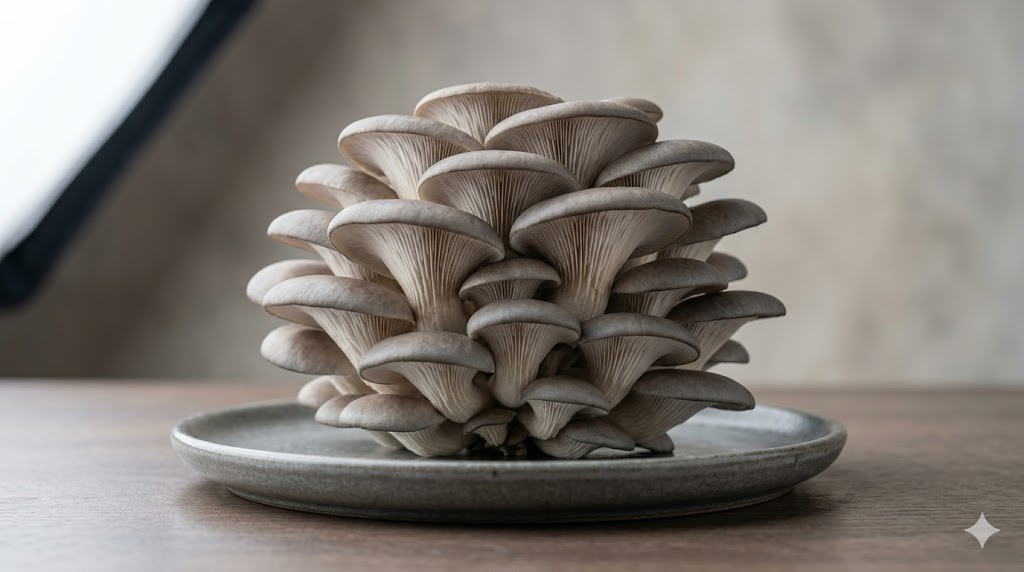
The oyster mushroom (Pleurotus ostreatus) is the single best mushroom for a first-time home grower - it is fast, forgiving, fruits on almost any clean organic waste, and produces heavy crops within a few weeks. Its soft, fan-shaped caps grow in tiered clusters and carry a mild, slightly sweet flavour with a delicate seafood-like aroma. Beginners who have never grown a mushroom before can reliably get a harvest from a kit or a bag of pasteurised straw.
Identification & Appearance
Oyster mushrooms grow in overlapping shelves. Caps are 5-25 cm across, smooth, and range from pearl-grey to tan or near-white depending on strain and temperature. The gills are white and run down a very short, off-centre stem (or attach directly to the wood). Spore print is white to pale lilac. The flesh is thin, soft, and tears in clean strips.
Where It Grows
In the wild it is a wood-decaying fungus found on dead and dying hardwoods - beech, poplar, oak, willow - across temperate regions worldwide. It is a primary recycler of fallen timber and often appears after the first cool, damp spells of autumn, though it can fruit any time conditions turn wet and mild.
How to Grow at Home
Oyster is grown on pasteurised wheat or barley straw, supplemented sawdust, coffee grounds, or cardboard. The simplest route is a ready-to-fruit kit: open the box, cut the bag, mist daily, and harvest in 1-2 weeks. For bulk growing, mix grain spawn into pasteurised straw at roughly 5-10% by weight, pack into a bag or bucket with air holes, and keep warm and dark for 2-3 weeks until the substrate turns solid white. Then expose it to fresh air, light, and humidity to trigger fruiting.
Growing Conditions
Light
Low, indirect daylight is enough - mushrooms do not photosynthesise, but light tells the fungus where "outside" is and shapes well-formed caps. A north-facing windowsill or normal room light works; never use direct sun.
Watering
High humidity is essential - aim for 80-95% during fruiting. Mist the surface and surrounding air 1-3 times daily, or tent the block loosely with perforated plastic. The substrate itself is pre-moistened and should not be soaked.
Temperature & Substrate
Most grey strains fruit at 10-21°C; warm-weather strains tolerate higher. Substrate: pasteurised straw, hardwood sawdust, or spent coffee grounds. Fresh air is critical at fruiting - stale, high-CO₂ air causes long stems and tiny caps.
Culinary Use
Oysters are best cooked hot and dry first to drive off moisture, then finished with fat - they crisp beautifully and absorb sauces. Use in stir-fries, pasta, soups, or torn and roasted as a "pulled" meat substitute. They do not store long; cook within 3-5 days of harvest.
Health & Nutrition
Low in calories, a good source of protein, B vitamins, and fibre. Oyster mushrooms naturally contain lovastatin-related compounds and beta-glucans studied for cholesterol and immune support. Always cook them - raw oyster mushrooms are hard to digest.
Common Problems
- Long stems, tiny caps - not enough fresh air. Increase ventilation.
- Dry, cracked caps - humidity too low. Mist more often.
- Green mould on the substrate - Trichoderma contamination; discard affected blocks and improve cleanliness.
- No pins forming - substrate not fully colonised, or temperature too high.
Pros & Cons
Pros
- Easiest gourmet mushroom for beginners.
- Very fast - harvests in weeks.
- Grows on free waste materials (straw, coffee grounds, cardboard).
- Heavy, repeat yields from one block.
Cons
- Short shelf life after harvest.
- Spores can aggravate allergies in sensitive growers.
- Needs daily attention during fruiting.
Best Suited For
- Complete beginners and children's growing projects.
- Anyone wanting a fast, rewarding first harvest.
- Low-waste households recycling coffee grounds and cardboard.
Not ideal for growers who want a long-storing mushroom or a fully hands-off setup.
FAQ
How long from kit to harvest? Usually 1-2 weeks for a ready-to-fruit kit; 4-6 weeks if starting from spawn and straw.
Can I grow oysters on coffee grounds? Yes - fresh spent grounds are already pasteurised by brewing. Use them within a day and mix with spawn promptly.
Why are my mushrooms all stem? Too much carbon dioxide. Oyster mushrooms need a steady supply of fresh air while fruiting.
Are wild oyster mushrooms safe? True oysters are good edibles, but beginners should never eat any wild mushroom without expert identification - look-alikes exist.