Pink Oyster Mushroom
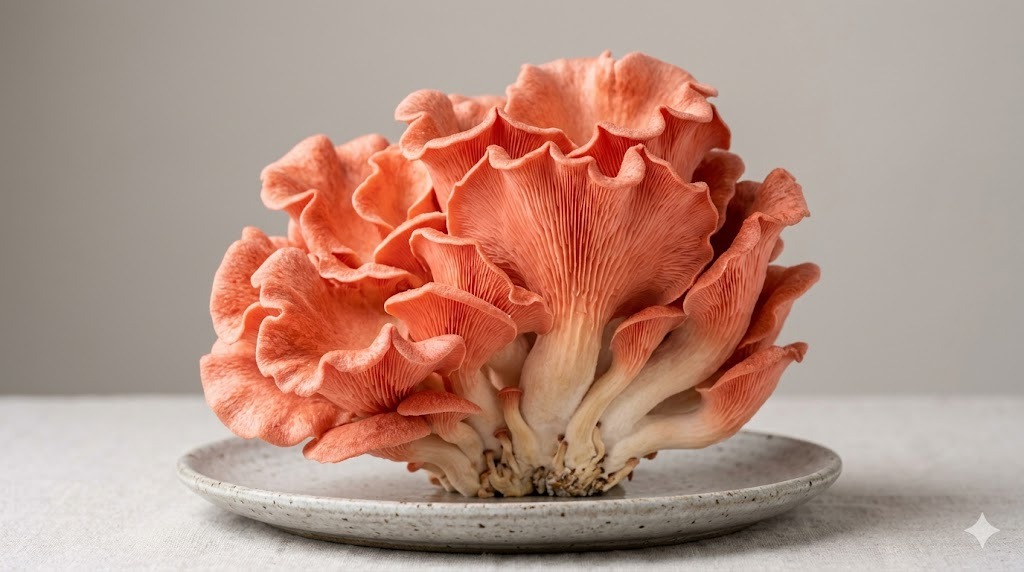
The pink oyster (Pleurotus djamor) is the showpiece of the oyster family - vivid salmon-pink clusters that grow explosively fast in warm weather.
🗓️ Last reviewed: June 2026
Overview
The pink oyster (Pleurotus djamor) is the showpiece of the oyster family - vivid salmon-pink clusters that grow explosively fast in warm weather. It is a tropical mushroom, so it suits summer growing and warm rooms, and it rewards growers with one of the quickest harvests of any cultivated species. The colour fades to tan on cooking, but the speed and visual drama make it a favourite for first projects and classrooms.
Identification & Appearance
Bright pink to coral fan-shaped caps in dense, ruffled clusters, with pink gills and almost no stem. The colour is strongest on young mushrooms and in good light. Flesh is thin and tears in strips like other oysters. The whole cluster can double in size within a day.
Where It Grows
A tropical and subtropical species found on dead hardwood across Southeast Asia, the Pacific, and the Americas. It needs warmth year-round and does not survive cold winters outdoors in temperate zones.
How to Grow at Home
Pink oyster grows on pasteurised straw, sawdust, or coffee grounds, exactly like grey oyster, but it demands warmth. Inoculate substrate with grain spawn, colonise at room temperature, then fruit in a warm, humid, well-lit spot. It is among the fastest mushrooms to grow - sometimes ready within a week of pinning.
Growing Conditions
Light
Bright, indirect light brings out the strongest pink colour and well-shaped caps; a shaded windowsill is ideal.
Watering
Humidity of 80-95% with frequent misting; pink oyster wilts fast if the air dries out, so mist 2-4 times daily during fruiting.
Temperature & Substrate
Warmth-loving: colonises and fruits best at 20-30°C and stalls below 18°C. Substrate: pasteurised straw, sawdust, or spent coffee grounds.
Culinary Use
Cook pink oyster hot to crisp the edges - it has a slightly bacon-like or seafood note when well browned. The pink colour cooks out to a soft tan. Use quickly: it has the shortest shelf life of any oyster, often just 1-2 days.
Health & Nutrition
Low calorie, good protein and fibre, B vitamins, and immune-supporting beta-glucans typical of the oyster group.
Common Problems
- Pale or white caps - temperature too low or light too dim.
- Rapid wilting - humidity dropped; pink oyster is very moisture-sensitive.
- Cluster collapses before harvest - it grows so fast it is easy to miss the picking window; check twice daily.
Pros & Cons
Pros
- Fastest cultivated mushroom - harvests in days.
- Striking colour, great for classrooms and beginners.
- Thrives in summer warmth when other oysters struggle.
Cons
- Extremely short shelf life.
- Needs consistent warmth - poor winter performer indoors without heat.
- Sheds heavy pink spores.
Best Suited For
- Summer growing and warm climates.
- Beginners wanting a dramatic, fast result.
- Educational and children's projects.
Not ideal for cool homes or anyone needing a mushroom that keeps.
FAQ
Why did my pink oysters turn brown? The pink pigment naturally fades with cooking and age - it is normal and does not mean spoilage.
How fast can I harvest? From pinning to harvest can be as little as 5-7 days in warm conditions.
Can I grow pink oyster in winter? Only with a heated grow space - below 18°C it barely grows.