Pioppino (Black Poplar Mushroom)
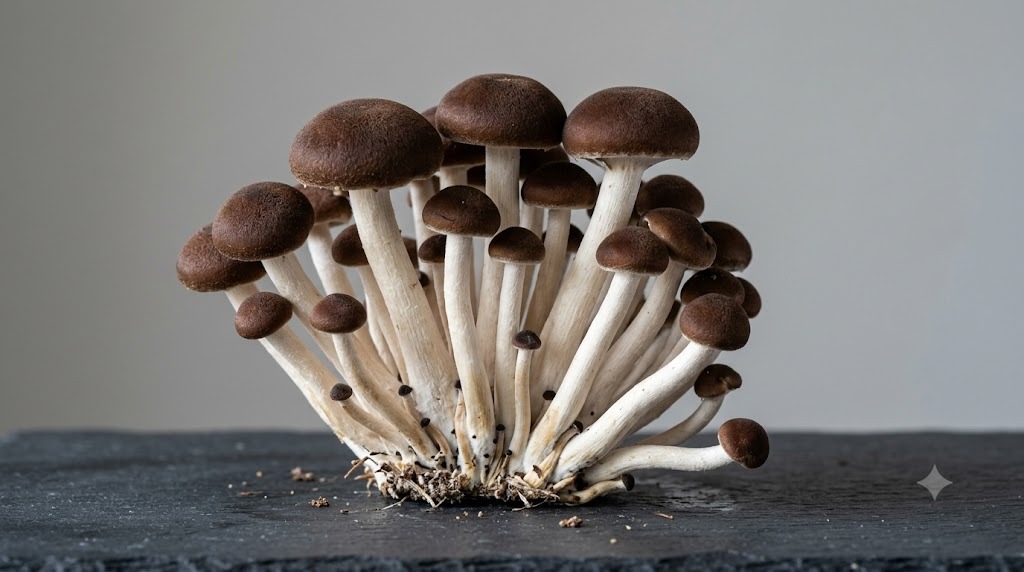
Pioppino (Cyclocybe aegerita), the black poplar mushroom, is an Italian favourite - slender clusters of dark-capped, white-stemmed mushrooms with a firm bite and a deep, peppery, almost wine-like flavour.
🗓️ Last reviewed: June 2026
Overview
Pioppino (Cyclocybe aegerita), the black poplar mushroom, is an Italian favourite - slender clusters of dark-capped, white-stemmed mushrooms with a firm bite and a deep, peppery, almost wine-like flavour. It is one of the more flavourful cultivated mushrooms and grows well on supplemented sawdust, making it a great choice for growers ready to move beyond oyster and into something with real character.
Identification & Appearance
Clusters of mushrooms with smooth caps 3-10 cm across, dark brown when young and fading to tan toward the edge, on long firm white stems with a thin ring. Gills pale at first, browning with age; spore print brown. The whole cluster rises from a shared base.
Where It Grows
A wood-rotting fungus of poplar, willow, and other hardwoods around the Mediterranean and warm temperate regions, fruiting in spring and autumn from trunks and stumps.
How to Grow at Home
Pioppino is grown on sterilised supplemented hardwood sawdust in bags. It colonises at a moderate pace and fruits in handsome clusters when given fresh air, light, and humidity. It tolerates a range of temperatures better than many gourmet mushrooms, which makes it relatively flexible for home conditions.
Growing Conditions
Light
Indirect light is needed to develop the dark cap colour and tidy, upright clusters.
Watering
Humidity of 85-95% with regular misting of the air; the firm caps cope well as long as the substrate stays moist.
Temperature & Substrate
Flexible - fruits across roughly 15-25°C. Substrate: sterilised supplemented hardwood sawdust.
Culinary Use
Pioppino has one of the best flavours of any cultivated mushroom - rich, nutty, and peppery, holding firm in the pan. The caps and stems both stay pleasantly chewy. It suits Italian cooking especially: pasta, risotto, ragù, and roasting. Cook it through; the texture and aroma improve with browning.
Health & Nutrition
Low calorie, good protein and fibre, B vitamins, and beta-glucans. A flavourful, easily digestible mushroom once cooked.
Common Problems
- Pale caps - too little light; pioppino needs light to colour up.
- Leggy, thin clusters - carbon dioxide too high; increase fresh air.
- Contamination - sterilised substrate and clean technique required.
Pros & Cons
Pros
- Outstanding deep, peppery flavour.
- Firm texture that holds in cooking.
- Tolerates a wide temperature range.
Cons
- Needs sterilised substrate.
- Slower than oyster mushrooms.
- Less widely known, so spawn can be harder to source.
Best Suited For
- Growers ready to move beyond beginner mushrooms.
- Cooks who love Italian cuisine and full-flavoured mushrooms.
Not ideal for absolute beginners without sterile technique.
FAQ
What does pioppino taste like? Rich, nutty, and peppery - among the most flavourful of all cultivated mushrooms.
Is it easy to grow? Moderately - easier than maitake, harder than oyster. It is forgiving on temperature, which helps.
Why is it called black poplar mushroom? It grows naturally on poplar and willow wood and has dark caps when young.