Reishi Mushroom
Reishi (Ganoderma lucidum), known in China as lingzhi, is the "mushroom of immortality" - a glossy, varnished red bracket fungus used in East Asian medicine for over two thousand years.
🗓️ Last reviewed: June 2026
Overview
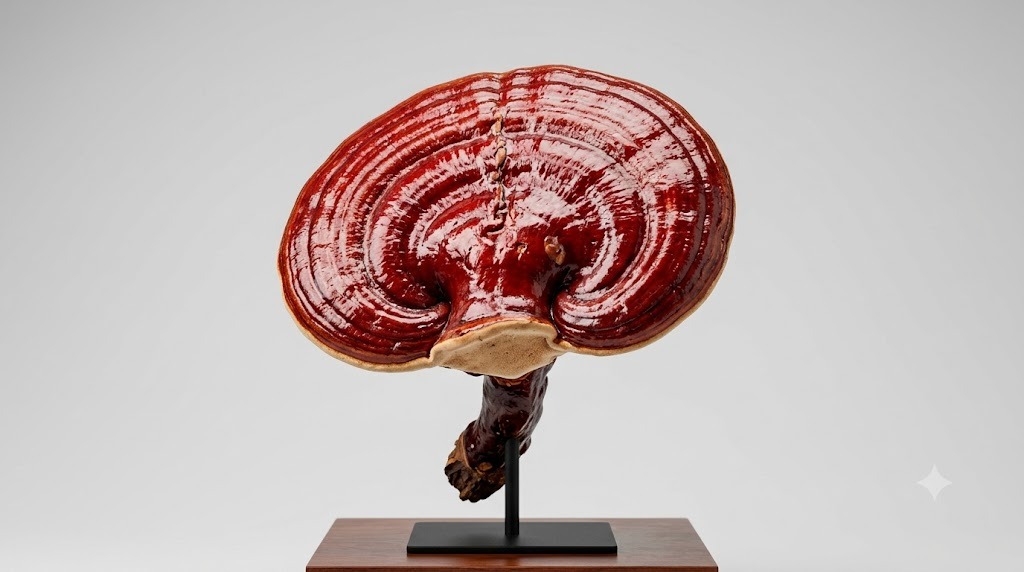
Reishi (Ganoderma lucidum), known in China as lingzhi, is the "mushroom of immortality" - a glossy, varnished red bracket fungus used in East Asian medicine for over two thousand years. It is far too tough and bitter to eat as food; instead it is grown for teas, tinctures, and extracts. Reishi is one of the easier medicinal mushrooms to cultivate at home, and growing it produces a strikingly beautiful, lacquered specimen.
Identification & Appearance
A kidney- or fan-shaped bracket with a hard, woody texture and a glossy surface that looks varnished, banded in red, orange, and chestnut tones with a pale growing edge. Underside is white with tiny pores. Grown in high carbon dioxide it forms strange antler-like branches instead of a flat shelf.
Where It Grows
A wood-rotting fungus of dead and dying hardwoods, especially oak, across warm temperate and subtropical regions worldwide, fruiting in summer and autumn.
How to Grow at Home
Reishi is grown on sterilised supplemented hardwood sawdust blocks or on logs. It colonises readily and fruits over several weeks. Conditions shape the form: good fresh air gives the classic flat varnished conk; deliberately high carbon dioxide gives ornamental "antler" reishi. After harvest the bracket is dried and used for tea and extracts.
Growing Conditions
Light
Indirect light is needed to develop the rich red varnished colour and proper conk shape.
Watering
High humidity (85-95%) during the growth of the bracket; reishi is grown slowly and steadily over weeks.
Temperature & Substrate
Warm-loving - grows best at 24-30°C. Substrate: sterilised supplemented hardwood sawdust or hardwood logs.
Culinary Use
Reishi is not a culinary mushroom - it is woody and intensely bitter. It is used by simmering dried slices into a long-brewed tea or decoction, or processed into tinctures, powders, and capsules. The bitterness is part of its traditional character.
Health & Nutrition
Reishi is among the most studied medicinal mushrooms, rich in beta-glucans and triterpenes researched for immune modulation, stress, sleep, and general wellbeing. It is taken as a supplement, not a food, and anyone on medication should check for interactions before regular use.
Common Problems
- Antler shapes instead of flat conks - high carbon dioxide; increase fresh air for the classic form (antlers are also fine).
- Dull colour - too little light; reishi needs light to develop its red varnish.
- Contamination - sterilised substrate essential.
Pros & Cons
Pros
- One of the easier medicinal mushrooms to grow.
- Strikingly beautiful, varnished specimen.
- Long shelf life once dried.
Cons
- Not edible as food - bitter and woody.
- Slow to grow compared with gourmet mushrooms.
- Needs sterilised substrate.
Best Suited For
- Growers interested in medicinal and functional mushrooms.
- Anyone wanting to make their own reishi tea or tincture.
Not ideal for those wanting a mushroom for the dinner plate.
FAQ
Can I eat reishi? Not as food - it is too tough and bitter. It is brewed into tea or processed into extracts.
Why did mine grow antlers? High carbon dioxide produces antler-form reishi. For a flat conk, give it more fresh air; both forms are usable.
Is reishi safe? Generally well tolerated as a tea or supplement, but check for interactions if you take medication, especially blood thinners.