Shiitake Mushroom
Shiitake (Lentinula edodes) is the world's second most cultivated mushroom and the gateway to serious home growing - rich, savoury, deeply umami, and capable of fruiting again and again from a single log or block for years.
🗓️ Last reviewed: June 2026
Overview
Shiitake (Lentinula edodes) is the world's second most cultivated mushroom and the gateway to serious home growing - rich, savoury, deeply umami, and capable of fruiting again and again from a single log or block for years. It rewards patience: colonisation is slow, but a well-run shiitake log can crop every couple of months for four or more seasons. Few mushrooms repay the effort so generously.
Identification & Appearance
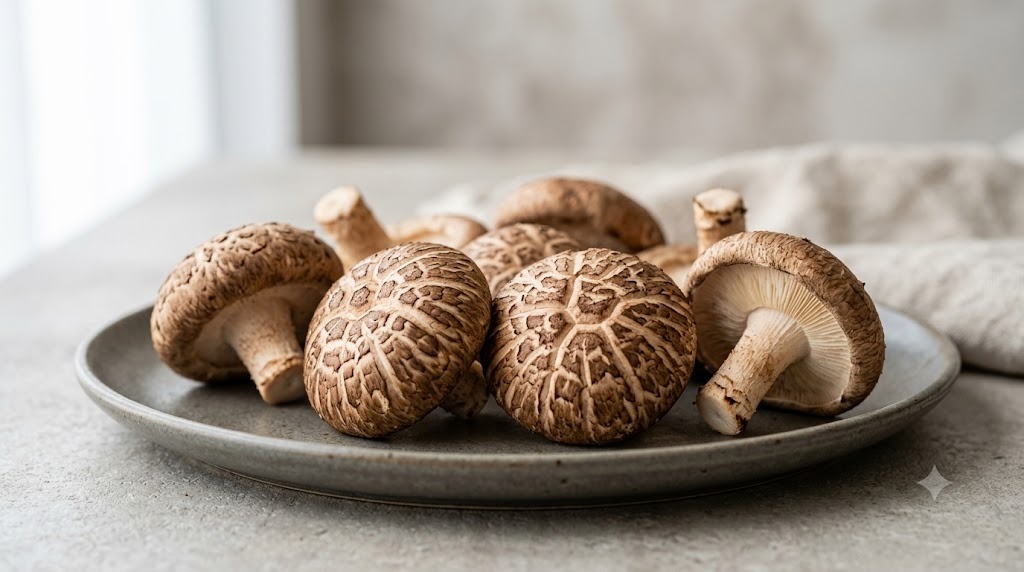
Domed tan to dark-brown caps 5-15 cm across, often cracking into a pale marbled pattern in dry air. Caps sit on a tough, fibrous off-white stem. Gills are white and finely toothed; spore print white. Cultivated caps are thicker and more uniform than wild Asian specimens.
Where It Grows
Native to East Asia, growing on fallen and dying hardwoods - particularly oak, the wood that gives the mushroom its name (the Japanese "shii" tree). It fruits in cool, damp spells of spring and autumn.
How to Grow at Home
Two routes. Logs: drill fresh-cut oak, beech, or hornbeam logs, hammer in spawn plugs, seal with wax, and wait 6-18 months for colonisation; logs then fruit for years and can be "shocked" into cropping by soaking in cold water. Sawdust blocks: sterilised supplemented hardwood sawdust colonises in 1-3 months, then browns and is fruited indoors - faster but shorter-lived. Logs are the traditional, low-effort, long-term method.
Growing Conditions
Light
Indirect light or dappled shade is needed to trigger and shape fruiting; logs do well in a shaded corner of a garden.
Watering
High humidity at fruiting (80-90%); logs are soaked in cold water for 12-24 hours to initiate each flush, then kept damp. Blocks need regular misting.
Temperature & Substrate
Colonises at 20-26°C; fruiting is triggered by cooler temperatures and a moisture shock. Substrate: hardwood logs (oak best) or sterilised supplemented hardwood sawdust.
Culinary Use
Shiitake is intensely savoury - excellent in stir-fries, broths, ramen, and braises. The stems are too tough to eat but make superb stock. Dried shiitake has an even deeper flavour and rehydrates well, a pantry staple in East Asian cooking. Always cook shiitake fully; raw or undercooked shiitake can cause an itchy "shiitake dermatitis" rash in some people.
Health & Nutrition
A strong source of B vitamins, copper, selenium, and dietary fibre. Shiitake contains lentinan, a beta-glucan studied for immune support, and is one of the few foods that builds vitamin D when exposed to sunlight.
Common Problems
- Log not fruiting - colonisation incomplete; give it more time before the first soak.
- Green mould on logs - competitor fungi; use fresh, healthy wood and seal drill holes well.
- Thin, pale caps - humidity or light too low.
Pros & Cons
Pros
- Deep, meaty, umami flavour.
- Logs crop repeatedly for 4-6 years.
- Dries and stores beautifully.
Cons
- Slow - months to over a year before the first harvest.
- Logs are heavy and need space.
- Must be cooked thoroughly.
Best Suited For
- Patient growers wanting a long-term, low-maintenance crop.
- Gardeners with a shaded outdoor spot for logs.
- Cooks who value umami depth.
Not ideal for anyone wanting a fast first harvest.
FAQ
How long until a shiitake log fruits? Typically 6-18 months for full colonisation, then it crops for years.
Can I make a log fruit on demand? Yes - soaking a colonised log in cold water for 12-24 hours shocks it into a flush.
Why must shiitake be cooked? Raw shiitake contains lentinan that can trigger a temporary itchy skin rash; thorough cooking prevents it.