Wine Cap (Garden Giant)
The wine cap (Stropharia rugosoannulata), also called garden giant or king stropharia, is the perfect mushroom for gardeners - it is grown not indoors but outdoors, in a bed of wood chips or straw, where it doubles as a soil-improving companion to vegetables.
🗓️ Last reviewed: June 2026
Overview
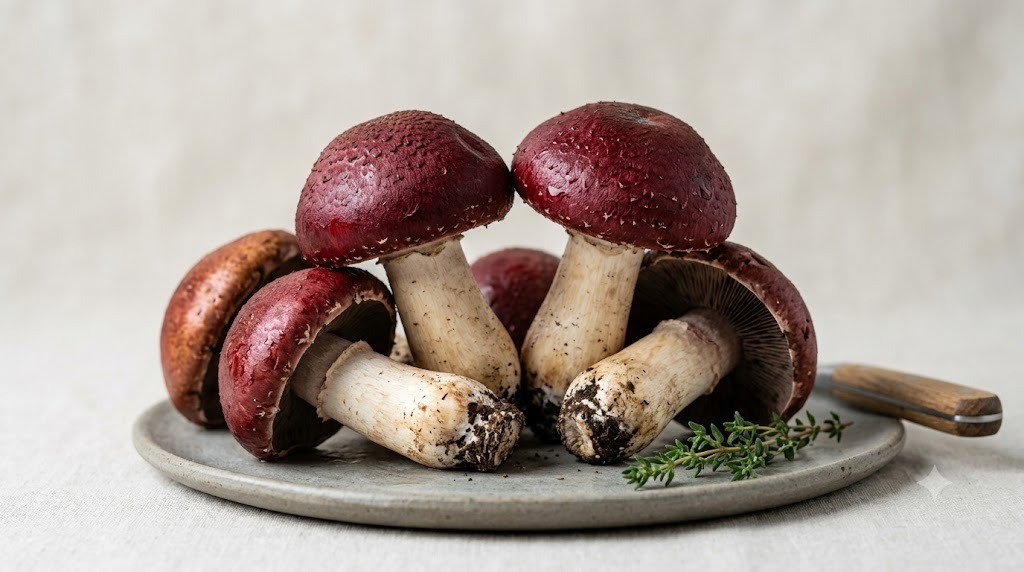
The wine cap (Stropharia rugosoannulata), also called garden giant or king stropharia, is the perfect mushroom for gardeners - it is grown not indoors but outdoors, in a bed of wood chips or straw, where it doubles as a soil-improving companion to vegetables. Big burgundy caps push up among the mulch with little fuss, and the same bed can crop for two or three years while the fungus enriches the ground.
Identification & Appearance
Large mushrooms with caps 5-30 cm across, deep wine-red to chestnut when young, fading to tan. The stout white stem carries a distinctive thick, wrinkled ring. Gills are pale grey turning dark purple-black; spore print dark purple-brown. Young "marshmallow" buttons are the best eating.
Where It Grows
A decomposer of woody debris, found in mulched ground, wood-chip piles, gardens, and field edges across temperate regions. It thrives wherever fresh organic matter is breaking down.
How to Grow at Home
Wine cap is the easiest outdoor mushroom. Spread spawn through a 10-20 cm bed of fresh hardwood wood chips or straw in a shaded spot - under shrubs, beside vegetable beds, along paths. Keep it watered; the bed colonises over a few months and fruits in flushes through the warm season, often heaviest in its first autumn. Top up the chips each year to keep it going.
Growing Conditions
Light
Dappled shade is ideal; wine cap fruits happily in a shaded garden bed and dislikes hot direct sun.
Watering
Keep the wood-chip bed consistently damp, like a wrung-out sponge - water in dry spells. Drought stops fruiting.
Temperature & Substrate
Fruits across the warm season at roughly 15-30°C. Substrate: fresh hardwood wood chips, straw, or a mix, spread as an outdoor bed.
Culinary Use
Wine cap has a hearty, earthy flavour with hints of potato and red wine, and a firm texture. Young buttons are best; older caps can be coarse. Excellent roasted, grilled, or in stews. Always cook it well - wine cap is not eaten raw, and as with any mushroom, be confident of identification.
Health & Nutrition
Low calorie, good fibre and protein, B vitamins, and beta-glucans. Beyond food, the fungus improves garden soil, breaking down wood chips into rich humus and supporting nearby plants.
Common Problems
- Bed dries out - the most common failure; wine cap needs steady moisture.
- No mushrooms the first months - normal; the bed must colonise before fruiting.
- Coarse, tough caps - harvested too old; pick young buttons.
Pros & Cons
Pros
- Easiest mushroom to grow outdoors - no sterile work, no indoor space.
- Improves garden soil as it grows.
- A bed crops for 2-3 years.
Cons
- Seasonal - fruits only in the warm months.
- Needs garden space and steady watering.
- Older caps become coarse.
Best Suited For
- Gardeners with a shaded mulched bed.
- Beginners who want an outdoor, low-tech mushroom.
- Anyone improving soil with wood chips.
Not ideal for apartment growers with no outdoor ground.
FAQ
Do I need a greenhouse or kit? No - wine cap is grown straight in an outdoor wood-chip bed.
How soon will it fruit? Often within a few months of starting the bed, with the biggest flush in the first autumn.
Does it really help the garden? Yes - it breaks wood chips into humus and is often grown alongside vegetables as a soil-builder.