Wood Ear Mushroom
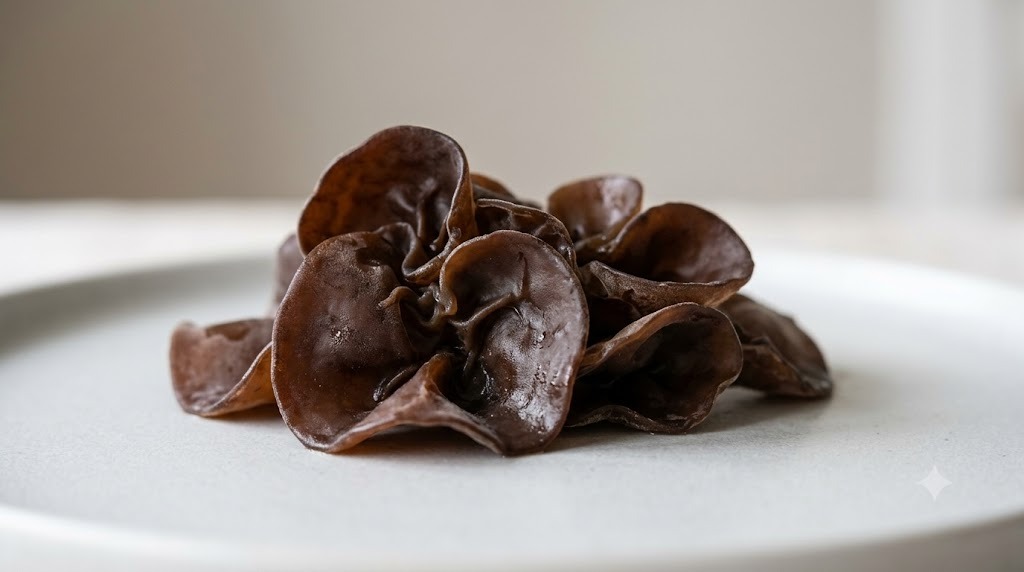
The wood ear (Auricularia auricula-judae) is a curious, ear-shaped jelly fungus with a translucent brown body and a gently crunchy, cartilage-like texture.
🗓️ Last reviewed: June 2026
Overview
The wood ear (Auricularia auricula-judae) is a curious, ear-shaped jelly fungus with a translucent brown body and a gently crunchy, cartilage-like texture. It has almost no flavour of its own - its appeal is entirely textural, and it is a beloved ingredient in Chinese soups, stir-fries, and cold salads. It grows readily on hardwood logs and sawdust and dries to a hard chip that rehydrates in minutes.
Identification & Appearance
Thin, rubbery, ear- or cup-shaped brackets 3-10 cm across, reddish-brown to near-black, with a smooth or faintly veined surface. The texture is gelatinous yet firm. When dry it shrinks to a hard dark flake; soaked, it swells back to its full ear shape.
Where It Grows
A wood-rotting fungus found on dead and dying hardwoods - especially elder - across temperate and subtropical regions worldwide. It fruits in damp weather and can appear in almost any season.
How to Grow at Home
Wood ear is grown on hardwood logs inoculated with spawn plugs, or on sterilised supplemented sawdust. Logs are kept shaded and damp and fruit for several years. The fungus is hardy and tolerant, fruiting whenever conditions are mild and humid, which makes it relatively easy and forgiving.
Growing Conditions
Light
Indirect light or shade; wood ear fruits well in a shaded, humid spot and does not need bright light.
Watering
Consistently high humidity is key - keep logs damp and the air moist; wood ear shrivels in dry conditions but revives when moisture returns.
Temperature & Substrate
Fruits across a wide range, roughly 15-30°C. Substrate: hardwood logs (elder, oak) or sterilised supplemented sawdust.
Culinary Use
Wood ear is all about crunch. Soaked and sliced, it goes into hot-and-sour soup, stir-fries, dumpling fillings, and chilled sesame salads, absorbing the flavours around it. It is almost always sold and used dried. Cook it before eating; raw wood ear is hard to digest, and one species has been associated with mild blood-thinning effects, so eat it in normal culinary amounts.
Health & Nutrition
Very low calorie, high in fibre and iron, with notable amounts of polysaccharides studied for circulatory and immune effects. It is a traditional ingredient in Chinese food-as-medicine cooking.
Common Problems
- Logs dry out - wood ear needs steady moisture; dry logs simply stop fruiting until rewetted.
- Slow start - logs take time to colonise before the first flush.
- Confusion with look-alikes - when foraging, only an expert should identify jelly fungi.
Pros & Cons
Pros
- Hardy, forgiving, and tolerant of variable conditions.
- Dries and rehydrates extremely well.
- Logs crop for years.
Cons
- Almost no flavour of its own - purely textural.
- Needs steady humidity to fruit.
- The crunchy-jelly texture is not for everyone.
Best Suited For
- Cooks who love Chinese soups and stir-fries.
- Growers wanting a hardy, low-fuss log mushroom.
Not ideal for anyone seeking a strongly flavoured mushroom.
FAQ
Does wood ear taste of anything? Very little - it is prized for its crunchy texture and for soaking up surrounding flavours.
Can I store it? Excellently - dried wood ear keeps for a long time and rehydrates in 10-20 minutes.
Is it safe to eat a lot of? Eat it in normal culinary amounts and cooked; wood ear has mild blood-thinning properties in large quantities.