Plant Stand Types Guide
Plant stands compared - bamboo vs metal vs tiered vs floor - by weight capacity, footprint, light access, and which kind suits which plant and room.
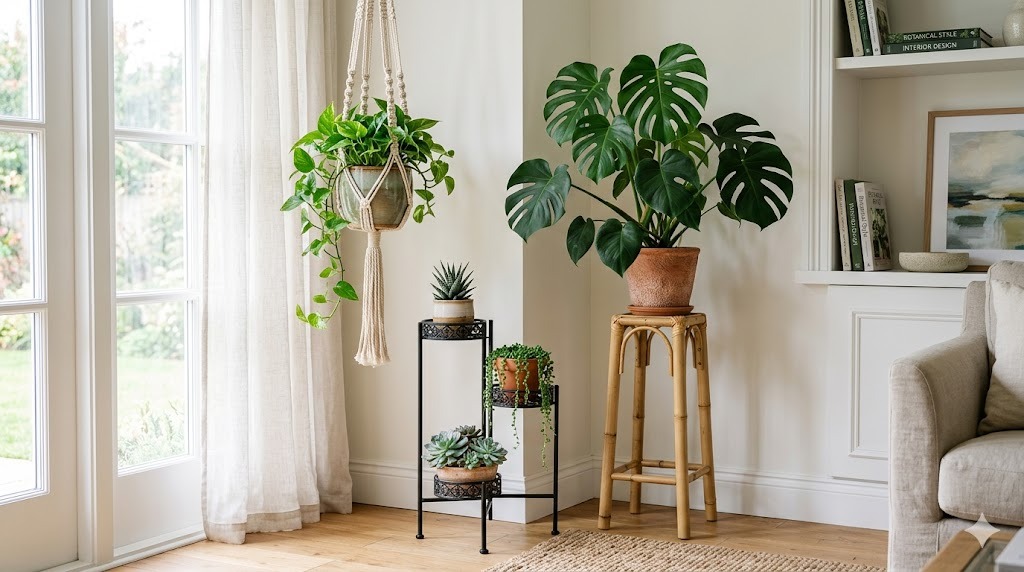
A plant stand is one of those low-stakes purchases that quietly transforms a room. The right stand can lift a plant into better light, free up a windowsill, fit twelve plants where two used to live, and add genuine character to a wall or corner. If you’re unsure which of your houseplants needs a lift into brighter conditions, that’s usually where a stand earns its keep. The wrong stand wobbles, blocks your access to the plant for watering, and pushes the plant somewhere it doesn’t actually thrive.
This guide walks through the major stand types - single plant stands, tiered stands, floor-to-ceiling poles, ladder stands, and rolling carts - and helps you match them to your plants, your light situation, and your room. It also covers the practical pitfalls: weight ratings, pot fit, water damage, and the stand types that look great in product photos but become a nuisance to live with.
Decide These Three Things First
Before browsing stand styles, get clear on:
- How many plants do you actually need to lift? One showpiece, or a vertical garden of ten?
- Where will it go? Floor space available, sunlight orientation, traffic patterns.
- What weight will it hold? A small succulent is 1 kg; a mature monstera in a wet ceramic pot is 25 kg. Stands have wildly different ratings.
Skip the cute Instagram stand if it can only hold 5 kg and your fiddle-leaf fig weighs 18 kg.
Type 1: Single Plant Stand (Pedestal)
A single pot at a single height - a column, an X-frame, or a tripod base.
- Heights: Usually 30-80 cm.
- Weight capacity: Generally 10-30 kg.
- Cost: £15-80.
- Best for: Statement plants - fiddle-leaf fig, monstera, bird of paradise. Or single trailing plant lifted high.
Materials
- Bamboo / rattan: warm, organic. Lower weight capacity (often 15 kg).
- Metal: modern, slim profile. Often the highest weight capacity (30 kg+).
- Wood (oak, walnut): premium look. Heavy themselves.
- Mid-century turned wood: stylish, but check the leg joints - three-legged ones can wobble.
Pitfalls
- Make sure the pot diameter matches the stand top - too small and the pot tips; too large and the pot overhangs.
- Wood stains and warps if wet pots leak. Use a saucer.
Type 2: Tiered Plant Stand
A staircase of plant shelves - 3 to 7 tiers - for showcasing many plants in a small footprint.
- Total height: 80-180 cm.
- Footprint: Typically 50 × 30 cm.
- Weight capacity: Usually 5-10 kg per tier.
- Cost: £30-150.
Best for
- Window-side displays (each tier catches different light).
- Multiple herbs in a kitchen.
- Succulent collections.
- Small-to-medium pots only - tiers usually fit 12-20 cm pot bases.
Pitfalls
- Lower tiers get less light because upper tiers shade them. Put shade-tolerant plants below (peperomia, fern, prayer plant), light-lovers above.
- Watering the upper tiers means water drips onto lower tiers. Use saucers everywhere.
- Many cheap tiered stands wobble badly. Check the assembly reviews.
Type 3: Ladder / Leaning Plant Stand
A leaning ladder with horizontal rungs or shelves. Modern, casual, takes minimal floor.
- Best for: Renters (no wall holes), narrow rooms, hallways.
- Capacity: Each rung holds one small to medium pot.
- Cost: £40-120.
Pitfalls
- Stability depends on leaning against a wall. Don’t use freestanding.
- Plants stick out into walkways - measure clearance.
Type 4: Floor-to-Ceiling Plant Pole / Tension Rod
A pole wedged from floor to ceiling with adjustable shelves or hooks along its length. Removable, no holes, no leaning.
- Best for: Renters wanting vertical garden density without wall damage.
- Capacity: Usually 5-15 kg per shelf or hanger.
- Cost: £60-150.
Pitfalls
- Needs a flat, structurally solid ceiling (drywall over joists, not a drop ceiling).
- Can mark ceiling at the top contact point - use the included rubber pads.
- Heavy plants on one side can twist the pole over time.
Type 5: Rolling Plant Cart / Trolley
A wheeled platform - often metal grid - that holds 4 to 8 medium pots and rolls.
- Best for: Plants you need to move (rotate to the window, move outside in summer, push aside for cleaning).
- Capacity: Often 30 kg or more.
- Cost: £40-150.
Pitfalls
- Wheels mark soft floors over time - use felt or rubber wheel pads.
- Looks utilitarian; doesn’t suit every aesthetic.
Type 6: Macrame / Hanging Pot Stand
Strictly speaking not a stand, but the alternative when floor space is zero. A macrame holder lets you hang trailing plants from a ceiling hook.
- Best for: Spider plants, pothos, string of pearls, ferns.
- Cost: £8-30 per holder; ceiling hooks £3-10.
Pitfalls
- Use a proper screw-in ceiling hook with a rated weight, anchored to a ceiling joist if possible.
- Watering means lifting the pot out - choose lighter plastic pots if possible.
Type 7: Window Plant Shelf
Glass or wood shelves mounted across a window frame, holding small pots in full direct light.
- Best for: Succulents, cacti, African violets, propagation jars.
- Cost: £25-80.
Pitfalls
- Some block window opening. Check before installing.
- Direct sun behind glass intensifies heat - fine for succulents, may scorch tropicals.
Materials Compared
Bamboo
Warm, light, sustainable. Lower weight capacity. Splits in very humid bathrooms or if soaked repeatedly.
Metal (steel, iron, brass)
Slim, modern, highest weight capacity. Cold to the touch - but plants don’t care. Cheaper steel stands can rust if outdoor or in a steamy bathroom; powder-coated finishes resist this.
Solid Wood
Premium look, heavy itself. Stain or seal the top to resist water marks.
MDF / Particleboard
Cheap but swells if wet. Use only for plants that don’t drip; always use saucers.
Rattan / Wicker
Vintage feel; low weight capacity; weakens over years.
Concrete / Stone
For one large statement piece outdoors. Almost never used indoors.
Matching Stands to Light
Plant stands move plants into light they don’t otherwise get. Use this to your advantage:
- South-facing window: Tiered stand with light-loving plants on top tiers, partial-shade on lower.
- East/west window: Single pedestal lifts a medium plant to the centre of the brightest light.
- North window or interior wall: Stand under a grow light; height adjusts plant-to-light distance. If you’re not sure how bright a corner really is, our light-level checker settles it.
Pitfalls Everyone Hits
- Wobble. Three-legged stands tip more than four-legged. Check stability before adding a heavy plant.
- Tipping over from top-heavy plants. A tall plant in a small pot on a tall stand is a fall waiting to happen. Use a wider, heavier pot or anchor the plant.
- Water damage to wood floors. Always use saucers. Wood plant stands stain if the pot itself leaks.
- Underestimating weight. Wet soil weighs more than dry. Pots, water, plant - add up before buying.
- Watering access. A tall narrow stand in a corner may need the plant lifted off to be watered. Plan for it.
Frequently Asked Questions
What’s the best plant stand for a large fiddle-leaf fig?
A heavy metal or solid-wood single pedestal stand 30-50 cm tall, weight rating 25 kg+. The fig is already tall - you don’t need height, you need stability and width. Make sure the pot base sits fully on the stand top.
Are tiered plant stands good for window light?
Yes, if the window is bright enough. Put shade-tolerant plants on lower tiers (which the upper tiers shade) and sun-lovers on top. East or south-facing window works best.
Will a plant stand damage my hardwood floor?
A plant stand alone, no. Water leakage from the pot, yes - over time. Always use saucers, empty them after watering, and consider a thin protective mat under wood stands.
How much weight can a typical plant stand hold?
Hugely variable. Small decorative stands rate at 5-10 kg. Tiered stands often allow 5-10 kg per tier. Heavy-duty metal pedestals can handle 30 kg+. Always check the listed rating and be generous (wet soil is heavy).
Can I use a side table as a plant stand?
Absolutely - and many people do. Just check the table can handle the weight, doesn’t have a finish that water will damage, and isn’t too small for the pot. A small ceramic side table is often a more elegant solution than a dedicated plant stand.
🛒 Recommended Gear on Amazon
- Tiered indoor plant stand - browse current options and reviews on Amazon.
- Mid-century plant stand - browse current options and reviews on Amazon.
- Rolling plant caddy - browse current options and reviews on Amazon.
As an Amazon Associate, we earn from qualifying purchases - at no extra cost to you. This helps us keep producing free, in-depth guides.