Edible Flowers from the Garden
Common safe edible flowers like nasturtium, calendula, borage, viola and chive blossom, how to identify and use them safely, and simple culinary ideas for beginners.
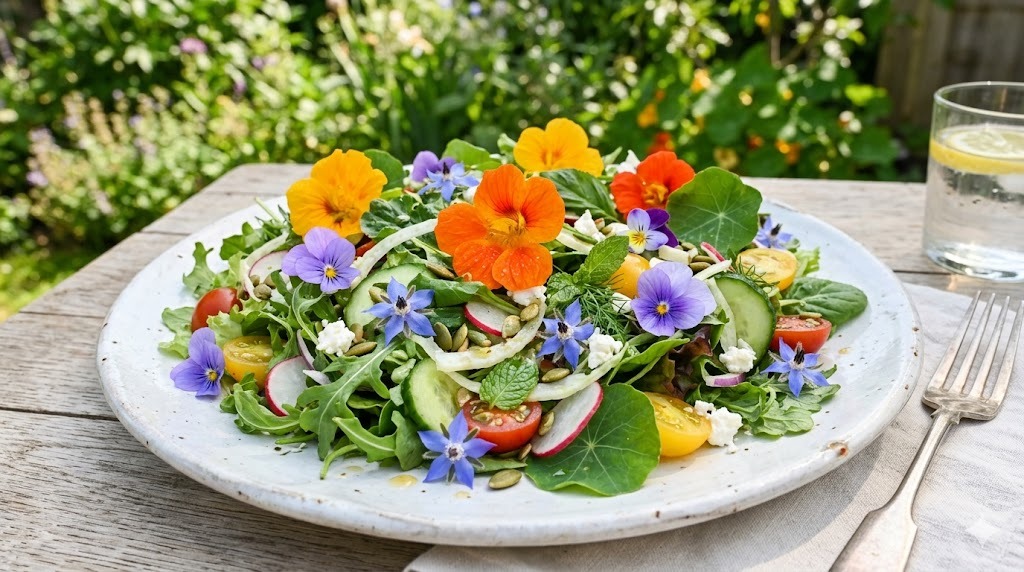
Edible flowers are one of the small luxuries of a home garden - a scatter of colour on a salad or a cake that you simply can’t buy fresh. Several of the easiest, most cheerful flowers to grow are also good to eat, and a beginner can get started with just a few of them. The key is to be sure of what you’re picking and to keep it simple.
Part of our Garden & Kitchen series - what to do with a harvest once it’s bigger than tonight’s dinner.
Safety first - read this before you eat any flower
- Positively identify the plant. Only eat a flower you have grown yourself and can name with certainty. Many ornamental garden plants are toxic, and some edible flowers have poisonous look-alikes. If you are not 100% sure what it is, do not eat it.
- Pesticide-free only. Never eat flowers from a florist, a garden centre display, or a roadside - they are routinely treated with chemicals. Use only blooms from your own pesticide-free plants.
- Start with a small taste. Even safe, edible flowers can cause a reaction in some people. The first time you try a new one, eat just a little and wait, especially if you have plant or pollen allergies.
- Eat the right part. For most edible flowers it’s the petals you want; remove stems, sepals and the bitter white base, and shake out any insects. This is a beginner’s guide to a handful of well-known edibles, not a licence to eat anything that looks pretty.
Five reliable edible flowers for beginners
These are common, easy to grow, easy to identify, and widely recognised as edible:
- Nasturtium - both the bright orange-and-yellow flowers and the round leaves are edible. Flavour is peppery and a little like watercress. The plant practically grows itself.
- Calendula (pot marigold) - the orange and yellow petals are mild, slightly tangy and faintly bitter, sometimes called “poor man’s saffron” for the warm colour they lend to rice and butter. (Note: this is true calendula, not the unrelated ornamental “marigold,” Tagetes.)
- Borage - small, star-shaped blue flowers with a clean, cucumber-like taste. Lovely floated in drinks or frozen into ice cubes.
- Viola and pansy - small, sweet, faintly grassy flowers in a rainbow of colours. The classic flower for decorating cakes and salads.
- Chive blossom - the purple pom-pom flowers of the chive plant, with a gentle onion flavour. Pull the little florets apart and scatter them.
Other easy ones worth trying once you’re confident: rose petals (remove the bitter white base), squash and zucchini blossoms (usually cooked), and the flowers of herbs you already grow such as basil, thyme, oregano and sage.
How to harvest and prepare them
- Pick in the morning, after the dew has dried, when the flowers are freshly open and at their best.
- Choose fully open, unblemished blooms and leave the wilted or buggy ones.
- Give them a gentle check and a light rinse, then let them dry on a paper towel. A soft shake usually dislodges any insects hiding inside.
- Remove the parts you don’t eat: stems, green sepals, and the bitter white heel at the base of petals on roses, calendula and the like.
- Use them fresh and soon. Most edible flowers are delicate and wilt within hours of picking. If you must hold them, lay them between damp paper towels in a sealed container in the fridge for a day or so.
Simple culinary uses
You don’t need a recipe to enjoy edible flowers - they’re mostly about colour, a light flavour and a little delight. Easy ways in:
- Scatter over salads - whole violas, nasturtium petals and chive florets turn a plain green salad into something that looks deliberate.
- Garnish plates and soups - a few petals on a finished dish add instant freshness.
- Decorate cakes and desserts - violas and pansies press beautifully onto frosting; petals candied with a little egg white and sugar are an old-fashioned treat.
- Freeze into ice cubes - borage flowers and small violas suspended in clear ice look wonderful in summer drinks.
- Stir into soft butter or cream cheese - chopped chive blossoms or calendula petals make a pretty, flavoured spread.
- Stuff and cook squash blossoms - filled with soft cheese and lightly fried, these are a genuine dish rather than a garnish.
A light hand wins. Flowers are an accent; a few go a long way, and a plate buried in petals looks fussy rather than fresh.
A note on flavour
Most edible flowers are subtle, so don’t expect a flower to taste like much on its own - the point is usually as much visual as culinary. The exceptions with real flavour are the peppery nasturtium, the oniony chive blossom, and the herb flowers, which carry a milder version of the herb’s own taste. Lead with those when you want flowers to do more than decorate.
For ideas on what to do with the rest of a generous harvest, see our guide on drying and preserving the harvest.
The short version
A handful of easy, well-known flowers - nasturtium, calendula, borage, viola and chive blossom - will give a beginner all the colour and gentle flavour they need. Grow them yourself without pesticides, identify them with certainty, taste a little the first time, and use them fresh and sparingly. Treated with that bit of care, edible flowers are one of the simplest pleasures the garden hands straight to the kitchen.