How to Grow Basil: The Sun-Loving Herb That Belongs Next to Your Tomatoes
A beginner's guide to growing sweet, aromatic basil on a warm windowsill or in the greenhouse, from sowing in heat to freezing it for winter.
When to sow & harvest
A rough guide for a temperate climate - shift it to your own zone and last-frost date. Greenhouse growing stretches both windows earlier and later.
Basil is the herb of high summer. It smells of holidays, it pairs with almost everything you grow, and it thrives in the same warm, bright spot your tomatoes love. It is also one of the plants beginners most often kill, usually by being kind to it in exactly the wrong way. Get the warmth and watering right, though, and a single pot can keep your kitchen supplied for months.
Why grow basil
The honest reason to grow basil is that fresh basil and shop basil are barely the same thing. A leaf torn straight from the plant is fragrant and peppery in a way the sad plastic packets never manage, and it wilts within hours of picking, which is exactly why supermarket basil is so disappointing and so expensive. If you cook with it at all, growing your own pays for itself fast.
It is also the classic partner to home-grown tomatoes, and not just on the plate. Basil enjoys the same conditions tomatoes do - warmth, sun, shelter - so the two make natural greenhouse companions. If you are already growing tomatoes on a windowsill or under glass, adding basil costs you almost nothing in extra effort.
The catch is climate. Basil is a tender plant that comes from hot places, and it genuinely struggles outdoors in cool, damp summers. This is a herb that rewards a warm, sheltered spot far more than a big garden. That makes it perfect for windowsills and greenhouses, and a gamble in an exposed border.
Choosing a variety
For most people, sweet basil (also sold as Genovese) is the one to grow. It is the classic large-leaved basil of Italian cooking, the one you want for pesto, tomato salads and pasta. If you only grow one, grow this.
Beyond the classic, there are a few worth knowing:
- Greek or bush basil - small, tidy and compact, with tiny leaves. It handles a pot and a windowsill neatly and looks after itself better than most, so it is a good choice where space is tight.
- Purple basil - similar flavour to sweet basil but with deep burgundy leaves. Mostly grown for looks, and it does look striking in a pot or a salad.
- Lemon basil - a lighter, citrusy version that is lovely in dressings, fish dishes and cold drinks.
- Thai basil - an aniseed, liquorice-scented type that is essential for Southeast Asian cooking and holds up far better in a hot wok than sweet basil does.
Beginners rarely go wrong starting with sweet basil and adding a second type once they have the knack.
Sowing and starting off
Basil has one non-negotiable demand at the start: heat. The seed needs genuine warmth to germinate, and cold compost will just sit there and rot. Sow indoors from spring, once you can give it a warm spot - a windowsill above a radiator, a heated propagator, or an airing cupboard all work.
Sow the small seeds thinly on the surface of moist seed compost and cover them with only the thinnest scattering of compost or vermiculite. Keep the surface just moist, not wet, and warm. At around 18-21C they usually come up within a week or two. Once seedlings have a couple of true leaves, prick them out into their own small pots of fresh compost.
If sowing from seed feels like a faff, there is a shortcut worth knowing. A supermarket living-basil pot is really dozens of crowded seedlings jammed into too little compost, which is why it collapses within a week at home. Tip it out, gently tease the rootball into three or four clumps, and pot each clump on into a larger container of fresh compost. Given room, light and warmth, those tired seedlings often turn into strong, long-lived plants.
Greenhouse or garden - where to grow
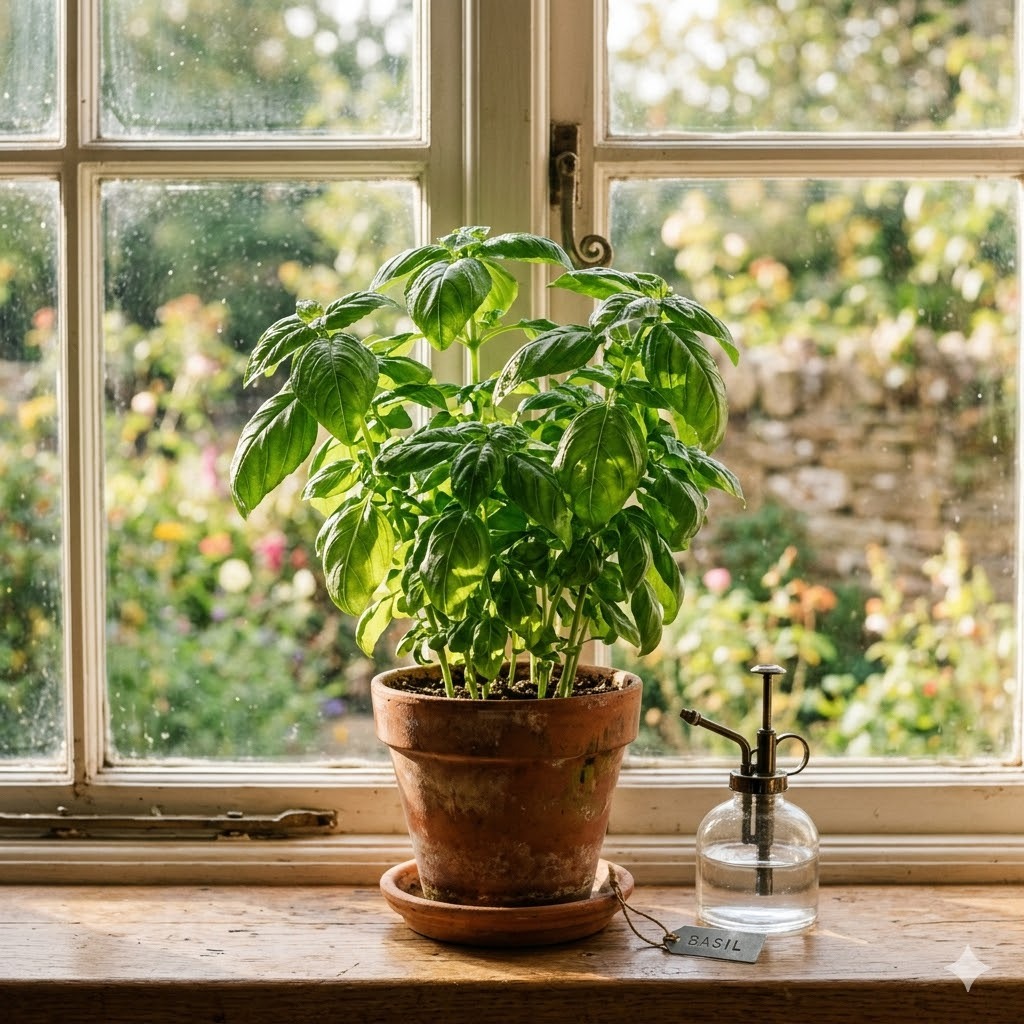
Basil wants warmth, light and shelter, and it wants them consistently. A sunny windowsill is one of the best homes it can have: bright light, warm indoor air, and no cold nights. A greenhouse is just as good, and slotting basil in alongside the tomatoes means one warm space does double duty.
Outdoors is the risky option. In a genuinely warm, sheltered summer, basil can do well in a pot on a sunny patio or in a sun-baked border. But cool nights, wind and damp will check it hard, and one chilly spell can undo weeks of growth. In cooler climates, treat outdoor basil as a summer-only gamble and keep your main plants under cover.
Whatever the spot, drainage matters. Basil hates sitting in cold, wet compost, so grow it in a pot with holes in the bottom and a compost that drains freely rather than staying sodden. Good light and good drainage are the two things it will not compromise on.
Day-to-day care
The single most useful rule with basil is this: keep it warm and keep it on the dry side of moist. This herb hates cold, wet feet and cold nights far more than it minds the odd dry day.
Water in the morning, not the evening. Morning watering lets the plant take up what it needs while the day warms, and the surface dries before the cold of night sets in. Evening watering leaves it standing in cold, damp compost overnight, which is exactly the condition that rots it. Aim to keep the compost just moist, never soggy, and let the top slightly dry between waterings.
The other key habit is pinching out. From when the plant is young, pinch out the growing tip above a pair of leaves whenever a stem gets tall. This forces the plant to branch from below, and a plant that branches is a bushy, leafy plant rather than a single leggy stalk. Pinch regularly and often - it is the difference between a scrawny plant and a generous one.
Just as important, never let basil flower if you want leaves. Once it puts up flower spikes, the plant turns its energy to seed, the stems go woody, and leaf production slows or stops. Pinch out any flower buds the moment you see them. Regular harvesting from the top does much of this job for you.
Common problems and pests
Basil is not fussy about pests so much as vulnerable to being grown wrong. Most problems trace back to cold or wet.
Damping off is the classic seedling killer: healthy little plants suddenly keel over at soil level and collapse. It is a fungal problem driven by overwatering and cold, so the cure is prevention - sow thinly, water sparingly, keep things warm, and give seedlings good airflow.
Sudden collapse in an established plant is usually the same story on a larger scale. A cold night, a chilly windowsill, or a spell of soggy compost can make a plant wilt and die within a day or two. If a plant goes down fast, look first at temperature and water, not at pests.
Outdoors, slugs and snails adore basil and can shred a young plant overnight. Under glass or on the windowsill, watch instead for aphids and whitefly, which cluster on soft new growth and the undersides of leaves. Catch them early and you can usually rub them off, hose them down, or wipe them away before they build up.
Harvesting
Harvest basil the same way you keep it bushy - from the top. Pinch out whole growing tips, taking a pair of leaves and the stem just above a lower pair. Each cut prompts the plant to branch, so harvesting and shaping are the same action, and a regularly picked plant stays fuller than one left alone.
Resist the temptation to strip the big lower leaves and leave a bare stalk on top. That removes the plant's main working leaves while doing nothing to encourage new growth, and it tends to leave you with a leggy, sulking plant. Little and often from the top is the way. Once a plant is established, you can pick from it every few days right through the warm months.
Storing and preserving
Fresh basil does not keep. Picked leaves wilt within a day or two even in the fridge, and cold storage often blackens them, so basil is a herb to use fresh or preserve promptly rather than stockpile in the salad drawer.
The good news is that it preserves brilliantly by freezing:
- Chopped in oil or in ice-cube trays - chop the leaves, pack them into ice-cube trays, top with a little oil or water, and freeze. You get ready portions to drop straight into sauces and soups.
- As pesto - blitz basil with oil, nuts, garlic and cheese, then freeze it in small tubs or cubes. Pesto freezes beautifully and is arguably the best way to bank a summer glut for winter.
Drying is possible but disappointing. Basil loses a great deal of its aroma when dried, ending up a pale shadow of the fresh leaf, so freezing or pesto is almost always the better choice. You can also make a basil oil by warming leaves gently in oil and straining it, which captures the flavour in a form that keeps well in the fridge.
Is it worth it?
Yes, with a condition. Basil is well worth growing if you can give it what it needs: a warm, bright windowsill or a spot in the greenhouse next to your tomatoes, morning watering, free-draining compost, and a bit of regular pinching to keep it bushy and leaf-free of flowers. Do that and one or two plants will out-perform anything you can buy, all summer long.
It is honestly not the herb for a cold, exposed border in a cool climate - that is where beginners get disheartened. But as a warm-spot, pot-and-windowsill crop, basil is generous, forgiving of a dry day, and endlessly useful in the kitchen. For anyone already growing tomatoes under glass, it is close to a no-brainer.