Drying & Preserving Herbs & Tea
Grew more than you can use? An honest, beginner-friendly guide to drying, freezing and storing herbs, tea leaves and home-grown mushrooms so nothing goes to waste.
A good growing season has a happy problem: more than you can eat fresh. The skill that turns a glut into a year-round larder is preserving - and for herbs, tea plants and home-grown mushrooms, that mostly means drying (with a few smart exceptions). Here’s the honest, low-equipment version.
New to this series? “Garden & Kitchen” is about what you do with a harvest once it’s bigger than tonight’s dinner - drying, freezing and storing so nothing is wasted.
The one principle behind all drying
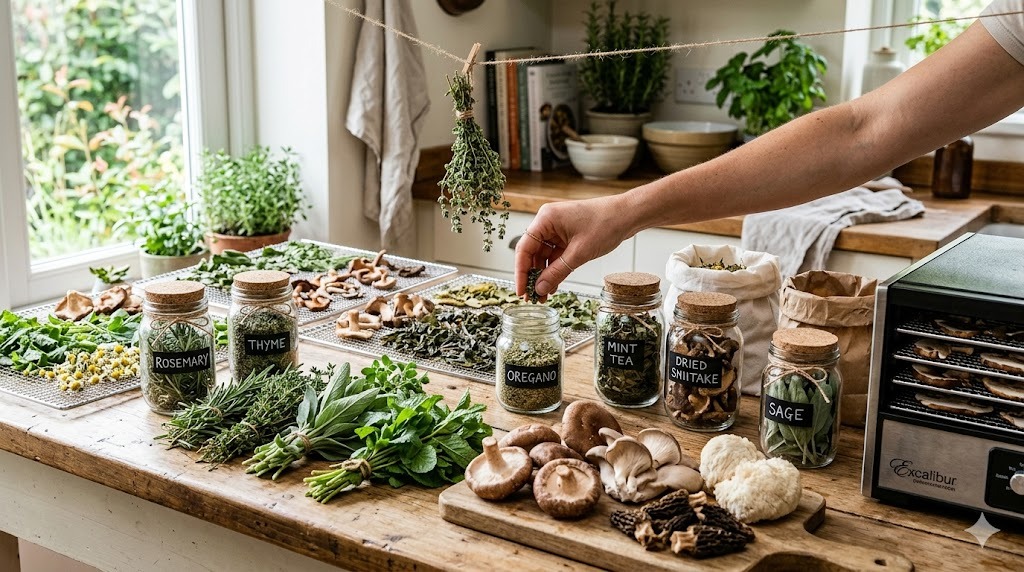
Spoilage needs moisture. Remove the water and most things keep for months. The whole craft is just: dry it fully, then keep it dry and dark. Three routes, easiest first:
- Air-drying - free, slow, perfect for herbs and tea. A warm, airy, shaded spot.
- Low oven / dehydrator - faster and more reliable, essential for fleshy things like mushrooms.
- The freezer - not “drying,” but the best route for things that lose too much when dried.
Herbs
Most culinary herbs dry beautifully and keep their punch for months.
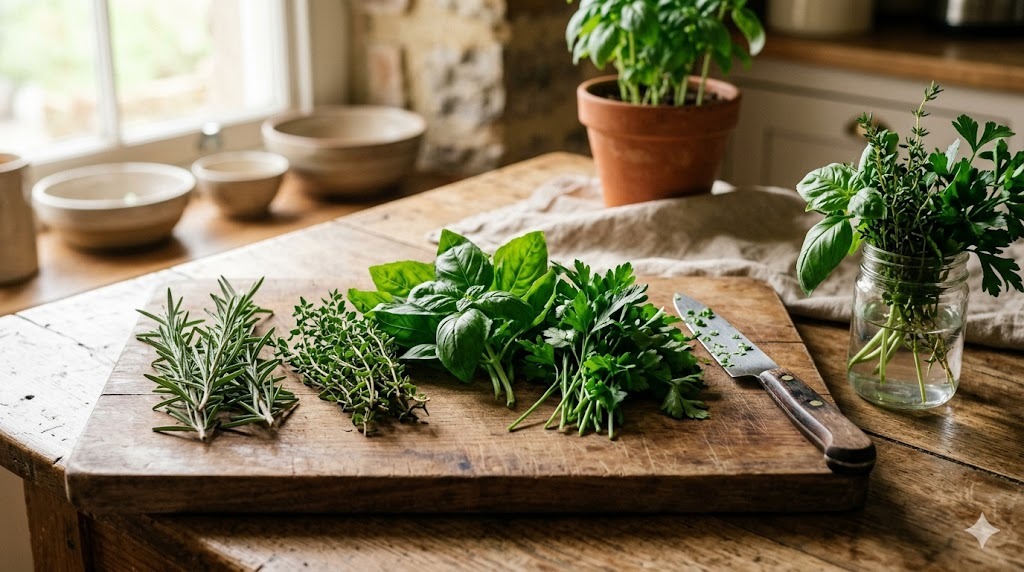
- Best dried: the tougher Mediterranean herbs - rosemary, thyme, oregano, sage, bay. Bundle small bunches, hang upside down somewhere warm, airy and out of direct sun, until crisp (a week or two). Strip the leaves and store whole in jars; crush only when you use them.
- Better frozen: soft, high-moisture herbs - basil, parsley, coriander, chives, dill - go brown and lose flavour when air-dried. Chop and freeze them in ice-cube trays with a little water or oil instead.
- Storage: airtight jars, out of the light. Whole leaves keep flavour far longer than pre-ground.
Tea-garden leaves
If you grow tea-garden plants (mint, lemon balm, chamomile, lemon verbena, true tea and the like), drying is how you build a year’s brews.
- Harvest young, healthy leaves or flowers, ideally in the morning once any dew has dried.
- Dry gently - air-dry on racks or in loose bundles, or use a dehydrator on low. High heat drives off the aromatic oils you’re actually after, so keep it cool and slow.
- Store dried leaves whole in airtight jars away from light; crumble into a pot or infuser when you brew. Most keep their character for many months.
- No medical claims: enjoy home-grown teas as the pleasant drinks they are - they’re not medicine.
Mushrooms
If you’ve grown your own edible mushrooms (oyster, shiitake, lion’s mane and friends - or you’ve gathered with an expert), preserving keeps a flush going for months.
- Drying is king for many: shiitake, lion’s mane, and especially porcini and black trumpet (if you forage) concentrate and deepen in flavour when dried - often better than fresh. Slice, dry in a dehydrator or low oven until cracker-dry, and store airtight. Rehydrate in warm water before cooking, and save the strained soaking liquid as an intense stock.
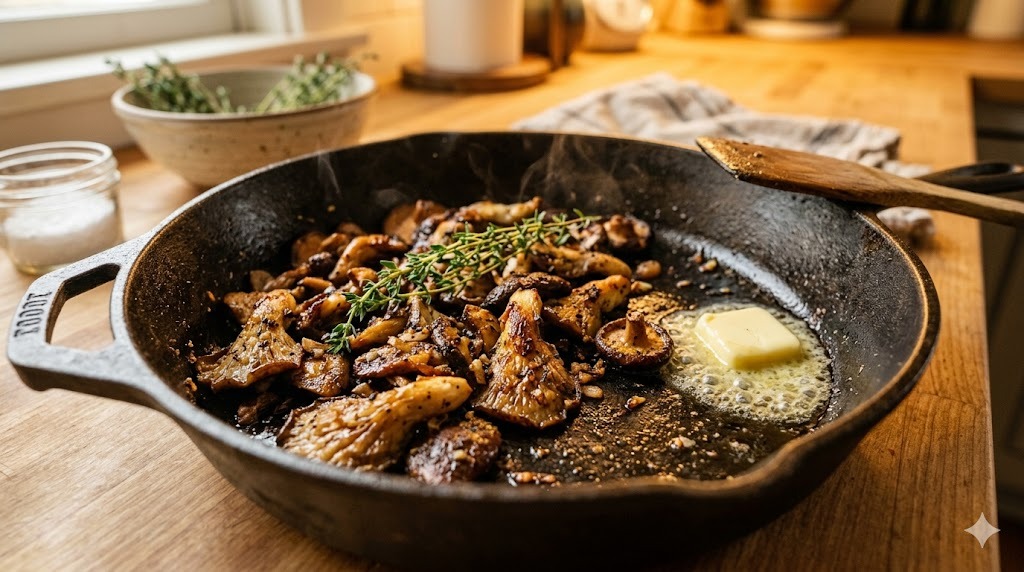
- Cook-then-freeze suits softer, watery mushrooms (and anything you want to keep its texture): sauté first, cool, then freeze in portions. Freezing raw mushrooms usually disappoints.
- Always cook cultivated mushrooms before eating, and never eat any wild mushroom without expert identification - drying a misidentified mushroom doesn’t make it safe.
A quick reference
| Crop | Best method | Notes |
|---|---|---|
| Mediterranean herbs | Air-dry | Hang bunches; store whole leaves |
| Soft herbs (basil, parsley) | Freeze | In oil/water cubes; don’t air-dry |
| Tea leaves & flowers | Air-dry / low dehydrator | Keep it cool to save the aroma |
| Firm mushrooms (shiitake, porcini) | Dry | Often better than fresh; save soaking liquid |
| Soft mushrooms | Cook then freeze | Don’t freeze raw |
The point of all this
Preserving is the quiet half of growing things: it’s how a busy fortnight of harvest becomes a shelf of jars you reach for all winter. Dry what dries well, freeze what doesn’t, keep it all dark and airtight - and a single good season feeds you long after the plants have gone to sleep.
Want the deeper version? Many of our plant, tea and mushroom guides include a harvest-and-store section for that exact species.