Build a terrarium, layer by layer.
A terrarium is only as good as its layers. Pick a style for a cross-section of exactly what goes where - drainage, charcoal, the right mix and the plants - plus how to look after it. Get the layers right and it can practically run itself.
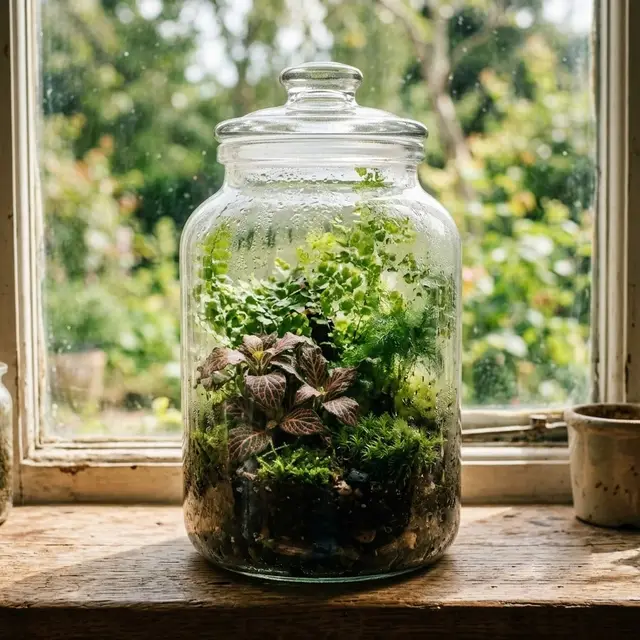
Layers, bottom to top - build in this order
Closed tropical (jungle) terrarium
A sealed jar that makes its own weather - humid, warm and mostly self-watering. The classic for ferns and nerve plants.
- 1Drainage - 2-3 cm of LECA or gravel at the very bottom, so excess water drains away from the roots instead of pooling.
- 2Activated charcoal - A thin scatter over the drainage. In a sealed jar it keeps the recycled water and air fresh and cuts any sour smell. A mesh or moss barrier on top here stops soil washing down.
- 3Potting mix - 4-6 cm of peat-free houseplant mix with a little bark - the layer the roots actually grow in.
- 4Plants & moss - Humidity-loving plants set in, with the gaps carpeted in moss so no bare soil shows.
Bright, indirect light only - direct sun cooks a closed jar. Mist as you plant it, then close the lid; a healthy closed terrarium recycles its own moisture and needs watering only rarely. If it fogs up so much you can't see in, crack the lid for a day.
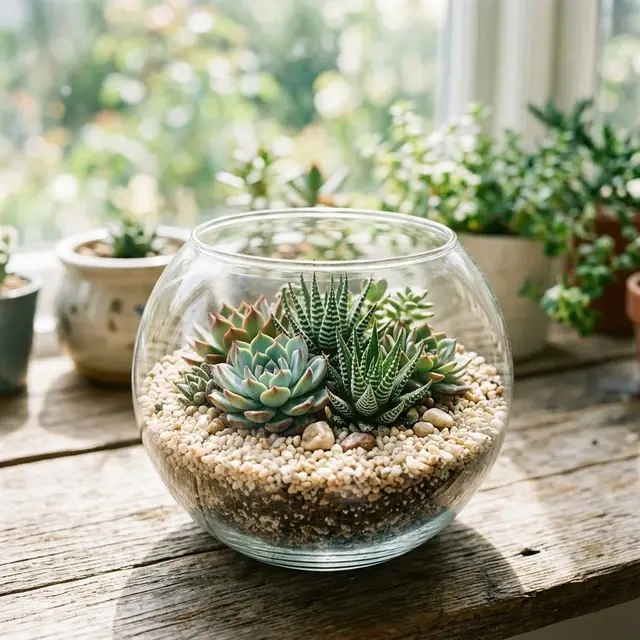
Layers, bottom to top - build in this order
Open succulent & cactus terrarium
The opposite build: open, dry and free-draining. Succulents rot in trapped humidity, so this one is never sealed.
- 1Drainage - 2 cm of gravel or LECA. Succulents will rot if water lingers, so give it somewhere to go.
- 2Activated charcoal - A thin scatter to keep the substrate sweet.
- 3Gritty mix - 4-5 cm of free-draining cactus/succulent mix - lots of grit or perlite so it dries fast.
- 4Succulents & top dressing - Plant with space between each for airflow, then finish with a layer of fine gravel or sand.
Bright light and an OPEN top - succulents need airflow and hate trapped humidity, so never seal this one. Water sparingly, only once the mix is bone dry, and pour it in at the base rather than over the leaves.
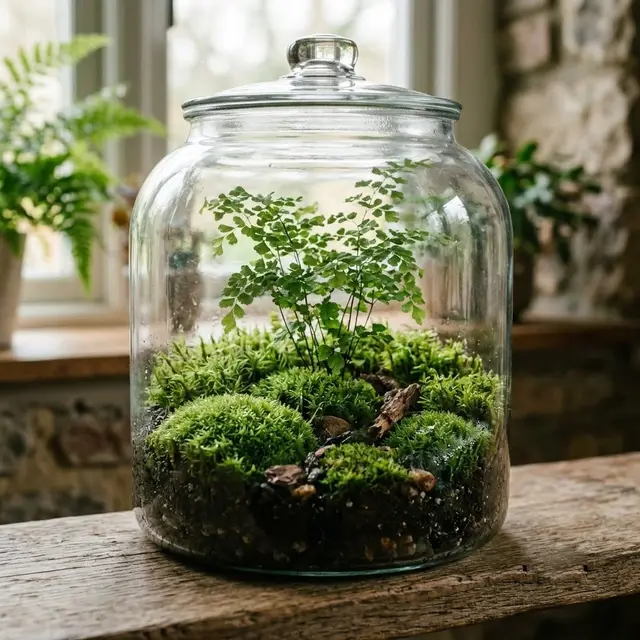
Layers, bottom to top - build in this order
Woodland moss & fern (mossarium)
A low, green carpet of moss with a fern or two for height - a shady woodland floor under glass. Loves constant moisture.
- 1Drainage - 2 cm of LECA or gravel.
- 2Activated charcoal - A thin scatter to keep the damp environment fresh.
- 3Substrate - 3-4 cm of peat-free mix. Moss is shallow-rooted and doesn't need much depth.
- 4Moss carpet & ferns - Lay sheet or cushion moss over the whole surface, pressing it down, with a small fern or two tucked in for height.
Low to medium indirect light and constant moisture - mist regularly to keep the moss vivid green, and it must never fully dry out. A closed or cracked lid holds the humidity moss loves.
No soil at all? Air plants (Tillandsia) need no layers - set them on stones, driftwood or in an open globe, soak them weekly, and give them bright light and good airflow. See the air plant profile.
Small and mini terrariums: what the extension service says
Clemson Extension's terrarium factsheet is the plain-language version of everything above (Clemson Extension):
- The container. Almost any clear glass or plastic vessel works: a fish bowl, a fish tank, a glass jar, a jug or a bottle. It must be clear, since tinted or cloudy glass cuts the light.
- Open or closed. Closed containers suit plants that tolerate high humidity; open ones are drier, less prone to disease and need watering more often.
- The layers. About a quarter of the container goes to drainage and soil: pea or aquarium gravel at the bottom, a ½ in (1.3 cm) layer of horticultural charcoal to keep the soil from souring, sphagnum moss if you want a barrier, then at least 1½ in (3.8 cm) of soil high in organic matter.
- Plants for a small-mouthed container. Creeping fig, ti plant, ribbon plant (Dracaena sanderiana), earth star, prayer plants and parlor palm. Low, dense plants are best, and every plant in one container should want the same light.
- Where it sits. Within several feet of a bright window, but not in direct sun.
- Water and food. After planting, mist rather than water and keep standing water at the bottom under ¼ in (6 mm). A closed terrarium may need no water for four to six months. Do not fertilize for at least a year; then, only if plants look yellow and weak, use about one-tenth of the normal houseplant rate.
Where the guides disagree. The factsheet advises against ferns, because they take over a terrarium; the closed and moss builds above use them, so expect to trim or replace a fern as it grows.
A starting guide, not a rulebook - vessel shape, your home and the exact plants all shift the details. Match every plant in one terrarium to the same light and water needs (never mix a cactus with a fern), and keep terrariums out of reach if a plant is toxic to curious pets.
Terrarium layers from the builder
Links go to Amazon or a partner store (such as Adagio Teas) and may earn us a commission at no extra cost to you. As an Amazon Associate we earn from qualifying purchases. We link gear types, not sponsors' picks: you choose the exact product.