Cooking and Storing Home-Grown Mushrooms
How to cook cultivated mushrooms like oyster, shiitake and lion's mane - the dry-saute method, why not to oversoak them, and simple ways to store and freeze the extras.
Growing your own mushrooms from a kit or a fruiting block has a way of producing a big flush all at once - far more than tonight’s dinner. The good news is that cultivated mushrooms are easy to cook well once you know the two or three techniques that actually matter, and they store and freeze better than most people expect.
Part of our Garden & Kitchen series - what to do with a harvest once it’s bigger than tonight’s dinner.
This guide is about cultivated mushrooms - the kind you grow at home or buy from a shop: oyster, shiitake, lion’s mane, button and chestnut. It is not a foraging guide.
Safety first - read this Never eat a wild mushroom you cannot identify with 100% certainty. Several deadly species look almost identical to edible ones, and cooking does not make a poisonous mushroom safe. This article covers only cultivated mushrooms from a known source. If you want to forage, learn in person from a qualified expert and have every find positively identified before it goes anywhere near a pan. When in any doubt at all, throw it out.
Clean them dry, not wet
Mushrooms are mostly water and behave like little sponges, so the first rule is to keep them away from the tap.
- Brush off any growing medium or debris with a dry pastry brush, a dry cloth, or a quick wipe with a barely damp paper towel.
- Don’t rinse or soak cultivated mushrooms before cooking. They soak up water you’ll then have to cook back out, which is exactly what makes mushrooms turn out grey and rubbery.
- Trim the tough, woody base of the stem on oyster and shiitake. Shiitake stems can be fibrous - save them for stock rather than the pan.
- Tear oyster mushrooms along their natural grain into bite-sized pieces; slice button and chestnut; pull lion’s mane into chunks or thick slabs.
The dry-saute technique
This is the single most useful method for home-grown mushrooms, and it’s the opposite of what most people do.
- Heat a wide, dry pan (no oil yet) over medium-high heat until hot. A crowded pan steams, so cook in batches with room between the pieces.
- Add the mushrooms dry and leave them. They will release their own water, hiss, and the pan will look wet. This is the point: you are driving off that internal moisture.
- Let the water evaporate and don’t stir too much. Once the pan goes dry again, the mushrooms start to brown and concentrate in flavour.
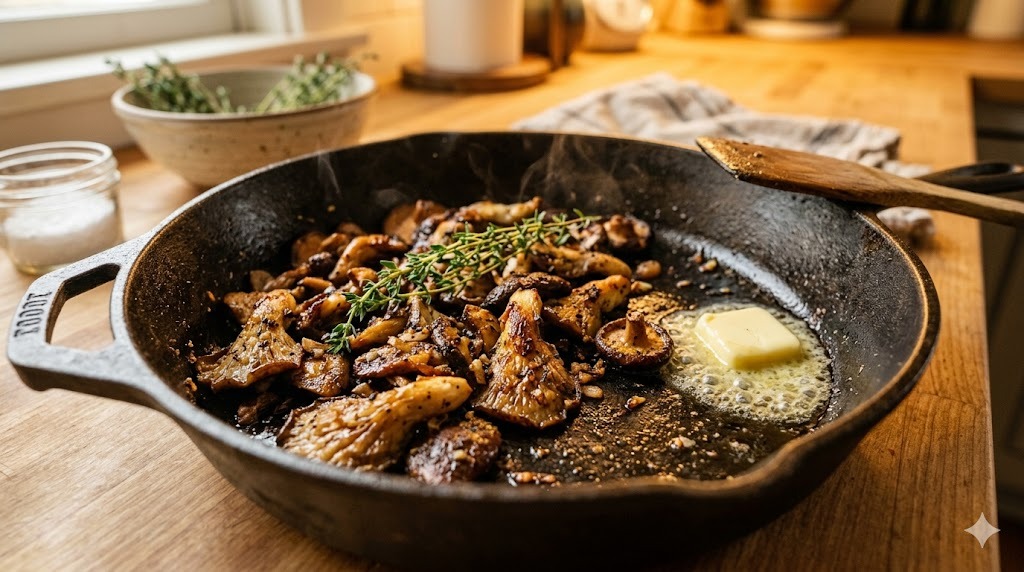
- Now add fat - butter or oil - plus a pinch of salt, and any aromatics like garlic, thyme or a splash of soy. Salt earlier draws water out too soon and stalls the browning, so wait.
- Finish with the fat sizzling and the edges crisp and golden. The result is deep, savoury and meaty rather than soggy.
A few notes by type:
- Oyster mushrooms crisp up beautifully and cook fast.
- Shiitake want a little longer to lose their slight chewiness; they take strong flavours well.
- Lion’s mane browns into a remarkably crab- or chicken-like texture; press it in the pan and give it time.
- Always cook cultivated mushrooms through - they are not meant to be eaten raw, and proper cooking improves both flavour and digestibility.
Why not oversoak or boil them? Water is the enemy of texture and flavour here. Soaking waterlogs the flesh, and boiling or stewing from raw turns most cultivated mushrooms slippery and bland. Get the water out first, brown second, and they reward you.
Storing fresh mushrooms
Fresh mushrooms keep for several days to a week if you treat them right:
- Store them in the fridge in a paper bag, not sealed plastic. Paper lets moisture escape; plastic traps it and makes them slimy.
- Keep them dry and don’t wash until you’re ready to cook.
- A breathable container lined with paper towel works just as well as a bag.
- Use the softest, oldest ones first - they go quickly once they start to wrinkle or weep.
Freezing the extras
When a flush outpaces your appetite, the freezer is the answer - but cook first, then freeze. Freezing raw mushrooms usually leaves them watery and limp.
- Saute them first (the dry-saute above is ideal), let them cool, then pack into portions and freeze. They keep their texture far better this way and drop straight into soups, sauces, omelettes and stir-fries.
- Drying is excellent for shiitake and lion’s mane: slice and dry in a dehydrator or low oven until cracker-dry, then store airtight. Rehydrate in warm water before cooking and save the strained soaking liquid as an intense stock. See our harvest preserving guide for more drying and storing methods.
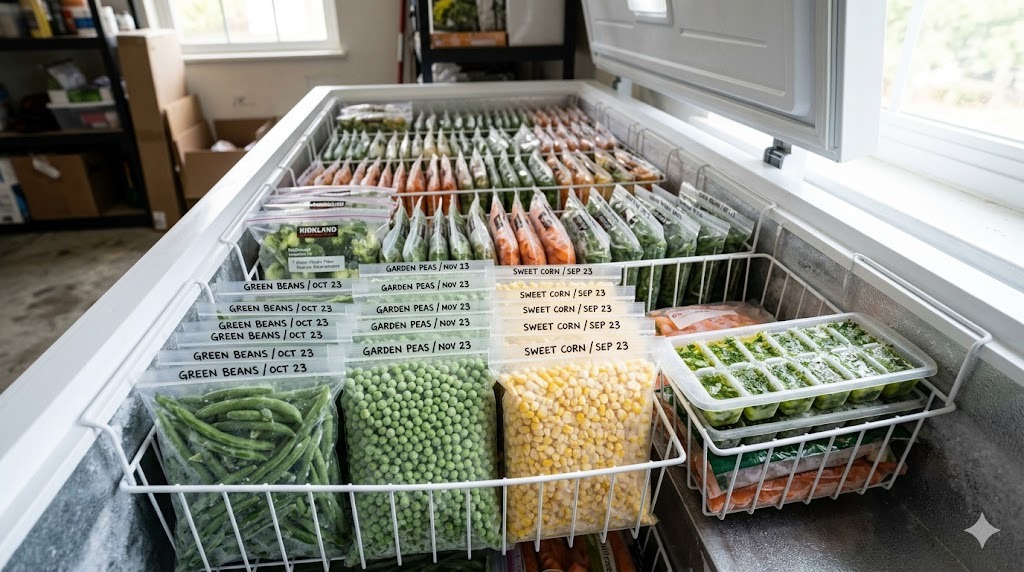
- Label everything with the type and the date - frozen mushrooms all look alike after a month, and you’ll want to use them within about six months for the best flavour.
For the full drying-and-storing method, see our companion guide on drying and preserving the harvest.
The short version
Cook home-grown mushrooms dry to start, brown them hard, and only then add fat and salt - that one habit fixes most mushroom cooking. Keep fresh ones in paper in the fridge, and when a flush is too big to eat, saute-then-freeze or dry the extras. And the rule that never bends: only ever cook mushrooms from a source you trust completely, and never a wild one you cannot identify with absolute certainty.