Cooking with Fresh Garden Herbs
When to add hardy herbs like rosemary versus tender ones like basil, how to pair them, how to harvest without killing the plant, and how to keep cut herbs fresh.
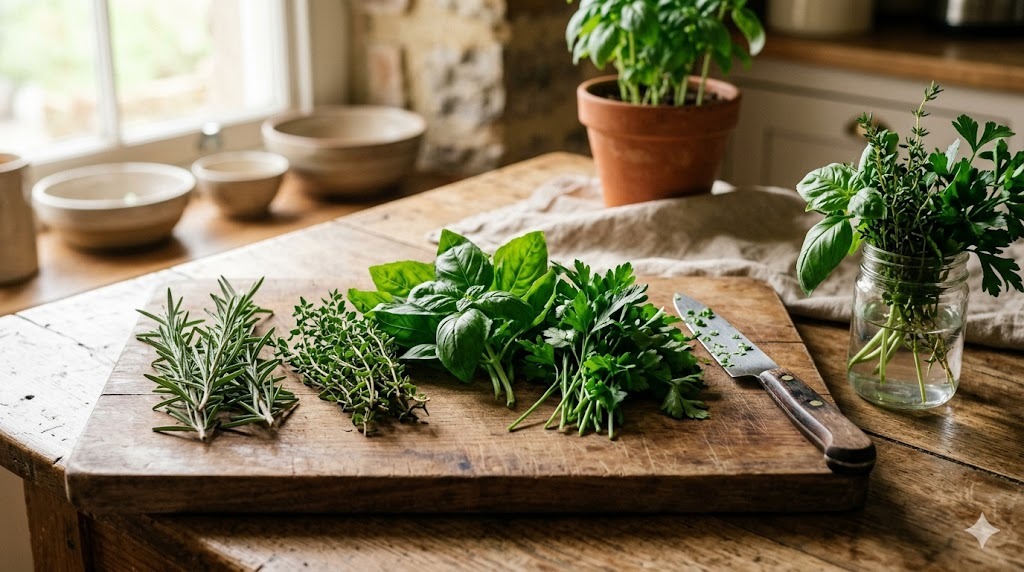
A handful of herbs from your own plants can do more for a dish than an expensive bottle of anything. But fresh herbs are not interchangeable - a sprig of rosemary and a fistful of basil want to be treated in almost opposite ways. Get the timing right and you keep the flavour; get it wrong and you boil it off or leave it raw and harsh.
Part of our Garden & Kitchen series - what to do with a harvest once it’s bigger than tonight’s dinner.
The one distinction that matters: hardy vs tender
Almost everything about cooking with herbs comes down to which camp a herb falls into.
- Hardy (woody) herbs - rosemary, thyme, sage, oregano, bay, savory. These grow on tough, woody stems and hold tightly onto their aromatic oils. They take heat well and need time for their flavour to spread into a dish.
- Tender (soft) herbs - basil, cilantro (coriander), parsley, dill, chives, mint, tarragon, chervil. Soft leaves, soft stems, delicate oils that scatter fast. Heat is their enemy; it dulls the colour and drives off the very thing you grew them for.
If you remember nothing else: hardy herbs go in early, tender herbs go in late.
When to add each one
Hardy herbs - early. Add them at the start, when there’s fat, liquid and time. They release flavour slowly, so they need the simmer.
- Toss whole rosemary or thyme sprigs into a roasting tray, a braise, a pot of beans, or oil you’re warming for a soffritto.
- Add bay leaves at the beginning of any stock, stew or sauce and fish them out before serving.
- Bloom dried-feeling oregano and sage in oil or butter over low heat for a minute to wake them up.
- Whole sprigs are easy to remove; chopped hardy herbs are fine too but check there are no tough rosemary needles left whole.
Tender herbs - the last minute, or off the heat. Their flavour is volatile, so cook them as little as possible.
- Stir chopped parsley, cilantro, dill or chives in during the final minute, or scatter them over the finished plate.
- Tear basil onto a pizza or pasta after it comes out, never during a long simmer (the classic exception is a quick blender pesto, where it’s barely heated).
- Mint, tarragon and chervil are almost always best raw or added right at the end.
A useful test: if the herb would still look bright green and fresh on the plate, it went in late enough.
Simple, reliable pairings
You do not need a chart to cook well, but these combinations rarely fail:
- Rosemary - lamb, chicken, potatoes, white beans, roasted root vegetables, focaccia.
- Thyme - mushrooms, eggs, slow-cooked meat, stock, tomatoes, almost any roast.
- Sage - pork, butter sauces, squash, beans, fatty meats it helps cut through.
- Oregano - tomato sauces, pizza, grilled vegetables, Greek and Italian dishes.
- Basil - tomato, mozzarella, garlic, summer vegetables, anything Mediterranean.
- Cilantro - lime, chili, beans, fish, Mexican and South/Southeast Asian dishes.
- Parsley - the universal finisher; brightens almost anything, especially garlic and lemon.
- Dill - fish, eggs, potatoes, cucumber, yogurt sauces, pickles.
When in doubt, herbs that grow in the same climate tend to belong together: the Mediterranean trio of rosemary, thyme and oregano is a safe backbone for roasts and tomato dishes.
Harvesting without killing the plant
The goal is to take what you need while leaving the plant stronger, not balder.
- Never take more than about a third of a plant at one time. It needs leaves left to feed itself.
- Cut, don’t strip. Snip stems with scissors or pinch with your nails rather than yanking, which can uproot a young plant.
- Pinch above a leaf pair on soft herbs. With basil, mint and oregano, cut just above a set of leaves and the plant branches into two new stems there - regular harvesting makes them bushier.
- Cut whole stems on woody herbs. With rosemary, thyme and sage, take a length of stem rather than picking single leaves, and avoid cutting into the oldest, bare wood, which is slow to regrow.
- Harvest in the morning, after dew has dried but before the midday sun, when the oils are at their strongest.
- Pinch off flower buds on basil and cilantro if you want more leaves; once a soft herb bolts (flowers and sets seed), leaf flavour fades and turns bitter.
Keeping cut herbs fresh
Once herbs are off the plant the clock starts, but a few minutes of setup buys you a week or more.
- Tender herbs - treat like a bouquet. Trim the stem ends, stand them in a glass with an inch of water, loosely cover the leaves with a bag, and refrigerate (basil is the exception - it hates the cold, so keep it on the counter in water). Refresh the water every couple of days.
- Hardy herbs - wrap and chill. Roll rosemary, thyme and sage in a barely damp paper towel, slip into a bag or box, and they will keep in the fridge for one to two weeks.
- Wash only when you’re about to use them. Wet leaves rot faster in storage.
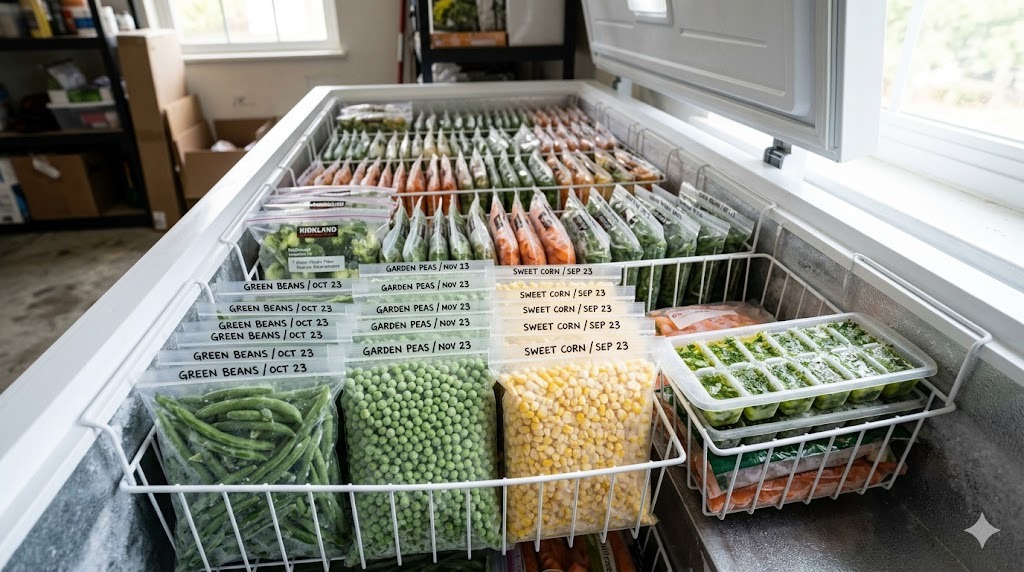
- Use the freezer for a glut. Chop soft herbs into an ice-cube tray with a little water or olive oil and freeze; drop a cube straight into soups, sauces and sautes. It’s the best way to save more than you can use fresh.
For drying woody herbs and storing them through winter, see our companion guide on drying and preserving the harvest.
The short version
Hardy herbs are built for the long cook - add them early and let time do the work. Tender herbs are built for the finish - add them late, off the heat, or raw. Harvest a little at a time and a few plants will keep your kitchen in fresh flavour all season, with the surplus frozen or dried for the months when nothing’s growing.
If you are still building your herb patch, we have full growing guides for rosemary, thyme, sage and basil, plus the rest of the herbs worth growing at home.