How to Grow Thyme: The Tough Little Herb That Thrives on Neglect
A beginner's guide to growing thyme in a hot, dry, gritty spot, from planting in poor soil to snipping fresh sprigs even in the depths of winter.
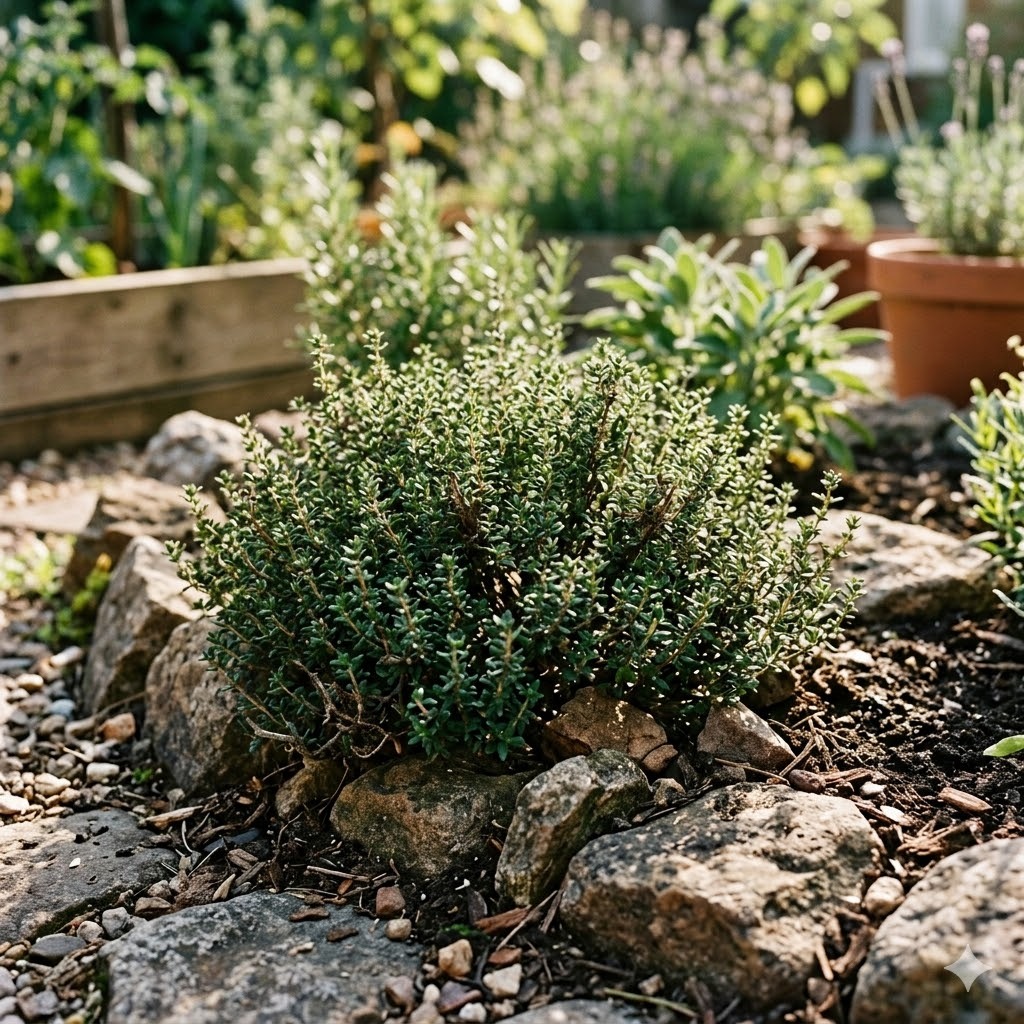
Thyme is the herb for people who forget to water. It comes from the sun-baked hillsides of the Mediterranean, where the soil is thin and stony and the rain is scarce, and it carries those habits into your garden. Give it the poorest, driest, brightest corner you have and it will reward you with a low mound of tiny aromatic leaves you can pick all year round. Kill it with kindness - rich soil, frequent watering, a shady damp spot - and it will sulk, rot and give up. This is a plant that wants less, not more.
Because it is evergreen, thyme also earns its keep in the cold months when almost nothing else in the herb patch is worth picking. On a grey January afternoon you can still walk out and snip a fresh sprig for a stew. Few herbs are as generous for as little effort.
Why grow thyme
The honest reason to grow thyme is that it is close to unkillable once it is settled, and it keeps going when the rest of the garden has packed up for winter. It is a low, woody perennial, so you plant it once and it comes back year after year, spreading slowly into a neat evergreen cushion. There is no annual sowing, no fuss, no rush to catch a short season.
It is also one of the most useful herbs in the kitchen. A little goes a long way, and it holds its flavour through long slow cooking in a way that softer herbs cannot. It belongs in stews, roasts, soups, marinades and stuffings, and it dries better than almost any other herb, so a single plant can genuinely keep you supplied all year.
The catch, if you can call it one, is that thyme wants conditions many gardeners instinctively avoid giving it. It thrives on neglect and hates being looked after. If you have a dry, sunny, awkward spot where nothing else will grow - a gap in a path, a hot bank, a gritty container - that is exactly where thyme will be happiest.
Choosing a variety
For cooking, common thyme (also sold as English thyme or garden thyme) is the one to start with. It is the classic upright bushy kind, strongly flavoured, hardy and reliable, and it is the thyme most recipes mean when they simply say "thyme". If you only grow one, grow this.
Beyond the workhorse, a few types are worth knowing:
- Lemon thyme - the same easy habit as common thyme but with a bright citrus note that is lovely with fish, chicken and roasted vegetables. It is a good second plant once you have the knack.
- Creeping thyme - a low, mat-forming type grown more for ground cover than the kitchen. It hugs the soil, spills over walls and paving, and takes light foot traffic, so it is the one to tuck between stepping stones or along the front of a bed.
Beginners rarely go wrong starting with common thyme and adding a lemon or creeping type once the first plant proves how easy it is.
Planting and starting off
The easiest way to start thyme is to buy a small plant from a garden centre and put it straight in the ground or a pot. Thyme can be grown from seed, but it is slow and fiddly to germinate, and one bought plant will give you sprigs far sooner. For a small herb patch, buying in is the sensible route.
Whichever way you begin, the soil is what matters. Thyme wants gritty, free-draining ground and full sun. Before planting, work plenty of horticultural grit or sharp sand into the spot so that water runs through rather than sitting around the roots. Do not enrich the soil - no rich compost, no manure, no feeding. Thyme grown fat and soft in rich ground grows leggy, flavourless and short-lived. Poor and stony is exactly what it wants.
Plant it slightly high rather than deep, firm it in gently, water it once to settle it, and then leave it largely alone. If you are planting in a container, use a soil-based compost mixed with a generous handful of grit, and always choose a pot with holes in the bottom. Once established, thyme spreads outward slowly into a low woody mound, so give each plant room to fill out.
Where to grow
Thyme is at its best in the difficult, dry, sunny places most plants dislike. A hot bank, a gap between paving slabs, the sun-baked edge of a border, the top of a dry stone wall - these are all ideal. Full sun is not negotiable; in shade thyme grows thin, sprawling and weak.
It is an excellent edging plant, spilling gently over the front of a raised bed or lining a path where it releases its scent when you brush past it. Creeping types in particular are made for planting between stepping stones. In all these spots the key is drainage. Thyme will shrug off drought, heat and poor soil, but it will not tolerate cold wet feet, so avoid any low corner where water collects.
Pots and troughs suit it well, especially if your garden soil is heavy clay that stays damp. A gritty container on a sunny patio or windowsill gives you full control over drainage, and the plant stays neat and within reach of the kitchen. Just remember that a potted plant in the open can still get waterlogged in a wet winter, so raise the pot on feet or bricks to let water drain freely.
Day-to-day care
The single most useful rule with thyme is to leave it alone. This is a plant that suffers far more from too much attention than too little. Once established, it needs almost no watering - natural rainfall is usually plenty, and even in a dry spell an established plant will cope. Water only newly planted thyme, and only until it has taken hold. After that, err firmly on the dry side.
Never feed it. Rich soil and fertiliser push soft, sappy growth that is weak, floppy and short on flavour, and it makes the plant more likely to rot. Thyme grown lean and hungry is tougher, more aromatic and longer-lived.
The one job that genuinely matters is trimming. Thyme has a natural tendency to go woody and bare at the base over time, with all the green growth pushed out to the tips and a mass of dead sticks in the middle. The way to slow this is to trim the plant over lightly after it flowers, cutting back the soft growth by a third or so to keep it compact and bushy. Do not cut hard into the old bare wood, as it is reluctant to sprout again from there. A yearly haircut after flowering keeps a plant neat and productive for years.
Common problems and pests
Thyme is refreshingly free of pests. Its aromatic oils put off most of the insects that plague softer herbs, and slugs and snails generally leave it alone. Nearly every problem a gardener has with thyme comes down to one thing: too much water.
Rot and sudden death are the classic killers, almost always caused by wet, heavy or badly drained soil, especially over a cold damp winter. A plant that goes black, soft and collapses at the base has usually been sitting in waterlogged ground. There is no cure once it has set in - the answer is prevention, through grit, sun and drainage rather than anything you can spray.
Going woody and bare in the centre is not a disease but a natural habit of an ageing plant, made worse by never trimming. If a plant becomes a ring of green around a dead middle, the honest fix is often to replace it with a fresh young plant or a rooted cutting rather than nurse the old one along.
The only pest worth watching for is the odd cluster of aphids or spider mites on plants grown under glass or in very still, dry indoor air. Outdoors in a breezy sunny spot they are rarely a problem at all.
Harvesting
You can pick thyme all year round, which is one of its great virtues. Simply snip whole sprigs with scissors or pinch them off with your fingers, taking them from around the plant so it keeps an even shape rather than stripping one side bare. Regular light picking actually helps keep the plant bushy, so harvesting and trimming work hand in hand.
The flavour is at its strongest just before the plant flowers, so if you want a batch for drying, cut it then. But for everyday cooking you can pick a sprig whenever you need one, in any season. To strip the tiny leaves from a woody stem, run your finger and thumb down it against the direction of growth and the leaves come away cleanly. Do not cut back into the bare old wood when harvesting - always take the soft green growth.
Storing and preserving
Thyme is one of the best herbs of all for storing, because unlike soft herbs it holds its flavour when dried. To dry it, cut whole sprigs, tie them into small loose bundles and hang them somewhere warm, dry and airy out of direct sun until the leaves are crisp. Then strip the leaves from the stems and store them in a jar out of the light. Dried thyme keeps its punch for months, which is why it is a store-cupboard staple.
Freezing works well too. You can freeze whole sprigs in a bag, or strip the leaves, pack them into ice-cube trays, top with a little water or oil, and freeze them into ready portions to drop straight into stews and soups.
Thyme also lends itself to flavoured oils and butters. Warm a few sprigs gently in oil and strip them out to make a fragrant thyme oil, or work chopped leaves into softened butter for a herb butter that freezes well and is lovely on roast chicken or vegetables. However you preserve it, a small amount of thyme carries a lot of flavour, so a single plant goes a very long way.
Is it worth it?
Yes, and for beginners it is one of the safest bets in the whole herb patch. Thyme asks for almost nothing - a sunny, dry, gritty corner, no feeding, barely any watering, and one light trim a year after flowering. Give it that and it settles in, comes back every year, and keeps producing right through winter when the rest of the garden is bare.
The only way to go wrong is to be too kind: rich soil, heavy watering and a damp shady spot will finish it off. But if you have that awkward dry sunny place where nothing seems happy, thyme is very likely the answer. For a plant that thrives on neglect and pays you back with year-round flavour, it is hard to beat.